Showing posts with label environmental justice. Show all posts

Wednesday, January 29, 2014

Book: Fairness and Justice in Environmental Decision Making Water under the bridge (Jan 2014)

Fairness and Justice in Environmental Decision Making

Water under the bridge

By Catherine Gross

Routledge – 2014 – 180 pages
By crossing disciplinary boundaries, this book uniquely connects theories of justice with people's lived experience within social conflicts over resource sharing. It shows why some conflicts, such as local opposition to wind farms and water disputes, have become intractable social problems in many countries of the world. It shows the power of injustice in generating opposition to decisions. The book answers the question: why are the results of many government initiatives and policies not accepted by those affected?
Focusing on two social conflicts over water sharing in Australia to show why fairness and justice are important in decision-making, the book shows how these conflicts are typical of water sharing and other natural resource conflicts experienced in many countries around the world, particularly in the context of climate change. It tells the stories of these conflicts from the perspectives of those involved. These practically-based findings are then related back to ideas and constructs of justice from disciplines such as social psychology, political philosophy and jurisprudence.
With a strong practical focus, this book offers readers an opportunity to develop a deep understanding of fairness and justice in environmental decision-making. It opens up a wealth of fairness and justice ideas for decision-makers, practitioners, and researchers in natural resource management, environmental governance, community consultation, and sustainable development, as well as people in government and corporations who interface and consult with communities where natural resources are being used.
review:
"A clear and compelling case for fairness as a foundation for resource sharing. Catherine Gross' book is essential for those wanting to understand the role of fairness and justice in preventing social conflict". Paul R. Ehrlich, Bing Professor of Population Studies, Stanford University, USA
"Building on real-world examples of environmental conflict over wind power and water access, the author clarifies what fairness and justice mean to those affected. She then argues the need for a theory of justice to guide environmental decision-making and to optimise fairness, as understood and seen. A timely book, as environmental tensions mount."Professor Tony McMichael, Australian National University, Australia
Content:
1. A global concern: seeking fairness in resource sharing 2. Theories of Justice and the search for fairness 3. Developing a justice-based research approach 4. Voices and stories: two water conflicts in Australia 5. Finding injustice - seeking justice 6. A sense of justice - processes and outcomes 7. Muddying the waters: worldviews, institutions and change 8. Justice as a means and an end in environmental decision-making

Friday, November 22, 2013

Event: Transforming National Commitments on GHG Emissions Reduction Based on Equity and Justice (28 Nov 2013)

Transforming National Commitments on GHG Emissions Reduction Based on Equity and Justice


Thursday, 28 November 2013, 11:00 - 12:30
Transforming National Commitments on GHG Emissions Reduction
Based on Equity and Justice 


Donald BrownScholar-In-Residence and Professor, Sustainability Ethics and Law, Widener University School of Law
Visiting Professor, Nagoya University

Venue: Meeting Room 1, UNU-IAS
Pacifico-Yokohama, 1-1-1 Minato Mirai
Nishi-ku, Yokohama


Event Description
This presentation will make specific recommendations on how to increase national commitments on greenhouse gas (GHG) emissions reductions based upon “equity” and “justice” in light of 30 years of climate change policy debates in 2 countries, the United States and New Zealand.

To prevent dangerous climate change, many observers of national GHG emissions reductions commitments, which have been made under the UNFCCC, have concluded that nations must adjust current commitments to levels based upon “equity’ and “justice”. To develop a strategy for greater consideration of ethical obligations by nations, it is necessary to understand why nations have failed to recognize their ethical obligations thus far. The history of climate change debates in the two countries demonstrates that these debates have almost exclusively focused on economic impacts on the nations adopting climate change policies or scientific uncertainty about climate change impacts. Thus there has been a narrow economic and scientific framing of national climate change policy issues in these nations which hides, distorts and ignores ethical obligations. This history also reveals widespread failures of the national media, higher education and civil society in encouraging discussion of the ethical obligations of nations to reduce the threat of climate change.

Therefore a strategy to transform national commitments on GHG emissions reductions based upon equity and justice must encourage express consideration of the ethical and justice dimensions of climate change policies. Such a strategy should (a) increase national media coverage of climate change ethical issues, (b) encourage higher education to educate civil society better about the importance of ethical framing of climate change policy issues, and (c) increase assistance to NGOs and civil society in understanding that how climate policy issues are framed and debated at the national level will determine the extent to which ethical issues are considered in setting national climate change policy.

Programme

11:00 - 11:05Opening RemarksGovindan Parayil (Vice-Rector of UNU and Director of UNU-IAS)
11:05 - 11:50Transforming National Commitments on GHG Emissions Reduction Based on Equity and Justice
Donald Brown (Scholar-In-Residence and Professor, Sustainability Ethics and Law, Widener University School of Law; Visiting Professor, Nagoya University)
11:50 - 12:30Discussion


Speaker's Biography

Donald A. Brown is Scholar In Residence for Sustainability Ethics and Law, Widener University School of Law in Harrisburg. At Widener University Law School he teaches courses on international comparative environmental law. He is also a contributing author to the Intergovernmental Panel on Climate Change (IPCC), 5th Assessment Report. Previously, he was Associate Professor of Environmental Ethics, Science, and Law at the Pennsylvania State University where he taught interdisciplinary courses on the science, ethics, and legal aspects of climate change and sustainable development. Prior to that, he was an environmental lawyer for the states of Pennsylvania and New Jersey and Program Manager for United Nations Organizations at the United States Environmental Protection Agency’s Office of International Environmental Policy. His main professional focus has been in promoting ethical reflection on issues that arise in environmental, economic, social, and legal controversies about sustainability issues at national and international levels. He has written over 130 books, book chapters, and articles on environmental and sustainability ethics, legal, and scientific issues. His newest was published in November 2012 by Rutledge, Earthscan, Navigating the Perfect Moral Storm, Climate Ethics. He manages an award-winning blog EthicsandClimate.org, a website that reviews ethical issues that arise in climate change policy formation

for registration and more information:

Sunday, August 11, 2013

New Books: Environmental Justice in Developing Countries Perspectives from Africa and Asia-Pacific By Rhuks Ako (7 Aug 2013)

Environmental Justice in Developing Countries

Perspectives from Africa and Asia-Pacific

By Rhuks Ako

Descriptions:
The evolving environmental justice paradigm is conceptualized differently based on political, economic and historical factors. In developed countries, emphasis is placed on the role of individuals in environmental decision-making and the protection of their access to the prerequisite environmental information and capacity to challenge environmental decisions is the main focus. However, in developing countries, access to land and natural resources are considered integral elements of environmental justice paradigm.
This book focuses on the conceptualization, recognition and protection of environmental justice in developing countries. It explores the situation by engaging an analytical discourse of relevant legal provisions in four case study countries including Nigeria, South Africa, India and Papua New Guinea. The comparative analysis of environmental justice in these countries present a framework within which to appreciate the conceptualization of the environmental justice paradigm
Contents:
Part 1: Background to the Book 1. Introduction: Scope of the Book
2. Environmental Justice: International and Regional Instruments 
Part 2: Environmental Justice in Developing Countries: Comparative Insights and Analysis from Africa And Asia-Pacific
3. Nigeria
4. South Africa
5. India
6. Papua New Guinea
7. Comparative Discourse
8. Conclusion

Wednesday, May 1, 2013

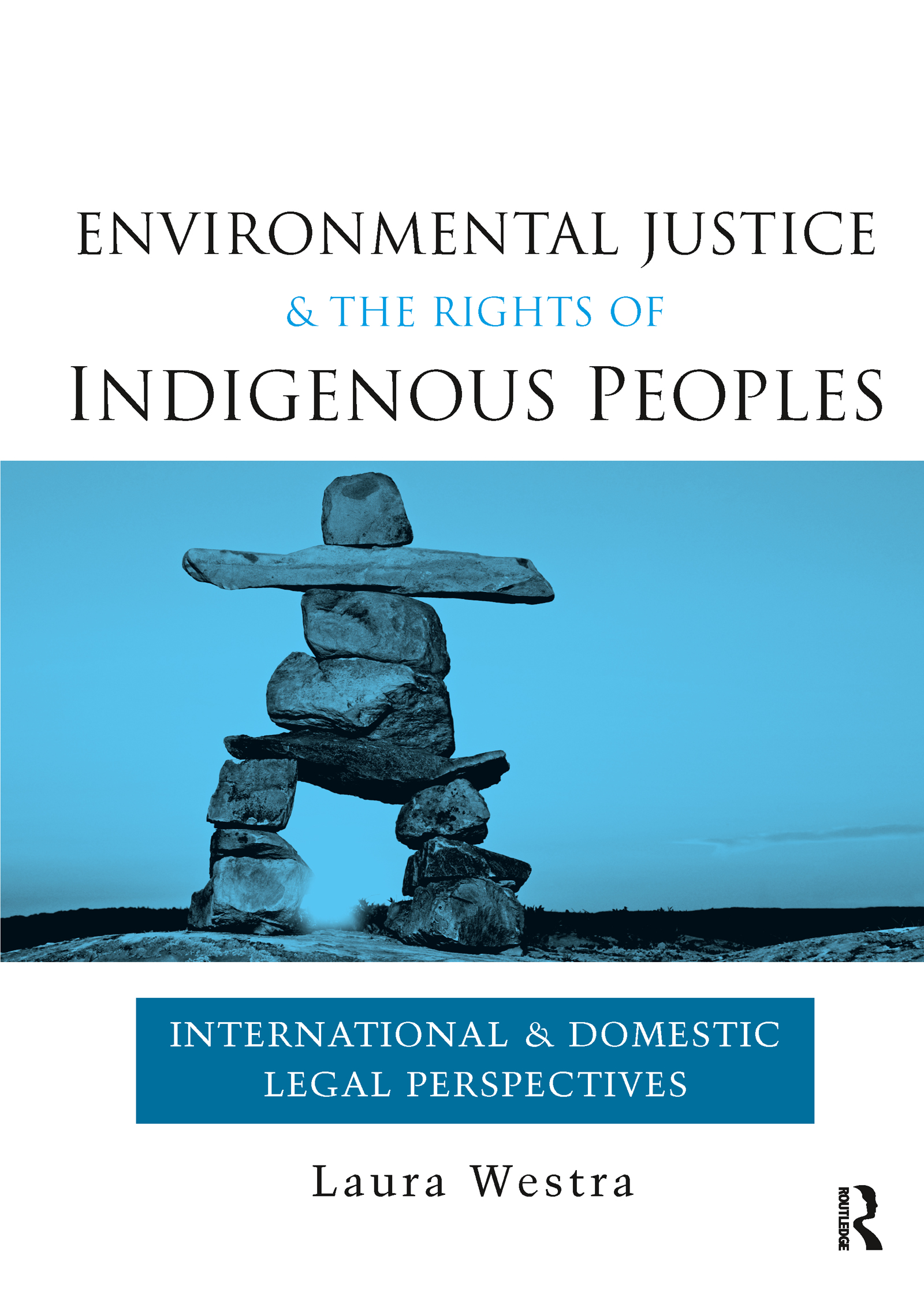
New Book: Environmental Justice and the Rights of Indigenous Peoples International and Domestic Legal Perspectives by Laura Westra (1 May 2013)


Environmental Justice and the Rights of Indigenous Peoples

International and Domestic Legal Perspectives

By Laura Westra

Published 1st May 2013 by Routledge

Description:
More than 300 million people in over 70 countries make up the world?s indigenous populations. Yet 
despite ever-growing pressures on their lands, environment and way of life through outside factors such as climate change and globalization, their rights in these and other respects are still not fully recognized in international law. In this incisive book, Laura Westra deftly reveals the lethal effects that damage to ecological integrity can have on communities. Using examples in national and international case law, she demonstrates how their lack of sufficient legal rights leaves indigenous peoples defenceless, time and again, in the face of governments and businesses who have little effective incentive to consult with them (let alone gain their consent) in going ahead with relocations, mining plans and more. The historical background and current legal instruments are discussed and, through examples from the Americas, Africa, Oceania and the special case of the Arctic, a picture emerges of how things must change if indigenous communities are to survive. It is a warning to us all from the example of those who live most closely in tune with nature and are the first to feel the impact when environmental damage goes unchecked.

Contents:
Foreword by Bradford W. Morse * 
Part I: Basic Issues, Principles and Historical Background *
The Rights of Indigenous Peoples: Eco-footprint Crime and the �Biological/Ecological Integrity Model� to Achieve Environmental Justice *
Cultural Integrity and Ecological Integrity: The Interface and International Law *
Cosmopolitanism and Natural Law for the Recovery of Individual and Community Rights * 
Part II: Selected Examples From Domestic and International Case Law *
Indigenous Peoples and Minorities in International Jurisprudence and the Responsibility of the World Bank *
The United States and Indigenous Peoples: Some Recent ATCA Jurisprudence *
First Nations of Canada and the Legal and Illegal Attacks on their Existence * 
Part III: Justifying Genocide: Principles and Reality *
Genocide and Eco-crime: The Interface *
Aboriginal Rights in Domestic and International Law, and the Special Case of Arctic Peoples *
Part IV: Some Modest Proposals for Global Governance *
Indigenous Human Rights and the Obligations of State and Non-State Actors *
Governance for Global Integrity: Present Instruments, Trends and Future Goals * 
Index
For more information: http://www.routledge.com/books/details/9780415703703/

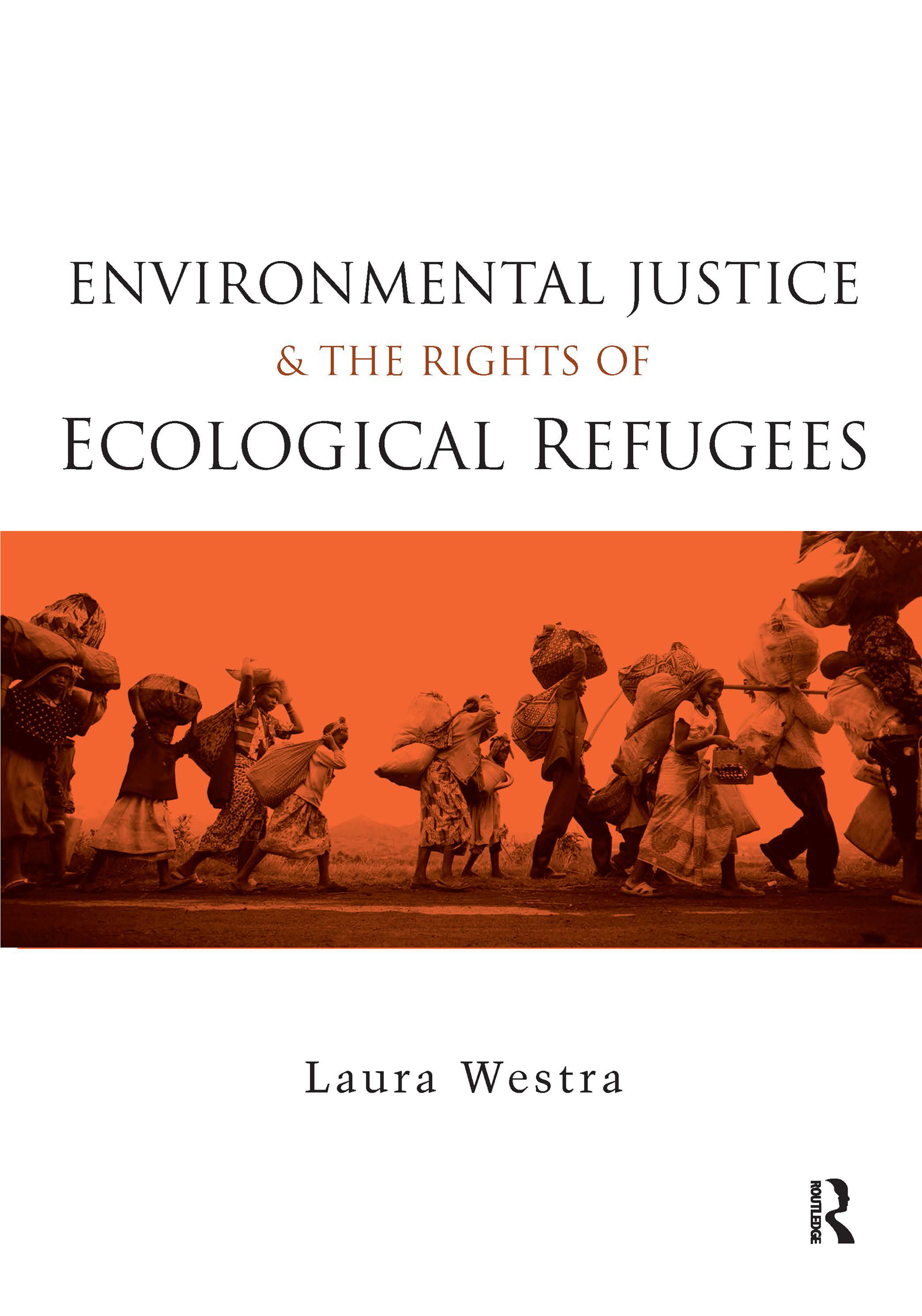
New Book: Environmental Justice and the Rights of Ecological Refugees by Laura Westra (1 May 2013)


Environmental Justice and the Rights of Ecological Refugees

By Laura Westra

Published 1st May 2013 by Routledge
Description: 
Climate change and other environmental problems are increasingly leading to the displacement of populations from their homelands, whether through drought, flooding, famine or other causes. Worse, there is currently no protection in international law for people made refugees by such means.
Following on from her previous explorations of environmental justice as it relates to future generations and indigenous peoples, Laura Westra now turns her attention to the plight of ecological refugees. In Part I, Westra provides an overview of what defines an ecological refugee and their present legal status. Part II goes into greater depth as to who the vulnerable are and what protection they have in international law. Part III looks to the future, advocating a comprehensive approach to the problem. With extensive examples and analysis, this is a compelling treatment that will be indispensable for legal professionals, government and business leaders, academics and students of the role of law in the protection of the rights of refugees.

Contents:
Prologue 
Part I: Present Refugee Law: Political and Legal Issues and Problems
1: The Question of Environmental Refugees
2: International Assistance and the Refugee Convention's Five Grounds of Persecution
3: State Protection and State Responsibility to Ecological Refugees 
Part II: Ecological Refugees and Refugee Law: The Interface
4: The Five Grounds Revisited: Who are the Vulnerable?
5: Ecological Refugees: Protection and Rights in International Law Part III: The Way Forward: Existing Legal Instruments and New Provisions
6: International Law Beyond the Convention on the Status of Refugees
7: Towards a Comprehensive Approach to Protecting Refugees and the Internally Displaced
For more information: http://www.routledge.com/books/details/9780415703666/

Sunday, December 2, 2012

CALL FOR PAPERS – 12th Global Conference: Environmental Justice and Citizenship (8th Feb 2013)


CALL FOR PAPERS – Environmental Justice and Citizenship

12th Global Conference: Environmental Justice and Citizenship
Wednesday 10th July – Friday 12th July 2013
Mansfield College, Oxford

Call for Presentations

This inter-disciplinary and multi-disciplinary conference aims to explore the role of environmental thinking in the context of contemporary society and international affairs, and assess the implications for our understandings of fairness, justice and citizenship. “Environmental justice” is conceived broadly as reflecting not only justice in the context of human communities but also towards other species, ecosystems, habitats, landscapes, succeeding generations and the environment as a whole. “Citizenship” is understood as an awareness of individual’s relative responsibilities in the global context.
Within this framework the 12th Conference of Environmental Justice and Citizenship will explore models, approaches and context necessary to solve the problems impeding environmental justice and living justly. We request contributions which explore technological, political or economic solutions to these problems, or those antecedents, agents, processes and institutions that support development of such solutions. The conference provides opportunities for scholars and practitioners in different disciplines to share examples and proposals for reducing the barriers to environmental justice and citizenship.

Presentations, papers, performances, reports and workshops are invited on any of the following indicative themes:

- Boundaries: reach and limitations of judicial and political systems in contributing to solving problems of environmental justice and citizenship
- Media and knowledge: generating, vetting and disseminating information related to environmental justice and citizenship; sources and channels
- Education: approaches to environmental education
- Hegemony and diversity: resolving problems involving differences in moral and legal frameworks
- Sustainable communities: lessons to be learned from communities that have implemented standards for environmental justice
- Hope: the roles of emotions in shaping behavior and practices; how hope for environmental justice and citizenship develops and is sustained
- Critical thinking: skills, assumptions, perspectives and habits of mind essential to environmental justice and citizenship

Perspectives are sought from all disciplines including:

- The natural and social sciences, and those engaged in actor network theory, agriculture and agricultural economics, the built environment and urban studies, conflict and dispute resolution, critical geography, environmental studies, human and sustainable development, industrial relations, law, philosophy and ethics, political science and international affairs, public policy and politics, sociology and communication of science, theology, cultural studies and anthropology.
- People in the public and private sectors who are involved in planning and project development, policy-making and implementation, and negotiation and mediation at national and international levels
- People in Governmental, inter-governmental and non-governmental organisations, voluntary sector bodies, environmental charities and groups, business and professional associations
The Steering Group welcomes the submission of pre-formed panel proposals. 300 word abstracts should be submitted by Friday 8th February 2013. If an abstract is accepted for the conference, a full draft paper should be submitted by Friday 10th May 2013.
300 word abstracts should be submitted simultaneously to all Organising Chairs; abstracts may be in Word, WordPerfect, or RTF formats with the following information and in this order:
a) author(s), b) affiliation, c) email address, d) title of abstract, e) body of abstract, f) up to 10 keywords
E-mails should be entitled: EJGC12 Abstract Submission.
Please use plain text (Times Roman 12) and abstain from using footnotes and any special formatting, characters or emphasis (such as bold, italics or underline). We acknowledge receipt and answer to all paper proposals submitted. If you do not receive a reply from us in a week you should assume we did not receive your proposal; it might be lost in cyberspace! We suggest, then, to look for an alternative electronic route or resend.

Organising Chairs:

Ram Vemuri and Rob Fisher: ejgc12@inter-disciplinary.net
Karen Druffel: kdruffel@framingham.edu
The conference is part of the Critical Issues series of research projects run by Inter-Disciplinary.Net. It aims to bring together people from different areas and interests to share ideas and explore various discussions which are innovative and challenging. All papers accepted for and presented at the conference are eligible for publication in an ISBN eBook. Selected papers may be invited to go forward for development into 20-25 page chapters for publication in a themed dialogic ISBN hard copy volume.
Please note: Inter-Disciplinary.Net is a not-for-profit network and we are not in a position to be able to assist with conference travel or subsistence.

For more information:
http://enviroethics.org/2012/11/09/call-for-papers-environmental-justice-and-citizenship/