Showing posts with label emission control. Show all posts

Wednesday, February 19, 2014

Taiwan News: 環保署發布「溫室氣體檢驗測定及查驗機構管理辦法」 (17 Feb 2014)

環保署發布「溫室氣體檢驗測定及查驗機構管理辦法」
 
提供單位:行政院環境保護署溫減管理室
發布日期:2014.02.17

為管理國內執行溫室氣體檢驗測定及查核業務之機構,環保署於103年2月17日發布訂定「溫室氣體檢驗測定及查驗機構管理辦法」(以下簡稱本管理辦法),並自發布日施行。後續依規定執行公私場所盤查查證或減量專案查核業務,及因應聯合國氣候變化綱要公約所需執行溫室氣體檢驗測定之查驗及檢測機構,應依本管理辦法相關規定辦理。 

        環保署表示,本管理辦法係參採「環境檢驗測定機構管理辦法」及「行政院環境保護署管理溫室氣體查驗機構作業原則」訂定,其主要規範均依現行管理程序辦理,包括溫室氣體檢驗測定機構及查驗機構應具備條件、許可申請與廢止、人員資格限制、審查程序及其他應遵行事項等規定。環保署已審核通過之11家溫室氣體查驗機構,其資格仍予以保留,並應於施行日起一年內申請換發。 

        前揭相關法規發布令除張貼於環保署公告欄、刊登於行政院公報外,並歡迎各界於環保署全球資訊網環保法規網頁(http://ivy5.epa.gov.tw/epalaw/index.aspx)查詢,民眾可逕自上網參閱。

source frpm: 
http://ivy5.epa.gov.tw/enews/fact_Newsdetail.asp?InputTime=1030217102558

Thursday, January 16, 2014

India News: India's sulphur dioxide emissions on the rise: Nasa (3 Jan 2014)

India's sulphur dioxide emissions on the rise: Nasa

India's sulphur dioxide emissions on the rise: Nasa
Researchers have drafted a map that depicts sulphur dioxide concentrations in 2011-12 and 2005, and the relative size of power plants in India.

WASHINGTON: Emissions of sulphur dioxide - atmospheric pollutant with health and climate impacts - from power plants in India increased by over 60 per cent between 2005 and 2012, new data analysed by a Nasa satellite found.

In 2010, India surpassed the US as the world's second highest emitter of SO2 after China, according to estimates previously published by Zifeng Lu of Argonne National Laboratory, and other scientists.

The same research showed that about half of India's emissions came from the coal-fired power sector, Nasa said.

Researchers have drafted a map that depicts sulphur dioxide concentrations in 2011-12 and 2005, and the relative size of power plants in India.

While some atmospheric SO2 is produced by volcanoes and other natural processes, a substantial amount is produced by human activities such as the combustion of fuels with sulphur- containing impurities and the smelting of metals such as copper and nickel, researchers said.

The gas contributes to the formation of acid rain and, in high concentrations, can cause respiratory problems. It is also a precursor for sulfate aerosols, a type of suspended particle that can affect the properties of clouds - an effect that is difficult to measure and remains a large point of uncertainty in climate models.

India's Central Pollution Control Board noted in a 2012 report that the national mean concentration of sulphur dioxide had declined from 2001 to 2010, an estimate based on data from ground-based monitoring stations, researchers said.

However, most of the stations are located in urban areas, where regulations have indeed reduced pollution locally. Only some of the stations in India collect measurements near the source of power plant emissions, they said.

"We should know the air quality not only in populated cities, but also in industrial areas, where coal-fired power plants truly dominate national sulphur dioxide emissions," said Lu.

The new analysis of sulphur dioxide emissions comes two years after researchers developed a method to observe power plant emissions using measurements captured by an instrument on the Aura satellite.

The Ozone Monitoring Instrument (OMI) measures ozone and other key air quality components - including sulphur dioxide and nitrogen dioxide - and collects data over the same locations at the same time daily.

Using OMI's eight-year record of observations, Lu and colleagues averaged measurements of sulphur from 65 power plants in 23 regions.

Over time, a pattern emerged that allowed scientists to distinguish nearly constant power plant emissions from more variable background concentrations of sulphur dioxide.

The study was published in the journal Environmental Science & Technology.

resourece from:
http://timesofindia.indiatimes.com/home/environment/global-warming/Indias-sulphur-dioxide-emissions-on-the-rise-Nasa/articleshow/28094720.cms

Tuesday, January 14, 2014

China News: Joint effort to fight Delta pollution (8 jan 2014)

China imposes air quality targets

Xinhua, January 8, 2014

China's 31 provinces, municipalities and autonomous regions have been set targets to reduce main air pollutants by 5 to 25 percent, in the country's latest effort to combat pollution.
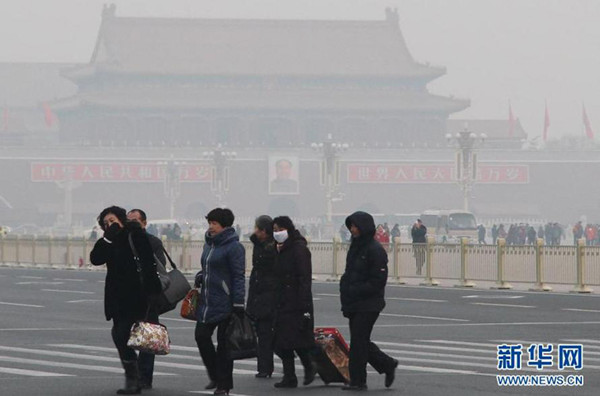
Heavy smog engulfs Beijing on Dec. 24, 2013. [Photo/Xinhua]
Among the provincial-level regions, eleven were given PM2.5-reducing tasks, including an annual 25 percent decrease, the highest, for Beijing and neighboring Tianjin municipality and Hebei Province, according to a liability paper signed Tuesday by the regions and the Ministry of Environmental Protection.
Shanghai, Jiangsu, Zhejiang, Shandong and Shanxi will have to cut the indices by 20 percent, followed by 15 percent for Guangdong and Chongqing and 10 percent for Inner Mongolia Autonomous Region.
The other regions were ordered to cut their PM10 readings by 5 to 15 percent, with only Hainan and Yunnan provinces and Tibet Autonomous Region, where air pollution is relatively slight, given no specific goals but "continuous improvements" must be made.
PM2.5 refers to airborne particles measuring less than 2.5 microns while PM10 gauges particulate matter under 10 micrometers. Both are main air pollution indicators.
The paper also urged regions to take various measures such as reducing the use of coal, eliminating outdated industrial capacity as well as better management and control of heating boilers, vehicles and dust.
Local governments have been ordered to map out detailed plans to ensure the implementation of various anti-pollution methods and lay down specific goals for each year.
Meanwhile, the State Council, or China's Cabinet, is mulling a system to evaluate each provincial-level government's progress, and those failing to reach their goals will be named and shamed. They will have to provide explanations and make corrections.
Despite a wide spectrum of measures including severer punishment for industrial polluters and the auction and lottery of car license plates, a government report revealed last month that progress was lagging in four environmental targets, including carbon dioxide emissions and energy consumption.
In the relatively more polluted northern area, Beijing reported 58 days of heavy air pollution last year, or roughly one heavy pollution day in every six.
http://www.china.org.cn/environment/2014-01/08/content_31121193.htm

China News: Higher targets set for emission reduction (10 Jan 2014)

Higher targets set for emission reduction

China Daily, January 10, 2014

The 2014 target for reduction of nitrogen oxide in the air has been set at 5 percent, a level much more aggressive than in previous years, Minister of Environmental Protection Zhou Shengxian said at a national environmental conference on Thursday.
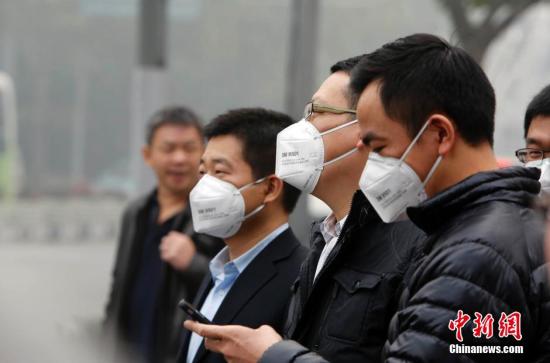
Heavy air pollution hits Shanghai on Dec. 6, 2013. [Photo/CNS]
Targets for reducing the other three major pollutants — sulfur dioxide, ammonia nitrogen and chemical oxygen demand (which measures the amount of organic compounds in water) — are set at 2 percent for 2014, Zhou said.
The level of nitrogen oxide was expected to fall by more than 3.5 percent in 2013, coming to the 2010 level for the first time in three years, he said.
Total emissions of nitrogen oxide were expected to fall 10 percent by 2015 from the 2010 level, but the figures in fact rose by 2.82 percent by the end of 2012, according to a report released in late December by the National Development and Reform Commission.
As one of the key airborne pollutants and main causes of acid rain that comes mainly from coal consumption and emissions of motor vehicles, nitrogen oxide is toxic and easily transformed into fine particles and ozone after undergoing a series of chemical reactions. Both pose significant threats to human health.
Organic nitrogen oxide is prevalent in smog and haze, according to the report of a research team from the Chinese Academy of Sciences that examined the thick haze in Beijing, Tianjin and Hebei province in January last year.
To meet the 2015 reduction goal for nitrogen oxide emissions, the annual reduction has to reach around 4.8 percent each year for 2014 and 2015, Zhou said.
All kinds of measures will be implemented to ensure the tough targets are met, said Huang Xiaozeng, deputy head of the pollution emission control department of the Environmental Protection Ministry.
"Many of the efforts we've made over the past years started to take effect, including equipping coal-fueled power plants with desulfurization and denitrification facilities, and phasing out high-emission cars from the streets," said Huang.
More than 90 percent of the currently installed coal-fired power generating capacity had desulfurization equipment by the end of 2012, a rise from 60 percent in 2005, according to the ministry.
Zhou said one of the major challenges in China's environmental management is to build a comprehensive management system that takes into account all kinds of pollutants and pollution sources.
The US government controls the emission of more than 180 pollutants from 80 industrial sources, according to Chai Fahe, vice-president of the Chinese Research Academy of Environmental Sciences.
"We are still not doing enough in terms of the number of pollutants and the types of sources under control," said Chai.
Investment from the central government for environmental control reached 22.9 billion yuan ($3.78 billion) in 2013, an increase of 17.4 percent compared with the previous year's investment, Zhou said.


Monday, October 28, 2013

World Update: EU Over-Delivered on Kyoto Commitments: EEA Assessments (9 Oct 2013)


EU Over-Delivered on Kyoto Commitments: EEA Assessments
EEA


9 October 2013: Two assessments by the European Environment Agency (EEA) indicate that the EU is on track to meet its common targets for greenhouse gas emission (GHG) reductions, renewable energy and energy efficiency. The assessments show that all member States are on track in at least one target area, although no member State is on track to meet all three.

The first assessment, ‘Trends and Projections in Europe 2013: Tracking Progress towards Europe's Climate and Energy Targets until 2020,' concludes that the EU reduced GHG emissions between 2008 and 2012 by 12.2%, beyond the 8% target required under the Kyoto Protocol. The assessment further finds that the EU is on track to achieve GHG reductions of 21% by 2020, beyond the 20% required by its 2020 target. On renewable energy, the assessment notes that 13% of EU final energy consumption came from renewable sources in 2011, on the way to a 2020 target of 20%.

The second assessment, ‘Approximated EU GHG Inventory: Early Estimates for 2012,' offers the first comprehensive assessment of EU performance for the first commitment period of the Kyoto Protocol, which called for collective reductions of 8% from 2008 to 2012. The assessment finds that the 15 member States of the EU with a common commitment over-performed the 8% target, achieving a collective reduction of 12.2%.

In light of these findings, Connie Hedegaard, European Commissioner for Climate Action, remarked, "The EU is clearly delivering on its Kyoto commitments. The EU has reduced its emissions significantly since 1990 while expanding its economy. This further demonstrates that climate policy can be implemented in a way that fosters jobs and growth.” [EEA Press Release] [European Commission Press Release] [Publication: Trends and Projections in Europe 2013


Thursday, October 17, 2013

Taiwan Update: 聯合國通過水俣公約,將控制和減少汞的全球排放 (11 Oct 2013)

聯合國通過水俣公約,將控制和減少汞的全球排放
提供單位:行政院環境保護署毒管處
新聞圖片

聯合國環境規劃署(United Nations Environment Programme, UNEP)及各國代表在日本熊本市召開「水俣公約外交會議(Diplomatic Conference for the Minamata Convention on Mercury)」,會議於今(2013)年10月11日結束,約有1000多人參加,與會的130餘個國家代表中有超過60個締約國的領袖與環境部長親自出席,相關政府組織、非政府組織與聯合國機構等亦共襄盛舉。 

        根據聯合國環境規劃署資料顯示:2010年因人類的活動所產生的全球汞排放量約為1,960噸,其中汞排放的最大來源是小規模金礦開採,占全球排放的37%,其次25%由燃燒化石燃料所產生,例如燃煤的火力發電廠,在全球人體內均可發現汞(trace mercury)的蹤跡,可見汞對人類健康的影響值得各界重視。9日會議開幕式邀請受害者緒方正實先生,以講故事的方式說明水俣病多年來帶給病患及家屬的折磨與苦痛的親身經歷,呼籲國際社會重視汞對全球環境與人類健康帶來的負面影響,並立即採取行動。 

        本次水俣公約外交會議經各國決議通過,公約內容包含35條公約條文以及5個附件,將從開採、使用、出口與進口等行為進行限制,以達成減少全球汞排放,保護人類健康和環境。在公約條文中含汞產品、使用汞或汞化合物的生產製程、手工和小規模採金業、汞及其化合物的大氣排放點源、汞廢棄物及污染場址等均為管制重點。目前已超過50國簽署公約,可望於90天後正式生效,預計3年內(2016年前)即可召開聯合國第一屆水俣公約締約方大會。 

        環保署說明,為展現我國積極保護地球環境之意願與作法,仍將依管制期程同步履行國際環保公約的規定,臺灣累積的環保經驗與成果亦將持續與國際社會分享。 

        我國汞的管制作為已與先進國家並駕齊驅,於會議期間主動與美國、日本及布吉納法索等10餘國友人分享臺灣的經驗與成果,透過交流活動爭取認同,說明台灣對於汞管制的努力成果與維護全球環境的堅定立場。

Thursday, October 3, 2013

Event: 4th Diesel Emissions Conference India (8 to 10 Oct 2013)

4th Diesel Emissions Conference India

8 to 10 October 2013

Integer’s 4th Diesel Emissions Conference India will provide a fundamental insight into India's current and future diesel emissions control legislation for both the commercial vehicle and non-road industries, including the impending CPCB-II regulation for diesel generator set engines, to ultimately improve air quality across the country.
The conference will examine cost-effective legislation compliant diesel emissions reduction technologies, the progress being made in improving the supply and distribution of lower-sulphur diesel fuel and the results of research into compressed natural gas (CNG) and hybrid technologies.
Expert speakers, fantastic networking opportunities and cutting edge topics including diesel fuel supply and quality, emission control technologies and alternative fuels make this the region's leading event.
10% discount for all Clean Air Asia members – register via email at conferences@integer-research.com quoting reference ‘CAA10’.
For further conference information and the full programme visit www.integer-research.com/dec-india-2013

Persons Presenting and the files used for this event
Tags
Countries: India
Cities: Pune, India
Topics: Fuels-Diesel