Showing posts with label Sustainability. Show all posts

Sunday, April 27, 2014

Book: Complexity and Sustainability (23 April 2014)

Complexity and Sustainability

By Jennifer Wells

Routledge – 2012 – 345 pages
Description:
Complex dynamic system studies have been studied explicitly in the natural sciences, and most only implicitly throughout other fields. Yet much great social theory and philosophy is in fact based in complexity, and important concepts like postmodernism, risk, and collapse all stem from complexity. Six key terms are explored: nonlinearity, feedbacks, thresholds, hierarchies, emergence and self-organization, and dozens of related principles are discussed, with a focus on uncertainty, risk, vulnerability, learning, strategy, resilience, collapse and sustainability. The book surveys the role of these complexity principles in the natural sciences, social theory, transdisciplinary discourse, philosophy, and ethics, and shows how this complexity framework is a valuable lens for approaching the spectre of climate change and life in the Anthropocene.
Content:
Foreward 1. Introduction 2. Elucidating Complexity Theories 3. Complexity in the Natural Sciences 4. Complexity in Social Theory 5. Towards Transdisciplinarity 6. Complexity in Philosophy: Complexification and the Limits to Knowledge 7. Complexity in Ethics 8. Earth in the Anthropocene 9. Complexity and Climate Change 10. American Dreams, Ecological Nightmares and New Visions 11. Complexity and Sustainability: Wicked Problems, Gordian Knots and Synergistic Solutions 12. Conclusion
source: http://www.routledge.com/books/details/9781138790742/


Monday, April 14, 2014

Taiwan News: 臺美環保合作21年 有朋自遠方來 共創全球永續繁榮的契機 (4 April 2014)

臺美環保合作21年 有朋自遠方來 共創全球永續繁榮的契機


美國環保署署長麥卡錫女士(Administrator Gina McCarthy)訂於本(4)月13~15日訪華,出席臺美環保署共同辦理一系列夥伴會議及活動,行政院環保署新任魏國彥署長表示「有朋自遠方來,不亦樂乎」,並推崇麥卡錫署長在實踐歐巴馬總統氣候變遷政策的智慧,以及對國際環保所做的建設性貢獻。 

        環保署魏國彥署長表示,美國環保署麥卡錫署長來華期間,將參與「臺美永續學校夥伴計畫」、「臺美合作20年展」、「第一屆全球環境教育夥伴會議」等活動,並在臺灣大學公開演講,並和參與臺美夥伴計畫的地方環保局局長及中、小學校長會面等。 

        美國在台協會及美國環保署過去將近21年來,透過190多項合作計畫,無私地分享環境監測、資訊系統、土壤、空氣、水各項領域風險管理及環境執法的技能,有效地提升我國各階層環境治理的能力,很多成功的技術移轉,值得分享給其他鄰近的新興國家。美國環保署麥卡錫署長此行,則是對國人過去3年來,中央與地方、政府與民間與美國環保署共同推動與區域各國夥伴環保治理之政策及技術交流,腳踏實地實踐永續環境及友善國際績效的肯定。

source : http://ivy5.epa.gov.tw/enews/fact_Newsdetail.asp?InputTime=1030413103047

Tuesday, March 25, 2014

Publication: The State of Sustainability Initiatives Review 2014: Standards and the Green Economy (23 March 2014)


The State of Sustainability Initiatives Review 2014: Standards and the Green Economy

» Jason Potts, Matthew Lynch, Ann Wilkings, Gabriel A. Huppé, Maxine Cunningham, Vivek Voora, IISD, 2014.Book, 365 pages, copyright: IISD and IIED, ISBN 978-1-894784-45-0

The State of Sustainability Initiatives Review 2014 provides a bird’s-eye view of market and performance trends across 16 of the most prevalent standards initiatives operating across ten different commodity sectors. The Review represents one small effort toward strengthening our understanding of how voluntary sustainability standards are developing over time, both in terms of the systems they deploy and the market impacts that they have. It is hoped that the ensuing data and analysis, when read in conjunction with the growing body of field-level impact data, will allow supply chain decision-makers to strengthen their own strategic decision-making processes in ways that provide optimal sustainable development impact.

PDF


  • Hard copy not available.


source from: http://www.iisd.org/publications/pub.aspx?pno=2899

Wednesday, February 26, 2014

World News: DRDO set to harness ocean power (18 Feb 2014)

DRDO set to harness ocean power
,TNN | Feb 15, 2014, 04.10 AM IST


CHANDIGARH: Given the pressure on land and limited sources which can be tapped for generation of electricity, the ministry of earth sciences is now focusing its attention on oceans to meet growing power demand. It has started working on developing wind farms in ocean, which have a potential of power generation for 300 days in a year. Coastal areas of Tamil Nadu and Gujarat are being studied for the purpose.

Shailesh Nayak, secretary, Union ministry of earth sciences, who was the chief guest for the 'National workshop on renewable energy systems for mountainous regions' in Chandigarh on Friday, informed about the new renewable sources of energy that were being tested. The workshop was jointly organized by the ministry of new and renewable energy and Snow and Avalanche Study Establishment, SASE - a wing of Defence Research and Development Organization (DRDO).

"As land is not easily available for the purpose, we have thought of oceans. The coasts of Gujarat and Tamil Nadu have shown a high potential of more than 6m/sec wind velocity. This can sustain power for 300 days in a year," said Dr Nayak. However, how much power in terms of wattage will be produced is yet to be worked upon. "That depends upon the number of wind turbines which will be installed," said the secretary.

Monday, February 17, 2014

Vietnam News: Vietnam move forward MDG on environment sustainability in 2015 (6 Feb 2014)

Vietnam move forward MDG on environment sustainability in 2015 Thứ bẩy, ngày 25 tháng 01 năm 2014 cập nhật lúc 17:27


Vietnam has seen considerable achievements in ensuring a sustainable environment over the past years, according to the United Nations Development Programme (UNDP).
Sustainable development is part of the country’s socio-economic development strategy of 2011 to 2020 and it was also included into the country’s socio-economic development plans during the 2006-2010 and 2011-2015 periods.
In order to reach the Millennium Development Goal (MDG) on ensuring environmental sustainability by 2015, the UNDP has encouraged the country to continue to prioritise clean water, environmental sanitation, climate change, and biodiversity preservation.
Localities have been urged to mobilise the community and their authorities’ involvement in ensuring the sustainability of water and environmental services.

Attention should be paid to protecting the living environment and biodiversity conservation. Relevant agencies should put forth prioritised policies to encourage the private sector’s participation in environmental protection, said UNDP.

source from: 

Tuesday, January 28, 2014

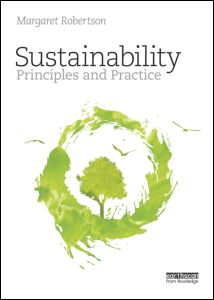
Book: Sustainability Principles and Practice (20 Jan 2014)

Sustainability Principles and Practice

By Margaret Robertson

Routledge – 2014 – 392 pages
Description:
Sustainability Principles and Practice gives an accessible and comprehensive overview of the interdisciplinary field of sustainability. The focus is on furnishing solutions and equipping the student with both conceptual understanding and technical skills for the workplace. Each chapter explores one aspect of the field, first introducing relevant theory and presenting issues, then supplying tools for working toward solutions. Elements of sustainability are examined piece by piece, and wide coverage ranges over ecosystems, social equity, environmental justice, food, energy, product life cycles, cities, and more. Techniques for management and measurement as well as case studies from around the world are provided.
Chapters include further reading, discussion questions, and problems to foster quantitative thinking. The book is supported by a companion website with key website links, detailed reading lists, glossary, and additional case studies, together with numerous projects, research problems, and group activities, all of which focus on real-world problem solving of sustainability issues.
The textbook is designed to be used by undergraduate college and university students in sustainability degree programs and other programs in which sustainability is taught.
Content:
Part 1: Context 1. What Is Sustainability? 2. A Brief History of Sustainability 3. The Biosphere 4. The Human Sphere 5. Putting Sustainability into Practice Part 2: Issues and Solutions 6. Climate 7. Water 8. Ecosystems and Habitat 9. Pollution 10. Energy 11. Food 12. Green Buildings and Sites 13. Livable Cities 14. Products 15. Waste, and Recycling Part 3: Becoming an Agent for Change 16. Working in an Organization 17. Education: Preparing a New Generation to Live Well in a Changing World 18. Working as Agents for Change
Author Bio:
Margaret Robertson, a member of
 the American Society of Landscape Architects (ASLA), is coordinator of the Sustainability Coordinator degree program at Lane Community College in Eugene, Oregon, USA, and a Sustainability Fellow in the Higher Education Associations Sustainability Consortium.

Thursday, January 23, 2014

Malaysia News: 2013 International Eco-Schools Conference Malaysia – Towards Creating Sustainable Legacy (20 Jan 2014)

2013 International Eco-Schools Conference Malaysia – Towards Creating Sustainable Legacy

9 Jan 2013, Kuala Selangor: The recent International Eco-Schools Conference, themed “Forest and Water”, was a true embodiment of youth empowerment as it witnessed students being the front runners as co-facilitators and keynote speakers. 

The successful event, which drew about 140 participants from 26 schools, was held from 9-12 December at Mega Crystal Camp, Yayasan Selangor, Kuala Selangor. It was the second consecutive year the conference was held.

The conference was a joint effort by WWF-Malaysia with Yayasan Anak Warisan Alam (YAWA) together with Kuala Selangor District Council, Integrated Agriculture Development Area, Sarawak Natural Resource and Environment Board, Department of Environment, and Selangor Waters Management Authority (SWMA).

Funded by BOH Plantations Sdn Bhd, it provided teachers, students, and researchers with the opportunity to explore the 7-step methodology, a tool used by students to find solutions and take actions on environmental issues faced by their schools. 

“The conference was a great practical training ground for the students. It was the first time I witnessed a conference which was led by students. It managed to enhance the students’ softskills in communication, leadership and knowledge-based. In addition, everyone had equal opportunity in terms of voicing opinions and leading certain sessions,” said Puan Nor Azizi Abdullah, a teacher from Sekolah Agama Menengah Tinggi Tengku Ampuan Jemaah, Klang.

The conference also gave participants the opportunity to understand the nine themes, i.e. water, waste, energy, climate change, biodiversity and nature, school grounds, transport/sustainable mobility, healthy living and Local Agenda 21, in a more practical manner and to create opportunities for learning by tapping into multiple intelligences through workshops, excursions and keynote speaker sessions. 

The excursions and activities during this second Eco-Schools conference included a trip to the paddy field, firefly observation in Kampung Sungai Panjang, eco-traditional cooking, nasi ambang preparation, demonstration on traditional fishing gears, mangrove tree replanting, photography skills and visit to a sanitary landfill. 

“I learned a lot from the sessions. I enjoyed the skill-based workshop, especially the tree climbing and the trip to the paddy field. It was my first experience seeing and touching a paddy plant,” said Pirakash A/L Rasan from Sekolah Jenis Kebangsaan (Tamil) Ringlet.

One of the major emphasis of the Eco-Schools programme is the concept of student empowerment, where students are the agents of change in making daily decisions on environmental conservation efforts in the school. 

“We hope the experiential learning and exposure provided will influence the young minds to make environmentally-informed decisions in their daily lives,” said WWF-Malaysia’s Head of Environmental Education, Thiagarajan Nadeson, who is also the National Coordinator for Eco-Schools Malaysia Programme.

During the conference, 10 schools registered under the Eco-Schools Malaysia programme were awarded with Bronze and Silver award for their efforts in embedding sustainability elements in their daily lives. Meanwhile, Sekolah Menengah Kebangsaan Muhibbah from Sandakan was awarded with the Green Flag, making it the first public school in Malaysia and South East Asia to receive this international award. 

- Ends -

About Eco-Schools Programme
At the international level, the programme is run by the Foundation for Environmental Education (FEE), a non-governmental and non-profit organization aiming to promote sustainable development through environmental education (including formal school education, training of staff and general awareness-raising). It is an international umbrella organisation with one national member organisation per country representing FEE on the national level and in charge of implementing FEE programmes nationally. It has 66 member organisations in 58 countries around the world. 

In Malaysia, WWF-Malaysia is the national coordinator of the programme, which started in 2010. The first school to register for the Eco-Schools Programme in Malaysia was Sekolah Menengah Kebangsaan Lanchang in March 2011. Since then, the Programme has grown from strength to strength, and more than 60 schools in Malaysia have now embarked on the Eco-Schools Programme journey. Click here for information on Eco-Schools Programme 

For further information: 
Fahrol Liza binti Jaafar, Senior Programme Officer, Eco-Schools Malaysia, WWF-Malaysia
Tel: 03-7803 3772 Ext: 6439 Email: fjaafar@wwf.org.my

Yeoh Lin Lin, Head of Communications, WWF-Malaysia
Tel: +603-78033772 Email: llyeoh@wwf.org.my

Tuesday, January 21, 2014

Call for paper: CFP – Just Sustainability, Seattle University (27 Jan 2014)

CFP – Just Sustainability, Seattle University

August is a beautiful time to visit Seattle!
Seattle University’s Center for Environmental Justice and Sustainability will host Just Sustainability: Hope for the Commons from August 7-9, 2014.
Abstracts of no more than 200 words are due by January 27, 2014 and should be submitted online here.
Please see the call for contributions from all disciplines, including but not limited to environmental studies, theology, business, philosophy, engineering, education, law, the arts, international development, anthropology, religious studies, geography and the natural sciences. The conference is seeking a broad base of participation at the intersection of sustainability and justice, focusing on topics such as water, energy, food systems, climate change, biodiversity conservation, law and policy, and education through the lens of environmental justice, as well as papers that engage with the ethics, challenges and opportunities presented by the transition to a sustainable society.
Hosted by the Seattle University Center for Environmental Justice and Sustainability Center for Environmental Justice and Sustainability, “Just Sustainability: Hope for the Commons” will focus on the intimate connections between environmental justice and sustainability. Attendees will have a unique opportunity to connect with researchers, businesses, and communities that are bringing EJS issues to the fore of public discourse. The conference goals are to:
- Emphasize EJS research in a wide variety of disciplines;
- Build an EJS network of Jesuit institutions;- Inspire EJS work through the arts;- Highlight work being done by nonprofit and government agencies;- Foster interdisciplinary conversations, research, and teaching.

More information about the event, call for papers and registration can be found here.

Friday, December 13, 2013

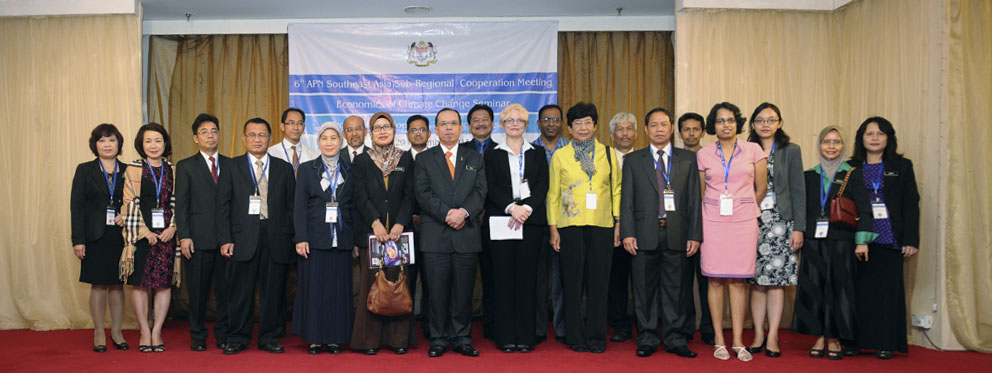
Malaysia News: Malaysia Hosts Sixth Sub-Regional Meeting and Associated Activities (11 Dec 2013)


Malaysia Hosts Sixth Sub-Regional Meeting and Associated Activities

Wednesday, December 4, 2013

Event: Evaluating the Quality of Contemporary Global Governance: Theory, Analysis, Practice (11 Dec 2013)

Evaluating the Quality of Contemporary Global Governance: Theory, Analysis, Practice

Tim Cadman Research Fellow, Key Centre for Ethics, Law, Justice and Governance and the Institute for Ethics, Governance and Law at Griffith University 

Wednesday, 11 December 2013, 11:00 - 12:30 
Venue: Meeting Room 1, UNU-IAS 
Pacifico-Yokohama, 1-1-1 Minato Mirai 
Nishi-ku, Yokohama


Event Description 
Everyone talks about governance, and similar to concepts such as "sustainability", it is little understood, and made greatly over-complex. This presentation is in three parts. Part one provides a definition of global governance, and applies three guiding questions to assist in its analysis. Part two looks at traditional concepts of governance in international relations, and explores current directions and developments in governance theory, using these to provide a preliminary analysis and draw some conclusions. Part three explores the impacts of applied theory on governance in the field, looking at a number of case studies undertaken by the researcher.

Speaker's Biography

Tim Cadman is a University Research Fellow with the Key Centre for Ethics Governance and Law and the Institute for Ethics, Governance and Law at Griffith University, Queensland, Australia. He is also a Research fellow with the international Earth Systems Governance Project and is a researcher for Chatham House on illegal logging. Tim was previously the Sustainable Business Fellow at the University of Southern Queensland, and specializes in environmental politics and policy, climate change, natural resource management, responsible investment and institutional governance. His first book, Quality and legitimacy of global governance: case lessons from forestry, was nominated in the top 12 of the British International Studies Association Book of the year 2011. His latest book, Global climate change policy: towards institutional legitimacy, was published in April, and is a collaborative effort with a range of scholars who have applied his innovative approach for evaluating global governance to a range of issue areas across the climate change "regime complex".

Registration is free and open to the public. For further information, please contact UNU-IAS atunuias[at]ias.unu.edu or 045-221-2300.

Sunday, December 1, 2013

Event: Sustainability Reporting and Communications (4 Dec 2013)

Sustainability Reporting and Communications

Date:Wednesday, 4 December 2013
Location:Malaysia

Course Overview:
The one-day training workshop is designed to help you learn about international reporting standards and how to deliver your sustainability message effectively to support business objectives. Topics include but are not limited to: Transparency and accountability; Developing priorities through stakeholder engagement; Developing effective communications plans and more. 
Topics include:
  • Identifying the key issues on which to report
  • Transparency and accountability
  • Developing priorities through stakeholder engagement
  • Issues-based reporting
  • Global Reporting Initiative (GRI)
  • Tools and strategies to deliver an effective sustainability message
  • Tailoring reporting solutions to meet a company’s unique needs
  • Case studies of successful reporting strategies
Course Leaders:
•Rikke Netterstrom
biography
•Gabriel Chong
biography
Fee:USD 375

Registration:
For CSR Asia Strategic Partners (to enjoy special discount)
For Ordinary
CSR Asia Strategic Partners are entitled to a 20% discount on all courses organised by CSR Asia. To register using your free training pass, please contact your relationship manager directly.

for more information and registration: http://www.csr-asia.com/course-detail.php?id=99

Monday, November 18, 2013

Publication:UNU-IAS/IGES Research Project on Monitoring and Evaluation of ESD Monitoring And Evaluation Of Education For Sustainable Development: A Framework Of Factors And Leverage Points In The Implementation Of ESD In The Asia-Pacific Region (15 Nov 2013)

UNU-IAS/IGES Research Project on Monitoring and Evaluation of ESD

Monitoring And Evaluation Of Education For Sustainable Development: A Framework Of Factors And Leverage Points In The Implementation Of ESD In The Asia-Pacific Region

Monitoring and Evaluation of Education for Sustainable Development: A framework of factors and leverage points in the implementation of ESD in the Asia-Pacific Region
 Vol. / Issue: 2012-06
Author: Didham, Robert James and Ofei-Manu, Paul
Policy Report / Research Report | 2013/03 | Language: English
Publisher: IGES(Hayama) | Copyright: IGES and UNU-IAS | Page No./Total No. of Pages: 142.

This report was developed as part of a series of three research publications on the research project led by UNU-IAS and IGES on monitoring and evaluation of education for sustainable development, especially in the Asia-Pacific region. This report specifically focuses on the development of an appropriate framework for structuring the approach on monitoring and evaluation of ESD in the region. This report draws findings from the studies published in the two previous reports on first the system leverage points in ESD implementation and second the characteristic of ESD learning performance.

The report is structured as follows:
Section One focuses on the nature of ESD, the qualities of ESD that make it challenging from the standpoint of assessment, previous attempts to conduct M&E of ESD, and the main reasons for attempting to measure the progress that has been achieved during DESD.

Section Two begins by providing an overview of the general applications of assessment methods. A lengthy discussion then reviews modern trends in both educational practice and assessment with the purpose of identifying the benefits and limitations of the approaches especially as they could apply to ESD. In the final part of section two, the focus is specifically on investigating approaches for ESD assessment; this first addresses several of the main questions, criteria and targets that must be considered in identifying an appropriate M&E approach, and second it provides a discussion of several potential methods for conducting M&E of ESD.

Section Three starts with an explanation of the structure and methodology used during this project to conduct scoping research on ESD monitoring and evaluation in the region. The three main research approaches are introduced in turn with a clear explanation of the processes undertaken to conduct these approaches and an explanation of the findings and contributions made by approach. The final parts of this section turn towards synthesising and integrating the findings from this mixed-methods research in order to reach the original project aim of identifying a core set of important targets and leverage points for ESD. Proposals and recommendations are then presented for an ESD M&E framework. This is complemented by the presentation of several key outcomes from an expert consultation held at the end of research phase to further define the ESD M&E framework in a participatory manner, which is presented in an addendum to the main text.

Saturday, September 28, 2013

Training workshop: Sustainability Reporting and Communications organized by CSR Asia on 4 Dec 2013


Sustainability Reporting and Communications

Date:Wednesday, 4 December 2013
Location:Malaysia

Course Overview:
The one-day training workshop is designed to help you learn about international reporting standards and how to deliver your sustainability message effectively to support business objectives. Topics include but are not limited to: Transparency and accountability; Developing priorities through stakeholder engagement; Developing effective communications plans and more. 
Topics include:
  • Identifying the key issues on which to report
  • Transparency and accountability
  • Developing priorities through stakeholder engagement
  • Issues-based reporting
  • Global Reporting Initiative (GRI)
  • Tools and strategies to deliver an effective sustainability message
  • Tailoring reporting solutions to meet a company’s unique needs
  • Case studies of successful reporting strategies
Course Leaders:
•Rikke Netterstrom
biography
•Gabriel Chong
biography
Fee:USD 375

Registration:
For CSR Asia Strategic Partners (to enjoy special discount)
For Ordinary
CSR Asia Strategic Partners are entitled to a 20% discount on all courses organised by CSR Asia. To register using your free training pass, please contact your relationship manager directly.

For more information: http://www.csr-asia.com/course-detail.php?id=99

Wednesday, September 25, 2013

Events: Building Livable Cities and Healthy Communities: Policy and Planning Approaches for Resilience and Sustainability organized by the Wilson Center on 2 Oct 2013

Events

Building Livable Cities and Healthy Communities: Policy and Planning Approaches for Resilience and Sustainability

October 02, 2013 // 3:00pm — 5:00pm
Chronic diseases have surpassed communicable diseases as leading causes of death worldwide.   Enviromental and policy conditions that enable unhealthy diets, physical inactivity and high rates of tobacco underly increasing chronic disease rates.  This makes good health in many communities with developing economies, difficult – if not impossible – to achieve.
ChangeLab Solutions is pioneering a new approach to public health advocacy by building collaboration between public health officials and other local government agencies. Often called health in all policies or shared governance, this collaborative governance model is garnering attention at the World Health Organization and other nongovernmental organizations dedicated to addressing the social determinants of health and fostering healthy, resilient and sustainable environments in which the healthy choice is the easy choice.
By creating good laws and policies that link housing, education, jobs, and the built environment to healthy outcomes – and by working with communities to implement them – ChangeLab Solutions is helping to create places where people have easy access to affordable and healthy food, safe and easily accessible places to live and play, plenty of opportunities to bike, walk, or take transit, fresh water, and clean air indoors and out.
ChangeLab Solutions works with neighborhoods, cities, and states to transform communities with laws and policies that create lasting change. Its unique approach, backed by decades of solid research and proven results, helps the public and private sectors make communities more livable, especially for those who are at highest risk because they have the fewest resources.
A panel of experts will discuss innovative law and policy solutions for creating healthier neighborhoods, cities. Speakers will identify environmental change solutions for diseases like diabetes, obesity, asthma, and lung cancer. This seminar will showcase the latest in research and practice on how best to incorporate legal and policy tools into public health strategies.
LOCATION: 
5th Floor, Woodrow Wilson Center
 
Event Speakers List: 
  • Vice President for Strategic Engagement, ChangeLab Solutions
  • Director of Office for Healthy Homes and Lead Hazard Control, US Department of Housing and Urban Development (HUD)
  • Senior Advisor, Nutrition and Physical Activity Initiative, Bipartisan Policy Center
  • Visiting Professor, School of Public Health and Health Services, The George Washington University


For more information: 
http://www.wilsoncenter.org/event/building-livable-cities-and-healthy-communities-policy-and-planning-approaches-for-resilience