Showing posts with label air quality. Show all posts

Monday, December 16, 2013

Vietnam News: Workshop “Sharing experience and technology to handle POPs/dioxin pollution in Vietnam” (5 Dec 2013)

Workshop “Sharing experience and technology to handle POPs/dioxin pollution in Vietnam” 

Thứ ba, ngày 03 tháng 12 năm 2013 cập nhật lúc 17:59

In two days of 2 and 3 December, in Da Nang City, the Office of the National Steering Committee on overcoming consequences of Agent Orange/dioxin in Vietnam (Office 33) in the Ministry of Natural Resources and the Environment in coordination with the relevant agencies organized a workshop to share experiences and international technology on assessment and solving POPS/dioxin in Vietnam.

The event is part of a five million USD joint project by the Global Environment Facility (GEF) and the United Nations Development Programme (UNDP) launched in July 2010 to support Vietnam in minimizing the disruption of ecosystems and health risks to people from environmental releases of dioxin-contaminated hotspots.
At the conference, scientists and experts in the country shared experiences on research, evaluation, detoxification in Vietnam for over the past 40 years. The workshop discussed three specific issues: Introduction to the methods to assess dioxin and other pollutants and update the development of technology to treat POPs/dioxin and comparison in terms of the international legal framework for the control and monitoring of dioxin.

According to Ass. Prof. Dr. Le Ke Son, head of a national project on handling dioxin under the Ministry of Natural Resources and Environment, Vietnam is one of the countries that face serious challenges posed by dioxin. Dioxin treatment projects in the hot spots in Vietnam have made important contributions in terms of theory and practice. The projects have handled dioxin contamination in Phu Cat airport and Bien Hoa airport.

Sunday, September 29, 2013

Events: Swedish Clean-Tech Solutions Seminar in Hong Kong organized by Consulate General of Sweden in Hong Kong, the Swedish Trade and Invest Council (Business Sweden), and the Government Offices of Sweden on 9 Oct 2013


Swedish Clean-Tech Solutions Seminar in Hong Kong
Event Date: 9 Oct 2013
Venue: Oasis Room, 8/F, Renaissance Hong Kong Harbour View Hotel, Hong Kong
Contact: Miss Carrie Chan
Email: carrie.chan@business-sweden.se
Telephone: 2521 1215

Business Environment Council is happy to be a supporting organisation of Swedish Clean-Tech Solutions Seminar in Hong Kong which is organised by Consulate General of Sweden in Hong Kong, the Swedish Trade and Invest Council (Business Sweden), and the Government Offices of Sweden. - See more at: http://bec.org.hk/events-current/swedish-clean-tech-solutions-seminar-in-hong-kong#sthash.Cg3MCkJi.dpuf

About the Seminar
Within Hong Kong´s ambitions to transform into a low carbon economy, green buildings, waste management and air quality are key areas that have become more prioritized and gained extra attention. Sweden as a country has a strong brand and is well known for its knowledge and experience when it comes to environmental technology and Swedish companies can provide various solutions. The purpose of this seminar is to further strengthening cooperation within Cleantech between Sweden and Hong Kong.

Ms. Anna-Karin Hatt´s, Swedish Minister for Information Technology and Energy and Dr. Christine Loh, JP, OBE, Under Secretary for the Environment, HKSAR Government, will be the keynote speakers at the seminar. Mr. Mats Denninger, High Representative for the Environmental Technology Cooperation with China, and Dr. William Yu, Founder and Chief Executive Officer, World Green Organisation will also be the co-moderators of the event.

Please visit here for event and registration details.

For more information: http://bec.org.hk/events-current/swedish-clean-tech-solutions-seminar-in-hong-kong

Friday, September 27, 2013

HK's Updates: $11.7b mooted for diesel phase-out (24 Sep 2013)

$11.7b mooted for diesel phase-out
September 24, 2013
Photo


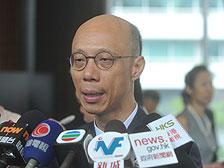
Clean air:  Secretary for the Environment KS Wong
briefs the media on pre-Euro IV diesel commercial vehicles
.


The Environmental Protection Department has raised by $3 billion its proposed subsidy to phase out pre-Euro IV diesel commercial vehicles, to a total cost of $11.71 billion.

Speaking to the media today, Secretary for the Environment KS Wong said the proposal strikes a balance between transport trade concerns and public health.

He appealed to the industry to phase out the vehicles as soon as possible to improve roadside air quality, although retirement deadlines for the vehicles will be deferred by one year to address its concerns.

In a paper tabled to the Legislative Council Panel on Environmental Affairs, the department proposed an incentive-cum-regulatory approach, while also limiting the service life of newly registered diesel commercial vehicles to 15 years, including goods vehicles, minibuses and non-franchised buses. 

The department said the proposal will reduce vehicle emissions of respirable suspended particulates and nitrogen oxides by 80% and 30%.

As at the end of March, there were 131,200 registered diesel commercial vehicles in Hong Kong, of which 84,600 were pre-Euro IV.

If approved by the council, a new regulation will be proposed under the Air Pollution Control Ordinance, imposing requirements for granting vehicle licenses under the Road Traffic Ordinance.

The proposed regulation will then be tabled to the council in late October or early November for negative vetting, to be implemented in the first quarter of 2014.

For the video and more information: 
http://www.news.gov.hk/en/categories/environment/html/2013/09/20130924_141551.shtml

South Korean Updates: ‘Car-Free Week’ to be held from Sep 30 to Oct 6 (26 Sep 2013)

MINISTRY OF ENVIRONMENT REPUBLIC OF KOREA


‘Car-Free Week’ to be held from Sep 30 to Oct 6
webmaster
2013.09.26

Marking World Car Free Day on September 22 every year, the Ministry of Environment (MOE) will hold ‘Car-Free Week’ for one week from September 30 to October 6 across the nation.

World Car Free Day, first led by the town of La Roche in France in 1997, has become a global event joined by 2,158 cities in 39 countries worldwide with an aim to give up using cars at least for one day.

MOE has carried out campaigns to reduce greenhouse gas emissions by using fewer cars with local governments and civic groups since 2008.  

The dates of this year’s Car-Free Week, which is supposed to fall from September 22, are adjusted considering Chuseok holidays. The theme of Korea’s Car-Free Week is ‘Clean Air- It’s your move!’ quoting the slogan of European Mobility Week.

MOE and Metropolitan Air Quality Management Office (MAMO) opened an official website for car-free campaign (www.carfreeday.kr) to raise citizens’ awareness and participation in the event.

As a part of street events, a polar bear’s free hug event and photo session will be held on the 30th in Gwanghwamun square, and an exhibition of environmentally-friendly works will be staged by October 6 in Gwanghwamun station.

In addition, the officials working in Government Complex in Seoul, Gwacheon and Sejong will voluntarily join the event of ‘commuting without a car’ on September 30.
The local governments and civic groups across the nation will designate a specific day for car-free day from September 30 and carry out campaigns to promote the use of public transportation.

Source: 

Wednesday, September 25, 2013

Chinese Updates: China announces pricing policy for fuel upgrade (24 Sep 2013)

China announces pricing policy for fuel upgrade
Xinhua, September 24, 2013

Chinese drivers will have to pay more in fuel prices amid the country's drive to reduce air pollution through upgraded fuel quality.
In the next two years, the prices of motor gasoline and diesel that meet the national "fourth-phase" standard will be raised by 290 yuan ($46.8) per ton and 370 yuan per ton, respectively, the National Reform and Development Commission (NDRC), the country's top economic planner, said on Monday.
After 2017, the prices of motor gasoline and diesel that meet the national "fifth-phase" standard will be lifted further by 170 yuan per ton and 160 yuan per ton, respectively, said the NDRC.
China has announced stricter motor fuel standards in a bid to reduce harmful emissions after smog blanketed much of the country at the beginning of 2013.
The State Council, China's Cabinet, has mandated that sulphur content for both gasoline and diesel be set at no more than 10 ppm (parts per million) by 2017, a reduction from the fourth-phase standard of 50 ppm.
Beijing is the only city in China to have already adopted the "fifth-phase" standard, equal to Europe's Euro V vehicle emissions cap of sulphur content below 10 ppm.
Under the country's timetable of fuel quality upgrades, motor gasoline should meet the "fourth-phase" standard by the start of 2014 and motor diesel by the start of 2015; both gasoline and diesel should meet the "fifth-phase" standard by the start of 2018.
"The quality of fuel is the most important factor affecting vehicle exhaust. Upgrading fuel quality can reduce waste emissions, help prevent smoggy weather, and improve air quality," said Zhou Dadi, an expert with the China Energy Research Society.
Air pollution is expected to fall substantially after the upgrade in China's developed regions, including Beijing, Shanghai, Jiangsu and Zhejiang, where the national "fourth-phase" standard of 50 ppm or below is used.
The rest of the country has adopted lower emission requirements, called the national "third-phase" standard, which allow the sulphur content of fuel to be as high as 150 ppm.
According to the NDRC, one-fifth of the particulate matter smaller than 2.5 micrometers in the country's air comes from vehicle emissions.
Compared to the "fourth-phase" standard, particulate matter emitted by vehicles using the "fifth-phase" standard will be reduced by 82 percent and nitrogen oxide compounds by 25 percent, joint research by the NDRC and the Ministry of Environmental Protection indicated.
However, Zhou said that upgrading fuel quality is only one necessary step to ease smog pollution.
"Multiple measures should be rolled out to fundamentally improve air quality," Zhou said.
Ms. Lei, a resident of Beijing, said that the government should further enhance its mass transit networks and make them less crowded so that more people will choose public transport instead of driving.
Lei said that the government should also reform certain policies aimed at reducing government vehicles.
"The government should take the lead in opting for public transport and promoting low-carbon commutes," Lei said.
The fuel quality upgrade does not mean an immediate price hike nationwide as local authorities are allowed to set prices in light of local conditions and are encouraged to initiate the upgrade ahead of schedule if conditions permit, according to the NDRC.
Analysts said the fuel quality upgrade means changes to fuel production facilities, adjustment in production methods as well as the upgrade of catalytic agents.
An NDRC official said the upgrade will increase production costs for oil companies by about 30 percent. Previous surveys showed billions of yuan could be invested in updating and renovating equipment for refineries.
"It's hard to precisely calculate the rise in production costs, as different refineries face different situations. The government has researched and arrived at a medium-level price hike so that the rise in production cost could be shared by both companies and consumers," said Dong Xiucheng, a researcher at the China University of Petroleum.

Chinese Updates: Pollution control plan to slash PM2.5 (25 Sep 2013)


Pollution control plan to slash PM2.5
2013-09-25


Reducing coal consumption, utilizing low-sulfur fuel at heart of program

Hebei and Shandong provinces and the municipalities of Beijing and Tianjin will cut their combined coal consumption by 83 million metric tons by the end of 2017, according to a new air-pollution control plan.

The plan, released by the Environmental Protection Ministry on its official website on Monday, sets targets for six municipalities, provinces and autonomous regions in the Beijing-Tianjin-Hebei region.

The plan aims to reduce the concentration of PM2.5 — particulate matter smaller than 2.5 microns in diameter that can go deep into the lungs — by about 25 percent from 2012 levels in Beijing, Tianjin and Hebei; by 20 percent in Shanxi and Shandong provinces; and by 10 percent in the Inner Mongolia autonomous region.

Measures that will achieve the goals include effectively reducing production capacity in many industries and controlling total coal consumption within the region.

In the steel industry, for example, Hebei is required to reduce its steel production capacity by at least 60 million tons by 2017. Shandong will cut its production capacity by 10 million tons by 2015.

The two provinces will also reduce their coal consumption by a combined 62 million tons in five years, accounting for almost 75 percent of the regional target.

The 60-million-ton quota will be allocated to cities and enterprises on Friday, said Chen Yongjiu, director of the Hebei Development and Reform Commission.

"Hebei will also cut the province's coal consumption by 40 million metric tons by 2017," Chen said. "The gap will be filled with electricity originating from outside the province, plus natural gas and renewable energy such as wind and solar power."

He said Hebei has the natural conditions to develop wind power. Its current production capacity is 10 million kilowatts.

As one of the biggest coal producers and consumers in China, Shandong has both the capacity and the obligation to reduce emissions, said Qiao Naizhen, director general of the Shandong coal industry bureau.

"I think the coal enterprises should make efforts to readjust their industrial structure to seek sustainable growth, developing some coal-related emerging industries, such as coal equipment manufacturing, modern logistics and high-end services," Qiao said.

According to the plan, coal consumption, as a proportion of Beijing's energy mix, will drop from its current mark of 25 percent to less than 10 percent by 2017.

Other major measures in the plan include comprehensive prevention and control of volatile organic compounds, starting with oil-gas recovery in all gas stations, storage tanks and tankers in the region before 2015.

Another key factor that affects the region's air quality is traffic. Public transportation will carry at least 60 percent of Beijing and Tianjin's passengers by the end of 2017, the plan said.

The plan specifically emphasized the importance for the country's three major fuel providers — Sinopec, China National Petroleum Corp and China National Offshore Oil Corp — to supply high-quality fuel with low sulfur content to the region on schedule, because previous experience shows that fuel-quality upgrades always lag behind vehicle upgrades.

The plan also asked several cities, including Beijing, Tianjin and Shijiazhuang, to implement policies such as subsidies to encourage taxi drivers to upgrade their vehicles' exhaust purification devices.

"Taxis are perhaps the most frequently used automobiles in cities, running more than 100,000 kilometers every year and emitting large amounts of pollutants into the air," said Ding Yan, deputy head of the Environmental Protection Ministry's vehicle emissions control center.

Ding said Hong Kong has already issued policies to help taxi drivers update their exhaust purification devices, which usually become invalid after the vehicles have been driven about 200,000 km. The fee is covered by the local government.

The success in meeting the targets will be evaluated every year by a special assessment team formed by the government and third parties, said Wang Jian, deputy head of the ministry's pollution prevention and control department.

He said the third parties may include industry associations, experts and think tanks, but the roles each party and the government will play have not been decided yet.

The six provinces, autonomous region and municipalities of the Beijing, Tianjin and Hebei cluster, plus Liaoning province, consume 43 percent of the country's coal, produce more than half the country's steel and suffer the most severe air pollution, Wang said.

Ju Chuanjiang from Shandong province and Zheng Jinran from Hebei province contributed to this story.

Sunday, September 8, 2013

Seminars: Atmosphere-biosphere Interactions: Impacts of Global Environmental Change on Air Quality, Food Security and Public Health organized by CUHK on 12 Sep 2013

Atmosphere-biosphere Interactions: Impacts of Global Environmental Change on Air Quality, Food Security and Public Health 

Date: 12/9/2013
Venue: Room 233, Wong Foo Yuan Building, Chung Chi College
Time: 16:30 - 1800

Chinese Updates: Shanghai unveils daily air-quality forecasts (3 Sep 2013)

Shanghai unveils daily air-quality forecasts
2013-09-03

The new 24-hour forecast includes the Air Quality Index, the pollution level and the primary pollutant, and is available for three time periods during the day: 8 pm to 6 am; 6 am to 12 am; and 12 am to 8 pm.

The time divisions aim to provide more convenient information according to the daily bedtimes and outdoor schedules of residents.

The number of pollutants changes throughout the day according to weather conditions, said an expert from Shanghai Environmental Monitoring Center, local news portal eastday.com reported.

The expert said the air-quality forecast is still being tested, and it cannot be completely accurate, especially during heavy pollution. Local environmental protection departments will try to launch more detailed forecasts in different districts after more monitoring sites have been set up, the expert added.

New standards from the national authority will bring upgrades to the city's 10 air-quality monitoring points to detect six pollutants, including respirable suspended particles, particles with a diameter of 10 micrometers or less, and PM2.5 fine particles.

Meteorological authorities also started issuing air-pollution forecasts on the national level on Sunday, the China Meteorological Administration announced on Monday.

The National Meteorological Center, a department under the top weather administration, is in charge of the forecasts, which will use a six-grade scale, with the first grade meaning excellent air conditions.

Higher grade numbers mean conditions are less conducive to pollutants diffusing, spreading and disappearing, according to a statement from the administration on its official website.

Each day, the center will update forecasts for the coming 24 hours at 8 am and 8 pm.

The statement said that the move would assist the government and the meteorological authority in making policies in the event of major air pollution, while it will also give the public more convenient access to air pollution information.

Chinese Updates: Beijing toughens pollution rules for cleaner air (3 Sep 2013)

Beijing toughens pollution rules for cleaner air
2013-09-03
Beijing on Monday unveiled a package of measures, including cutting vehicle emissions and curbing industrial pollution, in a bid to improve air quality in the often smog-shrouded city.

The package is part of an action plan released by the municipal government, which has pledged to reduce PM2.5 density by 25 percent or more by 2017.

According to the five-year clean air action plan (2013-2017), the municipal government will restrict the number of new cars on the road each year from January 2014.

By 2017, the number of vehicles in the city is expected to be no more than 6 million, according to the package. The city had 5.35 million vehicles by the end of July, according to figures from the Beijing Traffic Management Bureau.

By promoting new-energy and small-displacement vehicles, reducing the intensity of vehicle use and strictly enforcing regulations, the government expects to reduce total vehicle fuel consumption by 5 percent or more compared with 2012.

The city's traffic management and environmental protection bureaus will prepare traffic control rules for passenger cars by the end of 2013, which will mainly focus on time and area restrictions. The rules are expected to be implemented in 2014.

The municipal government has also vowed to improve the city's public transport and introduce a comprehensive public bicycle rental system by 2017, in order to make public transportation account for 60 percent of total vehicle trips made in the city.

Under the plan, air quality will improve significantly by 2017, with PM2.5 density controlled to around 60 micrograms per cubic meter.

PM2.5 are airborne particles measuring less than 2.5 microns in diameter which can pose health risks.
Vehicles in the city are considered a major contributor to Beijing's pollution -- and one that keeps growing.

A report issued by a research team under the Chinese Academy of Sciences revealed that vehicle exhaust fumes are among Beijing's top sources of air pollution, contributing to 22.2 percent of PM2.5 in the city, exceeding the figure for industry emissions.

"In order to curb vehicle emissions, we have to introduce a market mechanism to reduce intensity of vehicle use," said Li Kunsheng, an official in charge of vehicle emission management with the Beijing Municipal Environmental Protection Bureau.

Li said that government departments should make changes to parking costs and raise fuel prices, with the extra money used to deal with emission reduction.

"But both means should be carried out carefully as they may affect people's livelihoods," Li added.

PLANTS UPGRADED OR SHUT DOWN
In order to clean up the city's air, the Beijing municipal government also rolled out measures to curb industrial pollution.

According to the action plan, 1,200 polluting companies will be ordered to upgrade or close parts or all of their facilities in the years to 2016.

Authorities will identify polluters in township- and village-level industrial zones and shut them down if they fail to meet pollution reduction targets, said the plan.

The total amount of sulfur dioxide, nitrogen oxides, dust and volatile organic compound emissions will be a prerequisite of environmental impact assessments for any new projects starting this year.

In regions or industries that fail to meet air pollution reduction targets, no new projects that emit major air pollutants will be given regulatory approval as of 2013.

The local government will push forward water and electricity pricing reforms to raise prices for big water and power users to drive them to upgrade or shut down their polluting, energy-guzzling facilities as early as 2014.

The authorities will also increase discharge fees for sulfur dioxide and nitrogen oxide emissions this year and levy a new fee for discharge of volatile organic compounds next year. It will start a pilot emissions trading scheme for major polluters in 2014.

Companies that break environmental laws will be blocked from receiving bank loans, fund-raising through initial public offerings and value-added tax breaks starting this year, under the plan.

The action plan has set a tough target that needs involvement and concerted efforts from many departments, said Yu Jianhua, the air and environment director with the Beijing Municipal Environmental Protection Bureau, which is also one of the main composers of the plan.

More than 50 government officials as well as company executives have been made responsible for the implementation of the measures, according to Yu.

He said the measures, while improving the capital's air quality, will also help promote the upgrading of its industrial structure and optimize its economic development mode.

"In the meantime, the environmental protection awareness of the public will be dramatically uplifted," he added.

Yu, however, noted that neighboring provinces and municipalities will also need to intensify their efforts to curb pollution.

Beijing is surrounded by heavy-chemical industrial bases featuring iron and steal, building material, thermal power, and cement, that contribute significantly to the capital city's air pollution.

"Beijing's air quality improvement will be realized only if the overall environment at regional level is improved," Yu said.

Monday, August 19, 2013

Taiwanese Updates: 環保署與美國太空總署(NASA)合作,監測南海大氣品質 (13 Aug 2013)


環保署與美國太空總署(NASA)合作,監測南海大氣品質
提供單位:行政院環境保護署監資處
發布日期:2013.08.13

新聞圖片
環保署與美國太空總署(NASA)及部分東南亞地區國家合作,整合各國監測設備,共同推動「七海計畫」(7 South East Asian Studies, 7-SEAS),自本(102)年2月開始,在泰緬邊境、越南北部、我國鹿林山、恆春、東沙島及南沙太平島等地監測大氣品質及比對精密儀器,前後持續約4個月。這是國際間首度對南海地區大氣品質進行系統性的監測及儀器比對,成果備受矚目,日前已獲國際知名學術期刊「大氣環境(Atmospheric Environment)」接受,將收錄28篇國際合作的研究成果,預計於本年底以專刊方式發表。 

        環保署表示,「七海計畫」是由美國太空總署策劃推動的國際性大氣監測活動,主要參與國家包括我國、泰國、越南、印尼、菲律賓、新加坡及馬來西亞等7個國家,目的在探究東南亞地區火耕及農廢燃燒(統稱生質燃燒)污染物的跨境長程傳輸行為,以及生質燃燒與大氣污染物、環境、輻射、和氣候之間的交互作用。 

        配合這次監測及實驗活動,環保署首度提供一組空氣品質監測儀器,遠赴泰國安康山(Doi Ang Khan)部署,參與實驗比對。整體實驗結果,除了揭露中南半島生質燃燒污染物的化學組成及特性外,根據監測數據分析結果,初步發現這類生質燃燒污染物,會伴隨週期性大氣系統變化,在3公里以上高空長程輸送,可能對台灣西部平原與恆春半島的空氣品質造成影響。 

        我國因恰好位於東南亞大氣環流傳送之下風處,為掌握中南半島生質燃燒的污染物傳輸機制飄送軌跡,環保署在98年間即與國科會、海巡署、中央大學、東沙海洋國家公園及高雄市海洋局等機構合作,在東沙島設置空氣品質監測站;99年間並與美國太空總署合作,在東沙島各派駐一部監測車,進行將近半年的合作觀測;101年並在南沙太平島裝置太陽輻射儀。 

        環保署指出,延續過去幾年的國際合作經驗,為今年這項大規模及系統性的聯合觀測及實驗,奠定紮實基礎。今年的活動,除了美國及東南亞地區國家參與外,國內參與的機構包括環保署、國科會、以及中央大學等14個學術研究機構。 

        整體觀測及實驗內容主要以地面測站資料(包括泰緬邊境安康山測站、越南北部山羅與楊白測站、我國鹿林山測站、恆春測站、東沙及南沙太平島測站等),結合衛星遙測、雷達與地面國際監測網,同步進行基線資料整合研究。我國福爾摩沙二號衛星特別於實驗期間配合時程調整,取得中南半島超高解析度影像,以供判讀比對燃燒類型與地點。顯見我國在大氣品質監測方面的量能與技術水準,已充分國際接軌,未來有機會成為東南亞地區大氣品質監測相關活動的樞紐。 


Wednesday, August 7, 2013

Chinese Updates: Beijing's 1,000 electric taxis could help smog (6 Aug 2013)

Beijing's 1,000 electric taxis could help smog

China Daily, August 6, 2013

Beijing is expected to have more than 1,000 electric taxis by the end of this year which will help reduce emissions in the city, Beijing Times reports.
The city's Changping District has added 50 new electric taxis and plans to introduce more in the second half of this year, bringing the total number of the environmentally-friendly vehicles to more than 1,000, according to Beijing Municipal Commission of Transport.
It is understood that currently electric taxis in Beijing have all been piloted in the suburbs due to mileage limitation and charging station. Every taxi can get around a 3,000 yuan subsidy per month from the government.
The 'green' taxis will also help reduce pollution in the city where the dangerous levels of smog have dominated the headlines for months.
The city has around 66,000 taxis in total.

Indian Updates: Mumbai to get pollution information on 15 screens (5 Aug 2013)

Clean Air Initiative


Mumbai to get pollution information on 15 screens
Posted by Kathleen Dematera on 5 Aug 2013
By Pratibha Masand, The Times of India
August 1, 2013
MUMBAI: Real-time weather information and pollution levels will soon be available at big traffic intersections in the city. By mid-2014, the city will get air quality monitoring systems at ten locations, data from which will be displayed on big screens at 15 of the busiest crossings. The city is also likely to get a second Doppler radar.
Under the System of Air Quality Forecasting and Research (SAFAR), the data generated by the air quality stations will be sent to the weather bureau through GPRS, and after it is processed, passed on to civic authorities.
The System of Air Quality Forecasting and Research (SAFAR), a project of the Indian Meteorological Department (IMD) and the Indian Institute of Tropical Meteorology (IITM), will generate air quality data for the public. The information will be available via SMS and email, based on subscription. If the threshold of any pollutant is crossed, an alarm will be raised. The air quality stations will be distributed in a way to generate data in as localized a way as possible.
"The initiative is by the ministry of earth sciences," said K S Hosalikar, who has taken over from N Y Apte as the deputy director general of IMD, Mumbai.
"The ten air quality stations will include Panvel and Thane. Observations will be micro-level; sensors at the stations will monitor levels of carbon, sulphur dioxide, ammonia, dust, smoke and greenhouse gases," he said.
Thirty more automatic weather stations are in the pipeline. Hosalikar said the IMD will sign a memorandum of understanding (MoU) with the BMC to procure sites for the stations.
The sensors at every station will be location-specific. "For instance, if a particular area has more complaints of acid rain, the station will measure ammonia levels," Hosalikar explained. "We will make sure that the sensors are neither too close nor too far from a pollution source like a factory. This will help us to get an unbiased measurement of pollution."
About getting another Doppler radar, he said referring to the S-band radar installed about three years ago, "In a city like Mumbai, one Doppler radar is not enough. The Met department is hopeful of setting up another radar. We have given a projection for a C-band radar, which will solve the dual purpose of tracking regular weather and helping with aviation signals (S and C bands are frequency ranges)."
Incidentally, the BMC started 33 weather stations earlier in the year, bringing the total in the city to 60.
"Our stations can measure all aspects of the weather, but we collect only rainfall data during the monsoon," said Mahesh Narvekar, head of the BMC's disaster management cell.
Source:

Saturday, August 3, 2013

Chinese Updates: Chinese cities heavily polluted in first half (3 Aug 2013)

Chinese cities heavily polluted in first half

Xinhua, August 3, 2013

The air in Chinese cities was heavily polluted in the first half of 2013, the Ministry of Environmental Protection (MEP) said Friday.
"The air pollution situation in Chinese cities is severe," according to MEP air quality readings for 74 cities and three metropolis agglomerations.
Combined average air quality readings for the 74 cities met standards on 54.8 percent of the days in the first half of 2013, while 2.8 percent of days were heavily polluted, according to the readings.
Air in the Beijing, Tianjin and Hebei region was heavily polluted for 26.2 percent of days in the first half of the year, making it the worst of the three metropolis agglomerations monitored by the MEP.
The other two metropolis agglomerations monitored were the Pearl River Delta in south China and the Yangtze River Delta in the east.
Eight bouts of dusty weather hit China in the first half of 2013 and lasted a total of 21 days, affecting the northwestern and northern regions. The days unable to meet air quality standards in key environmental protection cities added up to 157, including 38 days of heavy pollution which soared 245.5 percent in comparison with the same period last year, the MEP readings said.
Acid rain hit 135 cities nationwide in the first six months of 2013, including 23 cities severely affected. Cities in Zhejiang, Jiangxi, Fujian and Hunan provinces and Chongqing municipality were hard hit by acid rain.
Water in the Yellow River basin was "moderately polluted" in the first half of 2013, and the Haihe River in north China was "seriously polluted." The Dianchi Lake in southwest China's Yunnan Province was also seriously polluted, according to the MEP.

Friday, August 2, 2013

Chinese Updates: Ozone adds to dangers of pollutants (1 Aug 2013)

Ozone adds to dangers of pollutants

China Daily, August 1, 2013

Air quality report from ministry paints worrying picture for cities
Ozone has become a major air pollutant in addition to fine particles, posing an even higher risk, according to a report released on Wednesday.
The air quality report from the Ministry of Environmental Protection covers three key areas and 74 cities during the first half of 2013.
The average levels of ozone in Beijing, Tianjin and Hebei province, the Yangtze River Delta area, and the Pearl River Delta area all exceeded the national level by about 20 percent from January to June.
Baoding in Hebei province recorded the highest reading for the daily average ozone level — 500 micrograms per cubic meter — more than twice the national level.
Although ozone in the stratosphere blocks high levels of ultraviolet from reaching Earth, it is highly destructive to the respiratory tract, according to research findings.
High levels of ozone are also irritating to the eyes and may cause irreversible damage to the lungs and central nervous system.
The report says that based on the data for June, air pollution caused by ozone in the Yangtze and Pearl River delta areas was even more serious than pollution caused by PM2.5 — particulate matter smaller than 2.5 micrometers in diameter that can reach deep into the lungs.
Ozone is more hazardous to human health than PM2.5, more complicated and harder to control, according to Zhao Hualin, head of the pollution prevention and control department at the Ministry of Environmental Protection.
Zhong Liuju, an atmospheric environmental expert from Guangdong province, said ozone is also dangerous because of its invisibility, which means that pollution can be severe even on blue-sky days.
Chai Fahe, vice-president of the Chinese Research Academy of Environmental Sciences, said high levels of ozone can also enhance the process in which PM2.5 is formed.
Chai said ozone does not come directly from emissions involving human activity, but is formed when there is strong sunshine and high temperatures through the reaction of nitrogen oxides and volatile organic chemicals.
He said one way to control ozone levels is to reduce nitrogen oxides, which come mainly from vehicle exhaust emissions.
In Baoding, the city government has listed ozone as one of the major pollutants in its plan to improve air quality.
Measures have been taken to reduce exhaust emissions by removing highly polluting vehicles from the roads, restricting barbecue stalls in the open air and removing small boilers, said Chen Zhenhui, an official from the city's environmental protection department.
The report also said that almost 40 percent of the 74 cities that publicized their readings failed to meet the national standard for fine particle pollutants — less than 35 micrograms per cubic meter — for more than three months in the first half of the year.
In Hebei, seven cities are on the top 10 list for having the most severe air pollution.
Shijiazhuang, the provincial capital, saw fewer than 20 days of good air quality in the first six months of the year.
A provincial action plan for air quality, which includes much tougher measures to cut major pollutants in the next five years, especially PM 2.5, will be released soon, according to an official from the provincial environmental protection department in Hebei, who declined to be named.
Four cities in the province — Shijiazhuang, Tangshan, Langfang and Baoding — were recently included on the central government's list of key areas for air pollution control.
The province has set emissions caps for major pollutants from highly polluting industries, such as the thermal power and iron and steel industries.
The official said the caps will come into force from July 1, 2014, adding that other measures will also be taken, such as strengthening supervision and building early warning and emergency response systems.
The situation for the region of Beijing, Tianjin and Hebei province is even more worrying.
Its PM2.5 level was recorded at 115 micrograms per cubic meter, more than three times the national standard, meaning that no cities in the area had good air quality.

Thursday, August 1, 2013

Chinese Updates: Beijing at center of China's worst area for poor air quality (1 Aug 2013)

Beijing at center of China's worst area for poor air quality

Shanghai Daily, August 1, 2013

The Beijing-Tianjin-Hebei region suffered the worst air quality in China in the first six months of the year with all cities in the region recording excessive PM2.5 pollution, according to a Ministry of Environmental Protection report.
Vehicles move slowly in dense smog in Beijing. [File photo]
Poor air quality was experienced for more than a fifth of the days in June in Beijing, as well as neighboring Tianjin and Hebei Province, according to ministry air quality readings.
Combined average air quality readings for 74 cities across China met standards for over half the days in June, the report said. The Pearl River Delta in south China had good air quality for nearly 90 percent of June.
However, the air in Beijing, Tianjin and Hebei was heavily polluted for about a quarter of the first half of the year.
A ministry official said the major pollutant in Beijing was PM2.5.
The average reading for PM2.5, or dangerous airborne particles measuring less than 2.5 microns in diameter, in the 74 cities in the first half was 76 micrograms per cubic meter.
But in Beijing and its surrounding areas, the average reading was 115 micrograms per cubic meter.
A ministry official cited coal-burning, automobile emissions, construction projects and industry as the major causes of the heavy pollution.
Environment Minister Zhou Shengxian said last week that the government was making an action plan to improve air quality during the 2013-2017 period.
Environmental authorities are drafting a plan to reduce air pollution in the Beijing-Tianjin-Hebei region, according to China Central Television. The plan will cover Beijing, Tianjin, Hebei, Shandong, Shanxi and Inner Mongolia, CCTV said.
It will require cities and provinces to sign contracts to reduce carbon consumption and eliminate industries that cause heavy pollution.