Showing posts with label birds. Show all posts

Wednesday, April 16, 2014

Philippines News: Behind Munti condos, a treat for birding eyes (12 April 2014)

Behind Munti condos, a treat for birding eyes

By 


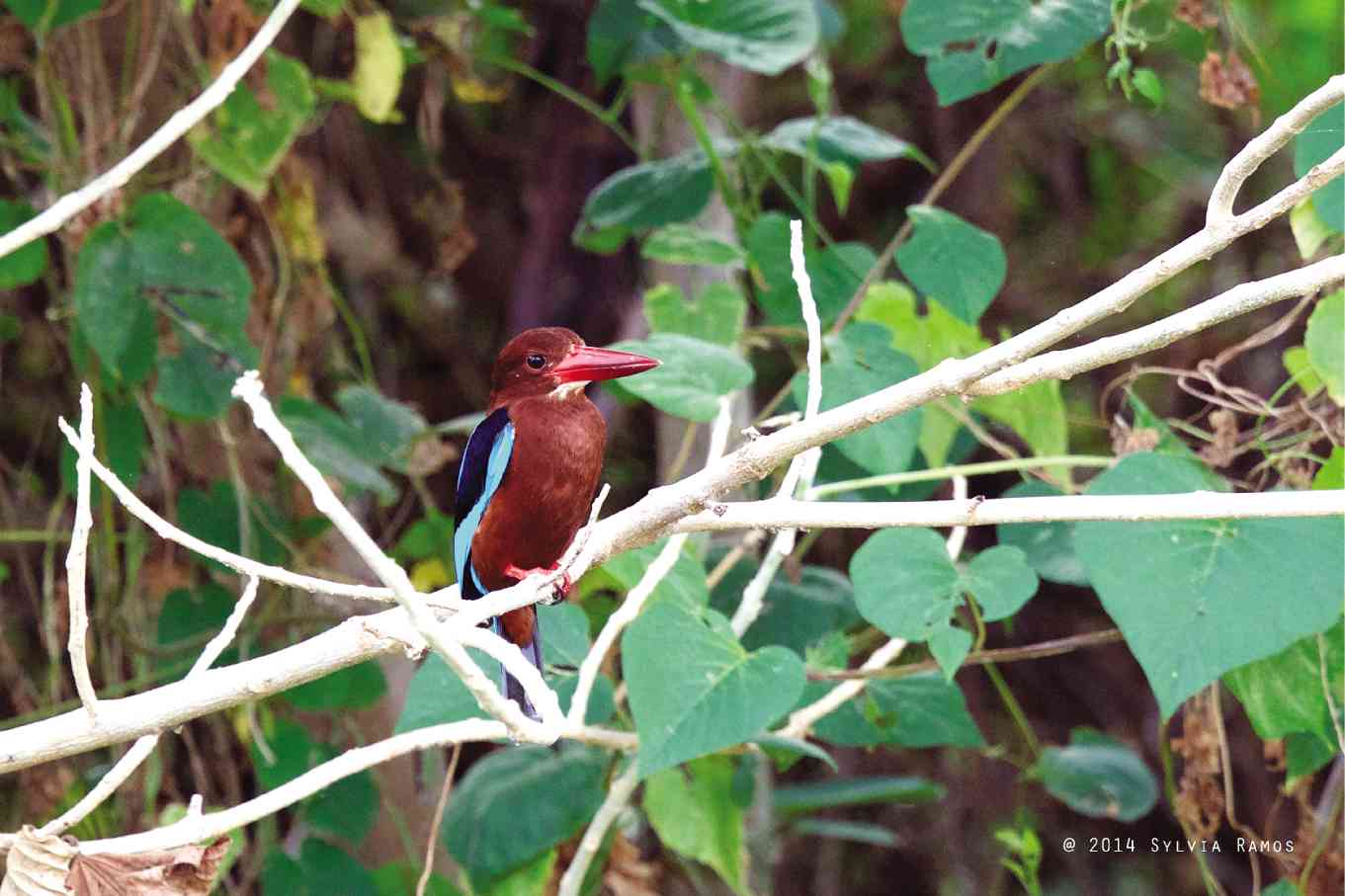
ROYALTY IN RESIDENCE The White-throated Kingfisher is just one of the 70 bird species documented by the Wild Bird Club of the Philippines in a “mini-forest” surprisingly thriving in the Ayala-Alabang area. SYLVIA RAMOS/CONTRIBUTOR
MANILA, Philippines —To celebrate Earth Month, wild bird photographers and environmental conservation advocates Sylvia and Tonji Ramos recently held a bird-watching walk for a small group of residents at Filinvest Corporate City in Muntinlupa City.
“We are always happy to share our love for birding with other people. It’s a fun and rewarding hobby,” Sylvia said.  “People usually say they only see Eurasian Tree Sparrows (maya) in the city. I tell them there are other birds too—kingfishers, woodpeckers, sunbirds, flycatchers and more. They just haven’t seen them because their birding eyes have not yet been opened.”
“We have documented more than 70 bird species in Ayala Alabang alone,” she said. “It has made us realize that the simplest things such as planting the right trees or vines can make a place more bird-friendly. We want urban planners, real-estate developers and community members to be aware of this.”
The couple are members of the Wild Bird Club of the Philippines (WBCP), which was organized in July 2003 to promote bird watching to the general public and keep records of bird sightings in the country.
Since 2005, the WBCP has hosted annual bird festivals that offer guided tours and venues for information-sharing. The number of local and foreign participants from the east Asian region has grown steadily by the thousands through the years, making the festival one of the largest ecological projects in the country today.
Also joining the March 29 walk were retirees Imelda and Heinz Stumpf, who spend half of the year in Germany and half in the Philippines.
“My husband and I were very eager to join the bird-watching tour,” Imelda said. “We’ve seen many interesting birds when we go on our regular walks and we were curious to know their names. It is the first outdoor activity we have joined and it’s suitable for senior citizens like us since the sports and social events held in the area are extremely noisy and cater only to more physically active groups.”
In Germany, she noted, there are strict regulations protecting both wildlife and communities from being disturbed by loud music and construction noise.
As she spoke, an olive-brown flyer darted over a nearby house. “Isn’t that the bird we often hear singing on our morning walks?” she asked her husband, who hurriedly adjusted his binoculars to see the bird more clearly.
Stream offers haven
“That’s a Yellow-vented Bulbul,” Sylvia said. “It’s a resident bird that breeds in the Philippines and is found here year round.”
“We’ll see more birds at the water source,” she added, pointing to an undeveloped area with a running stream behind several condominiums, where the vegetation had largely remained untouched.
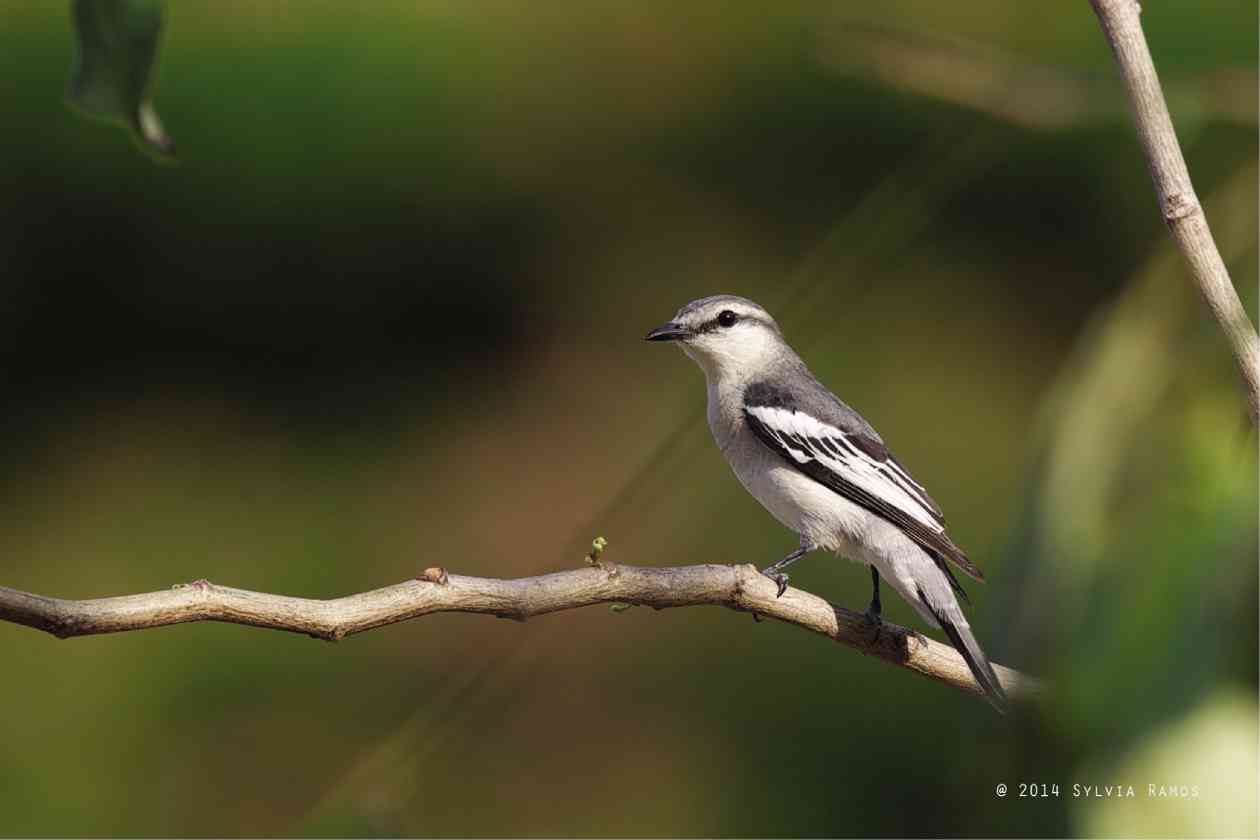
THE SIGHT of a Pied Triller rewards participants in a recent bird-watching tour in Muntinlupa City. SYLVIA RAMOS/CONTRIBUTOR
As Sylvia promised, the “mini-forest” behind the condos revealed a Barred Rail, a White-breasted Waterhen and a White-throated Kingfisher, perched either on the fallen branches or on the rocks by the grassy banks. The Kingfisher was hard to miss even from a distance, thanks to the bright blue spot on its plumage.
“There’s also a Little Egret, with its black legs and yellow feet, standing motionless in the water. It must be waiting for a fish,” adds Tonji, almost in a whisper, as he looked through his binoculars. “This stream is a great habitat for birds, some of them here to hunt for insects while others eat the fruits of the ficus trees along the banks.”
Nonstop sightings
The sightings continued: “Those are Black Crown Night Herons. The ones colored black, white and grey are the adults and the brown ones with white markings are their young.”

And then some more: “Those birds near the water are Yellow Bitterns,  Cinnamon Bitterns,  Barred Rails and  White-breasted Waterhens. They like to hunt for food around the edges of the water and near the tall grass.”
Cut the grass and you rob species like Grass Owls of their habitat, he explained.
Still, most of the “migrants” prefer the tree tops, like Brown Shrikes, Grey Wagtails and Arctic Warblers. The last are insectivores who visit the Philippines from August to May. Drive them out and you lose a major partner in controlling the insect population, Sylvia added.

Another group of 12 birds resting in a tree caught Tonji’s attention. “Those are  Chestnut-cheeked Starlings. It’s the first time we’ve seen them in the area. We’ve seen them flying north from Laguna province in big numbers, so this may have been a good pit stop.  They’re probably moving north to breeding grounds in Japan and Russia.”
The Ramoses have made it their calling to educate children and adults about endemic birds and environmental conservation.

Every year, schoolchildren visit the WBCP bird fair. Sylvia sadly noted, however, that while they could easily identify swans, flamingoes, penguins and other foreign birds because of the western shows or cartoons they watch, they could name only the maya and the Philippine Eagle among the 673 local species.
“There is a lack of information dissemination and environmental awareness in many of our schools. On one occasion, we were at La Mesa EcoPark waiting quietly to photograph a bird, when a school bus full of students arrived and they began running under the trees. They were laughing, shouting, trampling on tree saplings and pulling at plants. The reason? Their teacher made a game of gathering different leaves with no clear educational purpose, not bothering to identify the trees they came from.”

Wild but ‘proper’
People need to observe “proper behavior” when in the wild, whether it’s for bird watching, taking pictures or participating in an outdoor event, Tonji said. “Treat the habitat with respect; don’t leave your trash, destroy the plants and disturb the wildlife. The old adage of ‘take nothing but pictures’ applies to any site.”
“If you play loud music or speak loudly, you don’t get to hear the sounds of nature,” he stressed. “With a lot of sporting events now being held in mountains and (nature) trails, participants and organizers shouldn’t use loudspeakers, for example.  It signifies a higher level of learning and a higher class of event if they realize that biking or running through nature is about bonding with it rather than driving it away.”
Groups interested in taking a bird-watching tour in Filinvest City are advised to secure permission from the management


Read more: http://newsinfo.inquirer.net/593885/behind-munti-condos-a-treat-for-birding-eyes#ixzz2yjqzXpO7

Saturday, August 10, 2013

HK's Updates: BirdLife International Award Recognizes WWF’s Conservation Achievements (24 Jul 2013)

BirdLife International Award Recognizes WWF’s Conservation Achievements

Posted 24 July 2013  |  en  |  zh

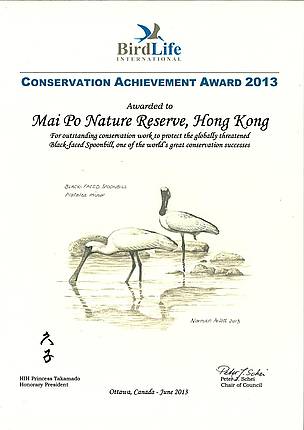
WWF-Hong Kong and the Mai Po Management Committee are honored to be the first-ever Hong Kong conservation organization to receive the BirdLife International Conservation Achievement Award. Presented in June, 2013, the award recognizes WWF and other conservation organizations’ efforts and achievements in protecting the endangered Black-faced spoonbill. The latest census has revealed a global population of over 2,700 birds, almost a ten-fold increase from a low of 288 individuals recorded in 1988-1990.

Underlining the robust cooperation that has taken place between Hong Kong and Taiwan, the two most important wintering sites for the Black-faced spoonbill, the award was also presented to the following parties from Taiwan: the Forestry Bureau of the Council of Agriculture, the Construction and Planning Agency of the Ministry of the Interior, the City of Tainan and Taijiang National Park

In 1988-1990, the first international census of the Black-faced spoonbill found a global population of just 288 individuals, and the species was considered at risk of extinction. Mai Po held the second-largest wintering population, with 50 birds present; while Taiwan hosted the largest wintering population. 

Conservation action since then has involved research into the species’ wintering habitat requirements, migration routes and breeding sites. Satellite tracking of birds from Hong Kong has proved to be important for the identification of their breeding grounds in Korea, which were found to be mostly in the demilitarized zone. Work on restoring and enhancing wetland habitats for the Black-faced spoonbill has also taken place at Mai Po and other sites.

After about 20 years of conservation work, the 2013 census revealed a global population of 2,725 birds, almost ten times the 1990 figure. Mai Po still supports the second-largest wintering population: around 350-400 birds winter in Hong Kong each year; more than the total global population in 1990. A population increase has also been seen at other wetland sites along the coast of China, including nature reserves at Haifeng, Zhangjiangkou and the Minjiang Estuary, where WWF Hong Kong has worked with the reserve authorities and local communities to improve waterbird protection and wetland management.

Although the future for Black-faced spoonbill is now considered to be more secure, they are still listed as an Endangered species on the IUCN’s Red List. WWF aims to continue its conservation work and provide Black-faced spoonbills with a high-quality habitat long in the future.


For more information: 

Sunday, May 19, 2013

UNEP: Loss and Degradation of Natural Habitats Threaten Migratory Birds, Pushing Species towards Extinction (10 May 2013)

 
Loss and Degradation of Natural Habitats Threaten Migratory Birds, Pushing Species towards Extinction


Bonn/Nairobi 10 May 2013 - The annual migration of an estimated 50 billion birds - around 19 per cent of the world's 10,000 bird species - is one of the world's great natural wonders, yet the critical staging areas migratory birds need to complete these journeys are being degraded or are disappearing completely.

These increasingly vulnerable sites, which act as stepping stones on migration routes, serve as a place for the birds to rest, feed and breed during their annual migration cycles. As a result of the degradation, some species may be extinct within a decade, while others are facing population losses of up to nine per cent each year.

Celebrated in over 65 countries on 11-12 May, World Migratory Bird Day 2013 will highlight the importance of ecological networks for the survival of migratory birds, the important human networks dedicated to their conservation, the threats migratory birds face, and the need for more international cooperation to conserve them.

Events to mark World Migratory Bird Day will include bird festivals, education programmes, presentations, film screenings and birdwatching trips.

"I fully support the global campaign to raise awareness about the threats to migratory birds from habitat destruction, overexploitation, pollution and climate change," said United Nations Secretary-General Ban Ki-moon. "I call for greater international efforts to restore and preserve migratory birds and the network of sites they need to survive as an important part of the environment on which we all depend."

Launched in Kenya in 2006, World Migratory Bird Day is organized by the Convention on Migratory Species (CMS) and the African-Eurasian Migratory Waterbird Agreement (AEWA)?two intergovernmental wildlife treaties administered by the United Nations Environment Programme (UNEP).

Many migrating birds - such as Cranes, Storks, Shorebirds and Eagles - travel thousands of kilometers across flyways that span countries, continents and even the entire globe. Yet pressures resulting from a growing human population, rapid urbanization, pollution, climate change and unsustainable use of natural areas are causing the loss, fragmentation and degradation of natural habitats along the birds' migration routes and threatening their survival.
Similar to a human transport system of harbors, airports and roads, migratory birds depend on these international networks of natural sites for food, safety, breeding and moulting?as well as for stopover areas which act as refueling stations between breeding and non-breeding areas.

Stopover sites of international importance for migratory waterbirds include the Wadden Sea, shared by Germany, the Netherlands and Denmark; Banc d'Arguin on the west coast of Mauritania; Bahia de Santa Maria in Mexico and the Saemangeum tidal flat in the Yellow Sea in South Korea.
Migratory waterbird species that depend on a network of intertidal habitats along the East Asian-Australasian Flyway (EAAF) are showing rapid decline and are amongst the world's most-threatened migratory birds. The decline is mainly caused by the fast pace of coastal land reclamation occurring in this densely populated region, particularly around key coastal staging areas in the Yellow Sea.
According to a 2011 report commissioned by the International Union for the Conservation of Nature (IUCN), the rates of decline in the region are among the highest of any ecological system in the world. At least 24 waterbird species using the flyway are heading towards extinction and many others are facing losses of five to nine per cent per year. According to the IUCN report, species such as the Spoon-billed Sandpiper could become extinct within a decade.

"Migratory birds and the challenges they face in many ways underline the ambition of multilateralism in a globalized world?it is only when countries work together in common cause that the survival and conservation of these species be ensured," said UN Under-Secretary General and UNEP Executive Director Achim Steiner.

"There are many reasons why migratory birds should be conserved?their beauty and behavior are a source of joy and inspiration for millions upon millions of people," he added. "But they also are part of the web of life that underpins nature's multi-trillion-dollar ecosystem services, while being in some countries, including Kenya, part of the nature-based tourism that generates 10 per cent of the nation's GDP."

This year, World Migratory Bird Day events will be celebrated in countries which share the African-Eurasian Flyways. In Kenya, for instance, a regional event will take place on the shores of Lake Elementaita - part of the Kenya Lakes Systems, a network of sites that supports 11 globally threatened bird species.
The area also sustains 75 per cent of the near-threatened Lesser Flamingo, and Lake Elementaita is known to be one of the world's major breeding colonies of the Great White Pelican. The event is being hosted by the Kenyan Wildlife Service (KWS) in cooperation with the UNEP/CMS and UNEP/AEWA Secretariats.

"The key message behind World Migratory Bird Day is that countries, dedicated organizations and people around the world need to work together to ensure that migratory birds can continue to travel, refuel and reach their destinations," said Bradnee Chambers, Executive Secretary of the CMS.

The global World Migratory Bird Day campaign is backed by a growing number of international partners, including: BirdLife International, Wetlands International, the Secretariat of the East Asian-Australasian Flyway Partnership (EAAFP), the International Council for Game and Wildlife Conservation (CIC) and UNEP.

In order to protect crucial staging grounds and thus conserve bird species, sophisticated systems such as the AEWA Critical Site Network (CSN) Tool are helping to summarize current knowledge about the network of sites used by migratory waterbirds in the African-Eurasian region.

The Report on the Site Network for Waterbirds in the AEWA Agreement Area, prepared by Wetlands International and BirdLife International using the CSN Tool information as a basis, revealed that less than half of the critical sites of AEWA waterbird populations had adequate protection.

"If maintained and continuously improved, this information can significantly help conservation efforts, but it is also revealing some disturbing gaps as the recent site network report has shown," said Marco Barbieri, Acting Executive Secretary of AEWA. "The bigger challenge, which has become obvious from the AEWA report, is that countries need to increase their efforts to fill the gaps in terms of adequate legal protection status and management of these sites."

FURTHER QUOTES
"Very often migrant birds are under huge pressure at the exact points where they are most vulnerable. Birds battling to reach the sea-shore descend into a limitless line of nets. Tiny falcons funnel through forests to be trapped in their thousands. Exhausted shorebirds find that the mudflats where they once refueled are now a sea of concrete, or circle wearily because their roosting sites have vanished" - Dr. Marco Lambertini, Chief Executive, BirdLife International.

"What does concern them (the waterbirds of the East Asian - Australasian Flyway) is that the network of sites they have traditionally depended on for safety, food, breeding and moulting is changing rapidly and usually for the worse. Areas of inter-tidal coastal flats of East Asia have undergone a steep and continuing decline in recent decades, threatening the migration routes of migratory shorebirds" - Spike Millington, Chief Executive of East Asian ? Australasian Flyway Partnership (EAAFP) Secretariat.

"Migratory waterbirds are spectacular and engaging ambassadors of wetlands. They connect people across the globe and the concerns about their conservation have played an important role in the creation of our organization" - Ms Jane Madgwick, Chief Executive Officer, Wetlands International.

"One of the truths about climate change is that no one species or habitat is immune from its effects. Therefore, the effort to meet the climate challenge and the effort to protect bird migration are deeply intertwined. Altered timeframes for migration (as temperatures rise), changed flight patterns (due to changing ecosystems) and reduced bird populations (due to extreme weather and drought) all provide ample evidence that the changing climate is already affecting migratory birds" - Ms. Christiana Figueres, Executive Secretary of the United Nations Framework Convention on Climate Change (UNFCCC).

"Migratory species are interesting because they highlight some of our own contradictions. We constantly aspire to move more freely around the world, yet we do exactly the opposite for migratory birds. We put hurdles on their journeys all the time. We make their travels more and more complicated. Nature actually dictates these movements of these species and we tend to forget that we are part of nature and should listen a little bit more to its rules" - Jean-Christophe Vi�, Deputy Director, IUCN Global Species Programme and Director, SOS ? Save Our Species.

Further statements marking World Migratory Bird Day 2013 can be found here.

Further Resources


For more information: 
http://www.unep.org/Documents.Multilingual/Default.asp?DocumentID=2716&ArticleID=9498&l=en&t=long

Wednesday, February 6, 2013

Indian Updates: Birds affected by climate change, says international study (5 Feb 2013)

Birds affected by climate change, says international study

Birds affected by climate change, says international study


Source: 

Sunday, December 2, 2012

Events: WWF - Hong Kong: The Big Bird Race 2013 (2 Feb 2013)

The Big Bird Race 2013


Organized by WWF- Hong Kong

Date: 2 February 2013 (Saturday)

Time: 6:30 a.m. to 6:30 p.m


Introduction

 / ©: So Wai Li

 / ©: WWF-Hong Kong
© WWF-Hong Kong
The Big Bird Race 2013 will be held on 2 February 2013 (Saturday) - International Wetlands Day, from 6:30 a.m. to 6:30 p.m.

Each team will be made up of four members who must participate in the entire Race: no replacements of individuals can be made during the race period. An additional non-bird watching driver and recorder are permitted to accompany each team. Teams will aim to record as many birds as they see – anywhere in Hong Kong – within the 12-hour period. Teams may start anywhere they choose, but must finish in the car park of Mai Po Nature Reserve.

Only species listed in either Categories A to D of The Avifauna of Hong Kong, (Carey et al. 2001), the Big Bird Race 2013 logbook, or those accepted by the Adjudicator will form part of the count, subject to the following:
  1. Birds must be unrestrained.
  2. Oiled or sick birds will not be counted.
  3. Species which have obviously been released from captivity within a few days of the Race will not be counted.
  4. All species must be recorded within the territory of Hong Kong SAR.
  5. Only species positively identified are acceptable.
  6. Attracting birds with tape-recorders or any digital audio equipment is prohibited.
The details of team enrolment will be provided in due course. Please visit our website for the latest updates.

Award
To encourage participation and support, a number of awards and exciting prizes will be presented to participating teams, including:
  • Most Birds Seen
  • Bird of the Day
  • Most Wetland Birds Seen
  • Dip of the Day
  • Fundraising Awards


Why Support Big Bird Race?

  • To raise funds to help maintain Mai Po as an internationally important wetland;
  • To discover the amazing diversity of bird species in Hong Kong;
  • To learn from professional bird watchers;
  • To appreciate the natural beauty of Mai Po and Deep Bay and have fun while doing so;
  • To raise your company’s corporate profile and brand exposure by becoming a sponsor.
For more details about corporate sponsorship, please contact Mr. Marius Chow at  2864 1410 or Ms. Cammie Ma at  2864 1462 or emailevents@wwf.org.hk for more information.