Showing posts with label conservation. Show all posts

Tuesday, October 29, 2013

Vietnam Update: ASEAN urges more eco-system protection (8 Oct 2013)


ASEAN urges more eco-system protection Thứ ba, ngày 08 tháng 10 năm 2013 cập nhật lúc 15:49
ASEAN has called for more protection to be offered to critical ecosystems in the region in the face of increasing environmental fears.
The appeal was made at the fourth ASEAN Heritage Parks (AHP) Conference in Tagaytay city, the Philippines, which ran from October 1-4.

Over 300 delegates from all ten ASEAN member countries joined representatives of regional and international ASEAN has called for more protection to be offered to critical ecosystems in the region in the face of increasing environmental fears.
The appeal was made at the fourth ASEAN Heritage Parks (AHP) Conference in Tagaytay city, the Philippines, which ran from October 1-4.
Over 300 delegates from all ten ASEAN member countries joined representatives of regional and international organisations to discuss strategies improving the management of the AHP network and other protected reserves.
The fourth conference was part of ASEAN efforts to prevent environmental degradation while implementing protective measures in areas of high conservation.

ASEAN countries, which together house more than 1,300 protected reserves, have joined international efforts to improve the management of the reserves, especially the ASEAN Heritage Parks.

source from :

Saturday, September 28, 2013

Public Lecture by HKU: Marine Biodiversity and Conservation of Hong Kong: Past, Present and Future on 5 Oct 2013

The University of Hong Kong
Sustainability@HKU
Marine Biodiversity and Conservation of Hong Kong: Past, Present and Future

Marine Biodiversity and Conservation of Hong Kong: Past, Present and Future

Introduction

Public Lecture co-organized by the Faculty of Science, School of Biological Sciences and The Swire Institute of Marine Science.
Date:
05 Oct 2013
Time:
11:00 - 12:30
Speaker:
Professor Brian Morton
Professor Emeritus of Marine Ecology
School of Biological Sciences, The University of Hong Kong
Date: October 5, 2013 (Saturday)
Time:
10:30 - 11:00 am Registration and light refreshments
11:00 - 11:50 am Public lecture
11:50 - 12:30 pm Panel and open discussion
Venue: Rayson Huang Theatre, Main Campus, HKU
Medium: English
About the talk:
While Hong Kong is surrounded by marine waters with a long coastline, the territorial sea area is relatively small (ca. 1,650 km2) and there are numerous conflicts with regard to the use of such a small marine environment ranging from ship navigation, ports, marinas and piers, to fisheries, sea bathing and diving, marine protected areas and, notably, the habitat of the Chinese white dolphin. Given the ever-increasing local human population and demands for land supply to build infrastructures (e.g. sites for bridge and causeways, the 3rd runway for the airport) and residential accommodation, reclamation has been proposed as a possible option to achieve this. There is also an on-going debate about whether the Government should turn the shore at Lung Mei into an artificial beach as a way to promote tourism and the local economy. Controversially too, the area around the marine park of Hoi Ha is being developed. In this talk, Professor Morton will talk to us about the history and character of our marine environment, the local rich marine biodiversity and the ecology and conservation of our marine environment, and then address the following questions:
- Should the Marine Parks and Reserve network be expanded? If so, where?
- How much more reclamation can there be in Hong Kong? If more is needed, what for and where?
- Can a swimming beach be built at Lung Mei? If so, why? And will it thrive?
- What is most needed to help scientists (Government and University), consultants and environmentalists plan a biodiversity strategy for Hong Kong?
Professor Morton’s talk will be followed by a panel and open discussion. Representatives from the Hong Kong Government, green groups and academia will be invited to serve as panel members. This public lecture and its panel discussion will be highly relevant to the Liberal Studies curriculum of local high schools and useful to graduate and postgraduate students who are studying environmental science and management.
Registration is required. Please visit http://www.scifac.hku.hk/events/comm/2013/marine for seat reservation and details. For enquiries, please contact School of Biological Sciences at 2299 0800.
For more information: 
http://www.sustainability.hku.hk/news-event/detail/marine-biodiversity-and-conservation-of-hong-kong-past-present-and-future

Sunday, September 22, 2013

Indian Updates: Bring states with rhinos under one conservation plan: WWF (22 Sep 2013)


Bring states with rhinos under one conservation plan: WWF
Bring states with rhinos under one conservation plan: WWFTNN | Sep 22, 2013, 03.50 AM IST


GUWAHATI: Expressing concern over spurt in rhino poaching in Assam, WWF-India has said that adoption of National Rhino Conservation Plan (NRCP) has become imperative for the protection of the species.

"After decades of conservation success, which resulted in the population of rhinos in Assam rising to more than 2,500 at present, the spurt in poaching over the last couple of years seems to indicate that poaching syndicates are strengthening. To avoid loss of these hard-fought gains, there is an urgent need for the adoption of NRCP for India," WWF-India said on the occasion of World Rhino Day on Saturday.

The NGO has asked Union minister of state for environment and forest, Jayanti Natarajan, to take the lead in putting NRCP in place by bringing together four rhino-bearing states of Assam,West Bengal, Bihar and Uttar Pradesh.

"The adoption of NRCP will increase coordination among the rhino-bearing states and enable sharing of best practices and information on poaching syndicates. This will help in better protection of Indians rhinos", said WWF-India's director of species and landscapes Dipankar Ghose.

The WWF-India has also pointed out that increasing use of firearms like AK-47 rifles in killing rhinos, especially at Kaziranga National Park, indicated growing sophistication and easy access to deadly weapons among poaching syndicates.

"The thirtieth rhino killed this year in India fell to poacher's bullets in Kaziranga on September 17. As India and rest of the world celebrate rhinos and their conservation successes on World Rhino Day, this latest killing is a grim reminder of the challenges being faces in protecting rhinos in India," the WWF-India said.

Of the 30 rhinos killed in the country, the majority of the casualties are from Assam which lost at least 25 one-horned pachyderms to poachers this year. In Kaziranga, 21 rhinos were killed by poachers, while Manas National Park and Pobitora Wildlife Sanctuary lost three and one rhinos respectively this year.

Source: 

Saturday, September 21, 2013

WWF: Marine Conservation Leadership Training Programme (Deadline for application: 30 Sep 2013)

Marine Conservation Leadership Training Programme

Posted 30 August 2013  

© Adam Minu

1. Programme Objectives

Marine Conservation Leadership Training Programme is a volunteer programme aims to train up local University students to become Marine Conservation Leaders. Through various marine and footprint related training workshops, voluntary services on different conservation and education works in WWF-Hong Kong, it is expected the trained leaders’ marine conservation knowledge and different interpersonal skills will be enhanced.

Objectives:
  • To build up the participants’ awareness and knowledge on marine environmental issues through workshops, hands-on experience and site visits;
  • To facilitate their attitude change towards a green and sustainable lifestyle and
  • To empower them as change agents and multipliers to spread the messages about marine conservation and sustainable lifestyle to a wider public.
2. Programme Content

2.1 Training Workshops
6 workshops will be provided to let participants have an in-depth understanding of general and marine environmental issues such as the concept of ecological footprint and sustainable seafood. Participants are expected to attend ALL workshops.

2.2 Voluntary Work
To enable participants to have a better understanding on WWF’s conservation and education works and to become a trained marine conservation leader, all participants are expected to contribute at least 50 service hours (outside training time) on various types of voluntary work for WWF-Hong Kong. 

2.3 Group Project
In order to apply the knowledge gained in the workshops, participants are required, in group of 6 to 7 people, to develop group projects to disseminate the marine conservation message to the wider community. 

2.4 Advanced Training
At the end of this programme, the 4 most outstanding participants will be selected by interview, and they would be able to attend an advanced training -- Open water scuba diving course, which would be conducted by a certified and experienced dive instructor.

2.5 Language
All training workshops will be conducted in Cantonese.

2.6 Acknowledgement
Participants who meet the following criteria will be rewarded a certificate of appreciation:
  1. Workshop attendance rate: 80% or above
  2. Contribute at least 50 hours of voluntary services, and
  3. Complete a group project to disseminate marine conservation messages.

3. Application Details 

3.1 Application
  • Return the completed and signed application form to WWF-Hong Kong by email to volunteers@wwf.org.hk.
  • Application deadline: 30 September, 2013 (Monday)
3.2 Interview and Results Announcement
  • Suitable applicants will be informed to attend an interview in early October.
  • Successful interviewees will be notified by email in mid-October.
3.3 Deposit
  • Selected applicants need to submit $800 deposit. It will be refunded upon completion of 80% training workshops, group project and 50 service hours.
4. Enquiries
Please contact WWF staff Mr. Chung for any enquires.
Tel. No.: 2526-1011 (> 2 > 2 > 4 > 2)
Email: volunteers@wwf.org.hk

For more information: 

Sunday, August 11, 2013

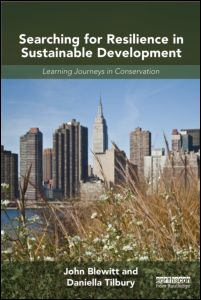
New Books: Searching for Resilience in Sustainable Development Learning Journeys in Conservation By John Blewitt, Daniella Tilbury (6 Aug 2013)

Searching for Resilience in Sustainable Development

Learning Journeys in Conservation

By John BlewittDaniella Tilbury

Descriptions:
Resilience is a term that is gaining currency in conservation and sustainable development, though its meaning and value in this context is yet to be defined. Searching for Resilience in Sustainable Development examines ways in which resilience may be created within the web of ecological, socio-economic and cultural systems that make up the world in. The authors embark upon a learning journey exploring both robust and fragile systems and asking questions of groups and individuals actively involved in building or maintaining resilience.
Through a series of wide ranging interviews the authors give voice to the many different approaches to thinking of and building resilience that may otherwise stay rooted in and confined by specific disciplinary, professional or spatial contexts. The book documents emerging trends, shifting tactics and future pathways for the conservation and sustainable development movement post Rio+20, arriving at a set of diverse but connected conclusions and questions in relation to the resilience of people and planet.
This book is ideal for students and researchers working in the fields of conservation, sustainable development, education, systems thinking and development studies. It will also be of great interest to NGOs and government officers whose interests and responsibilities focus on conserving or reconstructing biodiversity and system resilience.

Contents:
1. Introduction: Learning journeys and resilience in times of change
2. Resilience in Theory and Practice
3. Shifting Tactics?: Testing the resilience of a movement
4. Contesting Market Logics
5. Regenerative and Resilient Eco-cities
6. Risks, Transition and an Ecology of Circumstances
7. Education and Conservation: Building social resilience
8. Resilience, Sustainability and the Utopian Future
9. Destinations: Humpty Dumpty and the Search for Resilience

Saturday, August 10, 2013

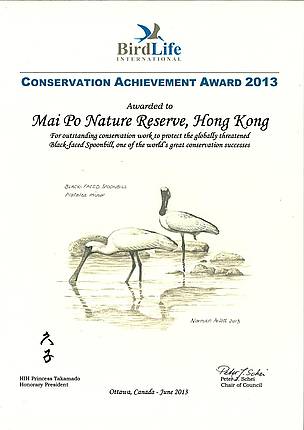
HK's Updates: BirdLife International Award Recognizes WWF’s Conservation Achievements (24 Jul 2013)

BirdLife International Award Recognizes WWF’s Conservation Achievements

Posted 24 July 2013  |  en  |  zh

WWF-Hong Kong and the Mai Po Management Committee are honored to be the first-ever Hong Kong conservation organization to receive the BirdLife International Conservation Achievement Award. Presented in June, 2013, the award recognizes WWF and other conservation organizations’ efforts and achievements in protecting the endangered Black-faced spoonbill. The latest census has revealed a global population of over 2,700 birds, almost a ten-fold increase from a low of 288 individuals recorded in 1988-1990.

Underlining the robust cooperation that has taken place between Hong Kong and Taiwan, the two most important wintering sites for the Black-faced spoonbill, the award was also presented to the following parties from Taiwan: the Forestry Bureau of the Council of Agriculture, the Construction and Planning Agency of the Ministry of the Interior, the City of Tainan and Taijiang National Park

In 1988-1990, the first international census of the Black-faced spoonbill found a global population of just 288 individuals, and the species was considered at risk of extinction. Mai Po held the second-largest wintering population, with 50 birds present; while Taiwan hosted the largest wintering population. 

Conservation action since then has involved research into the species’ wintering habitat requirements, migration routes and breeding sites. Satellite tracking of birds from Hong Kong has proved to be important for the identification of their breeding grounds in Korea, which were found to be mostly in the demilitarized zone. Work on restoring and enhancing wetland habitats for the Black-faced spoonbill has also taken place at Mai Po and other sites.

After about 20 years of conservation work, the 2013 census revealed a global population of 2,725 birds, almost ten times the 1990 figure. Mai Po still supports the second-largest wintering population: around 350-400 birds winter in Hong Kong each year; more than the total global population in 1990. A population increase has also been seen at other wetland sites along the coast of China, including nature reserves at Haifeng, Zhangjiangkou and the Minjiang Estuary, where WWF Hong Kong has worked with the reserve authorities and local communities to improve waterbird protection and wetland management.

Although the future for Black-faced spoonbill is now considered to be more secure, they are still listed as an Endangered species on the IUCN’s Red List. WWF aims to continue its conservation work and provide Black-faced spoonbills with a high-quality habitat long in the future.


For more information: 

Sunday, June 30, 2013

Publications: New maps highlight global conservation priorities (25 Jun 2013)

New maps highlight global conservation priorities

mongabay.com
June 25, 2013


What region of the world has the most imperiled mammals? Where are the most bird species found? And where are new amphibians being discovered? Indonesia and Malaysia is the answer to the first question; the Amazon, the second; and the Andes, the third. A
new studyin the Proceedings of the National Academy of Sciences (PNAS) has used global data on 21,000 mammals, birds, and amphibians to create magnificent maps that highlight missing priorities for conservation.

"Identifying the most important areas for biodiversity is essential for directing conservation resources. We must know where individual species live, which ones are vulnerable, and where human actions threaten them," explains lead author Clinton Jenkins at North Carolina State University. "We have better data than in the past—and better analytical methods. Now we have married them for conservation purposes."

The result is a series of stunning maps at scales of 10 kilometers by 10 kilometers: 100 times finer than anything ever produced before. The scientists hope that the new maps can point conservationists and policy-makers to new areas for protection—before they are lost. The finer scale is especially important because, according to the paper, it is "comparable with regional decisions on where to place protected areas."

The scientists created a series of maps highlighting different themes, including total diversity within each taxonomic group (mammals, birds, amphibians), threatened species, species dependent on small-ranges (i.e. particularly vulnerable to extinction), and newly discovered species.


Selected priority ecoregions based on small-ranged vertebrates. Maps courtesy of Jenkins et al.Click to enlarge.

The maps found that when combining all the vertebrate species, the most biodiverse areas were the Amazon, southeastern Brazil, and Central Africa. While these regions cover only about 7.2 percent of land area, they contain around half of the world's species.

Looking at diversity of each taxonomic group, the research found that "for birds and mammals, these areas are nearly identical: the moist forests of the Amazon, Brazilian Atlantic Forest, Congo, Eastern Arc in Africa, and the Southeast Asian mainland and islands house the greatest numbers of bird and mammal species. The pattern for amphibians is similar, but amphibians have exceptional diversity in the Neotropics."

Birds and mammals living in small-ranges were located primarily in the Andes, Madagascar, and Southeast Asian islands. Since most amphibians are small-ranged species already, few hotspots were located. However, 93 percent of the world's small-ranged mammals, birds, and amphibians are found in just 8.3 percent of the land area. Some if these areas—such as Papua New Guinea, the eastern coast of Australia, the west Coast of North America, and smatterings of China—are not included in current ecological hotspots designation crafted by Norman Meyers in 1988. The paper concludes that the best way to protect the world's biodiversity is to focus on these highly-diverse small-ranged species hotspots.

In fact, many of the most important sites are currently without protection. According to the paper, currently only one third of the biodiversity centers are protected, and just 11 percent are under strict protection.

"There is a growing worry that we are running out of time to expand the global network of protected areas. Our results can guide this expansion," says co-author Lucas Joppa with Microsoft Research.


Global maps of species richness for different categories of species. The top row shows the richness of all species in the taxon. For birds, we used breeding ranges only. The middle row shows the richness of threatened species (vulnerable, endangered, or critically endangered in the IUCN Red List). The bottom row shows the richness of species whose geographic ranges are smaller than the median range size for that taxon. Maps use a 10 × 10 km grid and the Eckert IV equal-area projection. Maps courtesy of Jenkins et al.Click to enlarge.

CITATION: Clinton N. Jenkins, Stuart L. Pimm, and Lucas N. Joppa.Global patterns of terrestrial vertebrate diversity and conservation. PNAS. 2013.

Saturday, June 1, 2013

Event: 9th Pacific Islands Conference on Nature Conservation And Protected Areas organized by SPREP on 2-6 Dec 2013


pnc banner new2


Registration Opens:
1st March 2013
Final Registration Closes:
31st August 2013

History of the Conference
Nature conservation programmes in the Pacific Island Countries and Territories (PICTs) are guided by this regional conservation conference that has met every 4-5 years since 1975 (see Table 1: list of past conferences). It has become the principal gathering of government agencies, NGOs, community-based organisations, donor agencies and individual experts concerned with conservation science and practice in the Pacific Islands region. It is an opportunity to set a Pacific based and initiated agenda for Pacific conservation for the next five years.
Each conference has generated an Action Strategy for Nature Conservation (Action Strategy) as a guiding framework for the next 4-5 years. The subsequent conference has reviewed progress achieved against the Action Strategy before considering outstanding issues and priorities for the years ahead.
The Action Strategy is the key over-arching or crosscutting strategy for biodiversity conservation in the Pacific Islands Region. The current strategy, 2008 - 2012, is a product of the 8th Pacific Islands Conference on Nature Conservation and Protected Areas at Alotau, Papua New Guinea in October 2007. The current Action Strategy has taken the lessons articulated in the review of the 2003 – 2007 Action Strategy including the outcomes of the 8th Conference to formulate a new approach which is centred on 8 core principles for nature conservation in the Pacific. It is basically a code of conduct to guide the work of all those involved in nature conservation in the Pacific. It is important to note that the Action Strategy is significant because it provides a regional framework for conservation that guides Pacific island countries and territories, donors, NGOs and regional organisations. It also provides an additional resource lever and it is a document which Governments, NGOs, donors and regional organisations can commit themselves to implementing.
Since the 8th Conference in 2007, many accomplishments have been achieved in the Pacific such as the Micronesian Challenge, the Phoenix Island Protected Area which is one of the largest marine protected areas in the world, the expansion of the Locally Marine Managed Areas, the political support and commitment from the Pacific Forum Leaders to the Pacific Oceanscape Framework, and many other key accomplishments that have been widely recognised.
Table 1: List of Past Conferences:
Conference Number
Year
Theme
Venue
1st Conference
1975
National Parks and Reserves
New Zealand
2nd Conference
1979
National Parks and Reserves
Australia
3rd Conference
1985
Traditional conservation knowledge and practice
Samoa
4th Conference
1989
The role of protected areas in sustaining Pacific Island societies
Vanuatu
5th Conference
1993
Community involvement in conserving biodiversity in the South Pacific
Tonga
6th Conference
1997
Tools for Conservation
FSM
7th Conference
2002
Mainstreaming nature conservation
Cook Islands
8th Conference
2007
Conservation serving communities in a rapidly changing world
PNG
9th Conference
2013
Natural solutions: building resilience for a changing Pacific
Fiji

9th Conference Theme: 

Natural Solutions: Building Resilience for a Changing Pacific

Momentum has been gathering around the world to find natural solutions to the issues and impacts of climate change. Ecosystem services have become increasingly recognised as a fundamental approach to combat these threats to the Pacific environment and its communities. Climate change is predicted to have a range of impacts on island ecosystems and natural resources that are critical to current and future development. Some of these impacts are anticipated to be severe. It is increasingly recognised that a relevant response to these predicted impacts is the application of ecosystem-based adaptation (EbA) approaches. That is, the use of biodiversity and ecosystem services as part of an overall adaptation strategy to the adverse effects of climate change. 

By taking into account the ecosystem services on which people depend for their livelihoods and social and economic security, EbA integrates sustainable use of biodiversity and ecosystem services in a comprehensive adaptation strategy (CBD 2009)[1]. Nature conservation and its role in sustainable development, growth of blue and green economies and community resilience is a key element in EbA approaches. 

It is proposed that the 9th Pacific Conference be organised within the framework of promoting natural solutions to the threats of climate change while developing community resilience through sustainable development and conservation of natural and physical resources. 

Key Conference Objectives
1. Review the Action Strategy 2008-2012 and formulate a new Action Strategy for 2013-2018
  • Assess progress in implementing the Principles of the Action Strategy for Nature Conservation and Protected Areas in the Pacific Islands Region 2008-2012.
  • Discuss and agree on priorities for the Action Strategy for Nature Conservation for 2013 – 2018, taking into account the potential to strengthen its relationship to implementation of EbA to climate change in the region, and also for helping countries to meet the Aichi Targets[2].
  • Identify and agree on specific key priority issues for the next 5-year period including innovative, practical and cost effective ways to address these issues.
  • Identify and agree on specific action to promote and implement natural solutions to climate change adaptation.
2. Promote natural solutions to address impacts of climate change
  • Review status of current ecosystem-based initiatives for climate change adaptation in the Pacific.
  • Identify how such initiatives can be strengthened and more effectively applied as adaptation solutions to impacts of climate change.
3. Review National Biodiversity Strategies and Action Plans (NBSAPs)
  • Assess progress in the implementation of National Biodiversity Strategies and Action Plans.
  • Identify priority areas to be considered in the NBSAP review process.
  • Provide a synthesis of the new priority targets for NBSAPs which will provide guidance and input to the setting of targets and priorities for the new Action Strategy for Nature Conservation.
4. CBD Programme of Work on Protected Areas (PoWPA) and Programme of Work on Island Biodiversity (PoWIB)
  • Assess progress in the implementation of the CBD PoWPA and PoWIB.
  • Discuss and agree on ways to improve the implementation of these CBD programmes of work as a means for countries to meet the Aichi Targets.
5. Capacity Building, Knowledge Management and Learning
  • Identify capacity needs and opportunities to advance conservation efforts in the Pacific.
  • Identify and develop mechanisms to deliver capacity development initiatives such as the South-South Cooperation modality.
6. Investigate and secure sustainable funding initiatives and create a framework for robust governance around nature conservation work
  • Investigate and discuss sustainable funding initiatives for long-term investment in nature conservation work within the Pacific region.
  • Obtain support for long-term funding initiatives to achieve international, regional and national nature conservation and biodiversity targets.
  • Hold a high level segment meeting with SPREP member countries and territories to discuss governance issues around nature conservation work.
  • Obtain a commitment from SPREP member country and territory governments to endorse a framework and action plan to achieve greater returns on their investments in sustainable development and nature conservation.

Expected Conference Outputs
  • Implementation mechanisms identified for strengthening the development and application of natural solutions to climate change adaptation.
  • Success stories developed and shared on selected topics especially those on ecosystem based adaptation.
  • Recommendations to assist countries with the review of their NBSAPs.
  • Draft Action Strategy for Nature Conservation in the Pacific produced to guide conservation work for the next five years.
  • Support mechanisms and partnership arrangements developed to assist countries achieve the Aichi Targets, national and regional targets.
  • Mechanisms and options identified to implement Capacity Development Programmes for Nature Conservation in the Pacific.
  • New alliances and partnership forged to deliver on the Principles of the Action Strategy. 


    [1]CBD [Convention on Biological Diversity] 2009. Connecting Biodiversity and Climate Change Mitigation and Adaptation: Report of the Second Ad Hoc Technical Expert Group on Biodiversity and Climate Change.Technical Series No. 41.
    [2] Aichi Targets are overarching international framework guiding the conservation of biodiversity. These targets were set under the Convention on Biological Diversity creating an updated Strategic Plan for Biodiversity at a global meeting in Nagoya, Aichi Prefecture, Japan 2010. For more information seehttp://www.cbd.int/sp/targets/

How to Register:
Registration for this conference is only available through this website. Places are limited so early registration is advised.
Before completing online registration please review the contents of this webpage, particularly regarding conference registration fees, payments and cancellation policy.
Use the register now link at the bottom of this page to register for this conference. Once you submit your online registration form you will receive an automated confirmation email.

Registration closes on the 31st August 2013.

For your own records, please keep a copy of this registration form and any payments you have made.


Registration Fees:
The registration fees will assist in covering the costs associated with organising and running the conference. Welcome Packs will be available after completion of onsite registration at the event.
All registration fees are quoted in United States of America dollars (USD). All registration fees must be paid in USD.
Type of Registration
Registration Fee (USD)
Standard Rate
$200
PIRT Members#
$150
Government Representatives
$100
Community Representatives
$75
Student Rate*
$50
       #If registering as a PIRT Member, your name will be cross-checked against the PIRT membership list
       *If registering as a student, you will be asked for evidence of current student status. 


For more information: http://www.sprep.org/pacificnatureconference