Showing posts with label land. Show all posts

Sunday, August 25, 2013

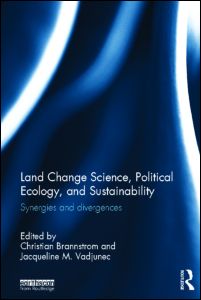
New Books: Land Change Science, Political Ecology, and Sustainability Synergies and divergences Edited by Christian Brannstrom, Jacqueline M. Vadjunec (22 Aug 2013)

Land Change Science, Political Ecology, and Sustainability

Synergies and divergences

Edited by Christian Brannstrom, Jacqueline M. Vadjunec

Routledge – 2013 – 266 pages
Descriptions:
Recent claims regarding conver
gence and divergence between land change science and political ecology as approaches to the study of human-environment relationships and sustainability science are examined and analyzed in this innovative volume. Comprised of 11 commissioned chapters as well as introductory and concluding/synthesis chapters, it advances the two fields by proposing new conceptual and methodological approaches toward integrating land change science and political ecology.
The book also identifies areas of fundamental difference and disagreement between fields. These theoretical contributions will help a generation of young researchers refine their research approaches and will advance a debate among established scholars in geography, land-use studies, and sustainability science that has been developing since the early 2000s. At an empirical level, case studies focusing on sustainable development are included from Africa, Central and South America, and Southeast Asia. The specific topics addressed include tropical deforestation, swidden agriculture, mangrove forests, gender, and household issues.

Contents:
Foreword
Andrew Millington
1. Notes for Avoiding a Missed Opportunity in Sustainability Science: Integrating Land Change Science and Political Ecology
Christian Brannstrom and Jacqueline M. Vadjunec
2. The Ghost of von Thünen Lives: A Political Ecology of the Disappearance of the Amazonian Forest
Robert Walker and Peter Richards
3. Forest Transitions in Southeast Asia: Synergies and Shortcomings in Land Change Science and Political Ecology
Guillaume Lestrelin, Jean-Christophe Castella and Jefferson Fox
4. Politicizing Land Use Change in Highland Madagascar: Struggles with Air Photo Analyses and Conservation Agendas
Christian A. Kull
5. Producing Biodiversity in Tanzania’s Mangrove Forests? A Combined Political Ecology and Ecological Resilience Approach to "Sustainably Utilized Landscapes"
Betsy A. Beymer-Farris
6. Gender, the Household, and Land Change in Southeastern Mexico
Claudia Radel, Birgit Schmook, and Crisol Méndez
7. Border Integrations: The Fusion of Political Ecology and Land Change Science to Inform and Contest Transboundary Integration in Amazonia
David S. Salisbury, Mariano Castro Sánchez Moreno, Luís Dávalos Torres, Robert Guimaraes Vásquez, José Saito Diaz, Pedro Tipula Tipula, Andrés Treneman Young, Carlos Arana Courrejolles, Martin Arana Cardó and the Grupo de Monitoreo de Megaproyectos Región Ucayali
8. Political Ecology and Land Change Science in the Study of Infrastructure Impacts: The Case of the Southwestern Amazon
Stephen G. Perz, Jane Southworth, Grenville Barnes, Youliang Qiu, Yibin Xia, Jing Sun, Karla Rocha
9. Deforestation and the World-as-Representation: The Maya Forest of Southern Belize
Joel Wainwright, Shiguo Jiang, and Desheng Liu
10. Shifting Spaces and Hidden Landscapes in Rural South Africa
Brian King
11. Political Ecology, Land Change Science and the Political Economy of Nature
Brent McCusker
12. The Intersection of Independent Lies: Land Change Science and Political Ecology
Rinku Roy Chowdhury
13. Two-Way Traffic across a Porous Border
Paul Robbins and B. L. Turner II

Thursday, August 1, 2013

Malaysian Updates: Malaysian NGOs form alliance to address palm oil concerns (31 Jul 2013)

Malaysian NGOs form alliance to address palm oil concerns

Rhett A. Butler, mongabay.com
July 31, 2013


Seven Malaysia-based NGO's have banded together to form an alliance to provide a Malaysian civil society perspective on social and environmental issues related to palm oil production. The initiative aims in part to counter Malaysian industry claims that concerns over palm oil are purely driven by Western NGO's.

The alliance, called the Malaysian Palm Oil NGO Coalition (MPONGOC), currently includes the Borneo Rhino Alliance (BORA), Bornean Sun Bear Conservation Centre (BSBCC), Indigenous Peoples Network of Malaysia (JOAS), Land Empowerment Animals People, (LEAP), Malaysian Nature Society (MNS) Sabah branch, Partners of Community Organisations (PACOS) Trust and WWF Malaysia, according to a statement issued by the group.

"MPONGOC aims to influence land use policy and decision making, and is also working towards advocating consumer responsibility," said the group. "Strengthening implementation of best environmental management practices including enforcement of pollution regulations, building capacity for smallholder verification and best practices, supporting community-based organizations largely made up of indigenous people to engage with the industry on their own terms, and mainstreaming awareness on human wildlife conflict are other objectives."


Conversion of rainforest for oil palm plantations in Malaysian Borneo


The move is significant because much of the dialog around social and environmental issues related to palm oil production is shaped by international NGO's, most of which are based in Western Europe or the United States. Therefore it has been relatively easy for the palm oil industry to brush off criticism by claiming that it simply represents a new form of colonialism, whereby Western nations use NGO's as a proxy to protect domestic soy, corn, and rapeseed producers. The Malaysian palm oil industry has spent millions of dollars on marketing and public relations since 2007 attempting to advance that message.

Now that messaging will be undercut by local NGO's expressing their own viewpoints on issues like deforestation, pollution, and land-grabbing. Some of those views may not necessarily match up with those of international NGO's. To start, MPONGOC says it will "engage in constructive and on-going dialogue with the industry via the Malaysian Palm Oil Association (MPOA), Malaysian Palm Oil Board (MPOB) and the Malaysian Palm Oil Council (MPOC)", industry groups that have had limited direct engagement with Western NGOs.


Clearing of natural forest for oil palm plantations in Malaysian Borneo


MPONGOC says it will also engage with international NGO's, which could help bridge the gap in understanding between Western activist groups — some of which call for measures, like banning palm oil imports, that play directly into industry messaging — and Malaysian palm oil producers.

“We intend to engage with all parties, bring our collective voice, leadership, skills and experience to the table to deepen and expand dialogue between civil society, industry and government in the vital conversation of sustainability for all," said LEAP Executive Director Cynthia Ong in a statement.

"We see MPONGOC as being able to offer solutions by involving all stakeholders," added PACOS Trust Executive Director Anne Lasimbang, noting that some of the most vulnerable people — indigenous communities — have been largely ignored in the debate over palm oil.

WWF-Malaysia Executive Director Dionysius Sharma said that the initiative could help provide a path toward more sustainable palm oil production.

“We hope that through MPONGOC, the industry, regulators, financiers, buyers and other stakeholders could work collectively to develop and promote the adoption of environmentally appropriate, socially beneficial and economically viable practices in the oil palm industry," he said.


Orangutans have become a symbol for concerns about uncontrolled expansion of oil palm plantations into native forests.


Palm oil is the highest-yielding source of vegetable oil grown on a commercial basis. But the industry's expansion in recent decades has been a major driver of deforestation across Malaysia and Indonesia. Biologists have thus called the crop the "single most immediate threat to the greatest number of species".

Source: http://news.mongabay.com/2013/0731-MPONGOC-palm-oil.html

Wednesday, February 13, 2013

New Book: Land Use: Planning, Regulations & Environment by Sergio Freire, Klaus Steinnocher, Christoph Aubrecht (2 Feb 2013)


Land Use: Planning, Regulations & Environment


Land Use: Planning, Regulations & Environment

by Sergio Freire, Klaus Steinnocher, Christoph Aubrecht


Book details:

Published: 02/02/2013
Publisher: Nova Science Publishers Inc
ISBN: 9781622573578


Description:
The edited book volume Land Use: Planning, Regulations, and Environment is a diverse compilation of ten chapters covering different facets of the field of land use research with a particular focus on planning aspects. The contributions were selected by the guest editors after passing a thorough peer review process involving selected international subject experts.
Besides the planning component which is considered the central theme of the book volume, articles also address risk and climate change as well as local land use development and sustainable management aspects. Contributions include application-oriented case studies, as well as conceptual approaches and data simulation and modelling-driven elaborations. In terms of land use planning and its implications on society and the environment, recommendations are provided that show how proper strategies help in avoiding negative effects and provide improved decision support on multiple levels.


For more information: 
http://www.waterstones.com/waterstonesweb/products/sergio+freire/klaus+steinnocher/christoph+aubrecht/land+use/9394289/

Sunday, December 2, 2012

New books: The Global Farms Race -- Land Grabs, Agricultural Investment, and the Scramble for Food Security in Asia, Africa, Latin America, and the Former Soviet Union by Wilson Center


Book Launch: The Global Farms Race -- Land Grabs, Agricultural Investment, and the Scramble for Food Security in Asia, Africa, Latin America, and the Former Soviet Union

December 04, 2012 // 3:30pm — 5:30pm
EVENT CO-SPONSORS: 
Environmental Change and Security Program
Africa Program
Latin American Program
Kennan Institute
Program on America and the Global Economy
China Environment Forum

Designated by the Christian Science Monitor as one of 23 new foreign policy books that should have been read by the 2012 U.S. presidential candidates.
 
Read more advance praise and additional information about The Global Farms Race
 
Read Island Press's press release for The Global Farms Race
 
 
From the book publisher: As we struggle to feed a global population speeding toward 9 billion, we have entered a new phase of the food crisis. Wealthy countries that import much of their food, along with private investors, are racing to buy or lease huge swaths of farmland abroad. The Global Farms Race is the first book to examine this burgeoning trend in all its complexity, considering the implications for investors, host countries, and the world as a whole.
 
The debate over large-scale land acquisition is typically polarized, with critics lambasting it as a form of “neocolonialism,” and proponents lauding it as an elixir for the poor yields, inefficient technology, and unemployment plaguing global agriculture. The Global Farms Race instead offers diverse perspectives, featuring contributions from agricultural investment consultants, farmers’ organizations, international NGOs, and academics. The book addresses historical context, environmental impacts, and social effects, and covers all the major geographic areas of investment.
 
Nearly 230 million hectares of farmland—an area equivalent to the size of Western Europe—have been sold or leased since 2001, with most of these transactions occurring since 2008. As the deals continue to increase, it is imperative to understand them and their consequences. The Global Farms Race is a critical resource to develop that understanding.

This event will feature presentations from contributors to the book and from other experts.
LOCATION: 
6th Floor, Woodrow Wilson Center
 
Event Speakers List: 
  • Michael Kugelman // Senior Program Associate for South and Southeast Asia, Asia Program
  • Independent scholar and adviser, and co-author of World Bank publication, Rising Global Interest in Farmland