Showing posts with label Indonesia. Show all posts

Friday, October 25, 2013

Indonesia Update: Pulp and paper giant gets $1.8B loan from China for Indonesia's largest mill (11 Oct 2013)

mongabay.com logo

Pulp and paper giant gets $1.8B loan from China for Indonesia's largest mill


October 11, 2013


Asia Pulp & Paper (APP) secured a $1.8 billion loan from China Development Bank (CDB) to finance the development of what will be Indonesia's large pulp mill, according to a statement released by the company. 

The total cost of the new mill, located in South Sumatra and run by APP affiliate OKI Pulp & Paper Mills, will be $2.6 billion. It will will have an annual capacity of 2 million metric tons of pulp and 500,000 tons of tissue paper, potentially South Sumatra's pulp production by 36 percent. 

The OKI mill will be subject to APP's forest conservation policy, which prohibits the use of fiber sourced by clearing of natural forests and peatlands and requires the company and its affiliates to employ the concept of "free prior informed consent" (FPIC) in dealing with local communities. APP established the "zero deforestation" policy this past February after a long-running campaign by environmental groups over its damaging forestry practices, which NGOs said destroyed vast areas of rainforest, triggered social conflict, and put critically endangered species at risk. 

source from :http://news.mongabay.com/2013/1011-app-oki-pulp-mill.html

Wednesday, October 23, 2013

Indonesia Update: Asia’s first Rhino Range States meeting secures government-level agreement to bolster conservation efforts (4 Oct 2013)

Camera traps produce first ever hard evidence of Sumatran rhino population in Kalimantan forests

WWFPosted on 02 October 2013  

Lampung (2/10) – Using video camera traps, a joint research team that included members from WWF-Indonesia and the district authorities of Kutai Barat, East Kalimantan, have captured video of the Sumatran rhino in East Kalimantan. The footage of the rhinos --- the rare Dicerorhinus sumatrensis --- is the fruit of three months of research that collected footage from 16 video camera traps. The team is delighted to have secured the first known visual evidence of the Sumatran rhino in Kalimantan.

“This physical evidence is very important, as it forms the basis to develop and implement more comprehensive conservation efforts for the Indonesian rhinoceros,” said Forestry Minister Zulkifli Hasan upon unveiling the video at the opening of the Asian Rhino Range States Ministrial Meeting in Lampung, Sumatra. “This finding represents the hard work of many parties, and will hopefully contribute to achieving Indonesia's target of three percent per year rhino population growth.” He emphasized that all parties need to immediately begin working together to develop a scientific estimate of all the remaining Sumatran rhino populations in Kalimantan, and to implement measures to conserve the species --- particularly by strengthening the protection and security of the rhinos and their habitats.

The remarkable evidence from the camera traps includes footage of  a rhino wallowing in the mud to keep its body temperature cool and a rhino walking in search of food.  The rhino footage, captured on June 23, June 30 and August 3, is believed to show different rhinos although confirmation of this will require further study.

Nazir Foead, Conservation Director of WWF-Indonesia, said, “To ensure the protection of the species, a joint monitoring team from the Kutai Barat administration, Rhino Protection Unit, and WWF have been conducting regular patrols around the area.  WWF calls on all parties, in Indonesia and around the world, to immediately join the effort to conserve the Indonesian rhinoceros”.

Commenting on the findings, the district head of West Kutai, Ismael Thomas SH. M. Si., noted “The local administration is fully supporting these conservation activities in West Kutai. We are drafting further laws to protect endangered animals --- including these rhinos.” 

The Asian Rhino Range States Ministrial Meeting is taking place in Lampung 2-3 October 2013, with participation of goverment representation from Bhutan, Indonesia, India, Malaysia, and Nepal.


Note for Editor :
  
The camera trap VIDEOS can be download at http://bit.ly/18EBb1a with © WWF-Indonesia/PHKA as copyright.

More info, please contact:
Sumarto, Head of Public Relation, Indonesia Ministry of Forestry

Email: sumarto.suharno@gmail.com 

Diah R. Sulistiowati, Communication Coordinator for Forest & Terrestrial Species Program WWF-Indonesia
Email: dsulistiowati@wwf.or.id,  Mobile: +62-811-100-4397


Saturday, September 28, 2013

Publications: Corporate community investment impact measurement in Hong Kong, Indonesia, Malaysia and Singapore by CSR Asia Research (Jun 2013)

Corporate community investment impact measurement in Hong Kong, Indonesia, Malaysia and Singapore

This report provides an insight to the Corporate Community Investment (CCI) activities of eighty of the largest listed companies in Hong Kong, Indonesia Malaysia and Singapore. The focus of the research was to analyse whether the sample group of companies were reporting on CCI impact. This report was presented at the CSR Asia Corporate Community Investment – Measuring Impact Forum, Singapore June 2013.


Link to download the full document: http://www.csr-asia.com/report/CCI-report.pdf
For more information: http://www.csr-asia.com/publications.php

Wednesday, September 25, 2013

Indonesian Updates: Indonesia introduces 'school of climate change' program to reduce emission (25 Sep 2013)


Indonesia introduces 'school of climate change' program to reduce emission

Xinhua, September 25, 2013

Indonesia is introducing the " school of climate change" aimed at speeding up efforts in reducing emission in the country, a senior official from the environment ministry said Tuesday. "The aim of the school of climate change'is to provide a forum to build up the capacity of decision makers in environment preservation issue. This program is essential to encourage and remind them of the importance of environment and climate change factors that should be integrated in their considerations process before issuing final decision both in state institutions and in the business world," Environment Damage Control and Climate Change Deputy Minister in the environment ministry Arief Yuwono said in a session to introduce the program.
He said that the program was initiated by the environment ministry in cooperation with the House of Change, an education institution led by a prominent educator Rhenald kasali.
Yuwono added that such an education program was now crucially important for Indonesia due to its geographical position that makes the world's largest archipelago country prone from the impacts of climate change.
He said that Indonesia has already experienced the impacts of climate change in the last few years, including rising temperature, changing of rain season period, the shifting period of dry to rain seasons and the rising of sea surface level, among others.

Sunday, September 8, 2013

Greenpeace report: Palm oil now biggest cause of deforestation in Indonesia (3 Sep 2013)

Palm oil now biggest cause of deforestation in Indonesia
Rhett A. Butler, mongabay.com
September 03, 2013
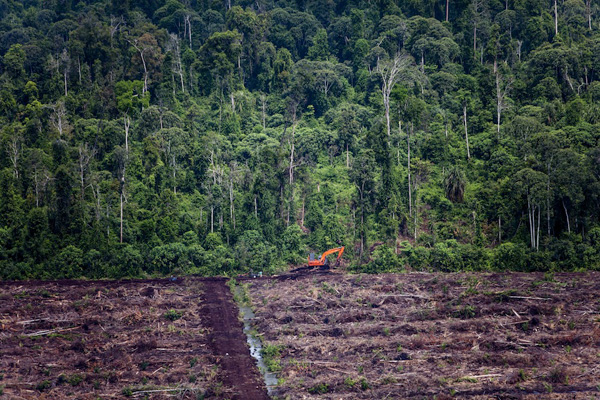
An excavator at the rainforest's edge in recently cleared peatland within the Duta Palma group's PT. Bertuah Aneka Yasa palm oil concession in Indragiri Hulu, Riau
An excavator at the rainforest's edge in recently cleared peatland within the Duta Palma group's PT. Bertuah Aneka Yasa palm oil concession in Indragiri Hulu, Riau. Taken 05/04/2013 © Kemal Jufri / Greenpeace


Conversion of forests for palm oil production now appears to be the single largest driver of deforestation in Indonesia, accounting for roughly a quarter of forest loss between 2009 and 2011, asserts a new Greenpeace report that accuses the sector's main certification standard of failing to stop forest destruction.

The report, titled Certifying Destruction, uses satellite imagery, government concession data, field investigations, and third party analysis to conclude that several recent and current members of the Roundtable on Sustainable Palm Oil (RSPO) — the industry's chief eco-certification body — are continuing to buy or trade palm oil produced via the conversion of rainforests and carbon-dense peatlands in the Southeast Asian nation.

"The RSPO wants its members to be industry leaders in sustainability, but its current standards leave them free to destroy forests and drain peatland," said Bustar Maitar, head of Greenpeace International’s Indonesia forest campaign, in a statement. "Year after year, Indonesia’s forest fires and haze wreak havoc on the region, and the palm oil sector is a main culprit."

300,000 hectares

Analyzing satellite data, Greenpeace finds that some 300,000 hectares of forest were cleared for oil palm plantations between 2009 and 2011, accounting for nearly 25 percent of the 1.24 million hectares of forest the Indonesian government says were cleared during the two-year period. Deforestation for oil palm plantations was disproportionately high in three provinces in Indonesia Borneo: West Kalimantan (75 percent of total deforestation was attributed to palm oil), East Kalimantan (55 percent), and Central Kalimantan (38 percent).

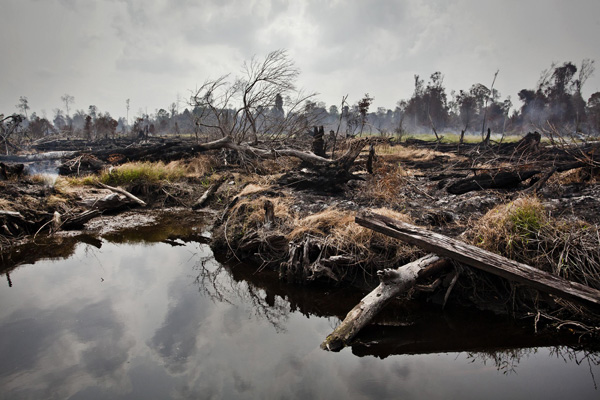
Charred tree stumps against the smoldering background in an area of recently deforested peatland near Tanjung Baru village, Pangkalan Kerinci subdistrict in Pelalawan regency, Riau province, Indonesia. The village lies beside PT. Pusaka Megah Bumi Nusantara (PMBN) – a palm oil company belonging to the Asian Agri group, a member of the Roundtable on Sustainable Palmoil (RSPO). This area, according to the most recent official charts, is covered by the Indonesia government’s moratorium on the issuance of new permits in primary forests and peatlands.Thousands of peatland fires in the province - the majority within pulp and palm oil concessions - have caused record-breaking air pollution in Singapore and Malaysia, with the haze extending as far as Thailand.
Charred tree stumps against the smoldering background in an area of recently deforested peatland near Tanjung Baru village, Pangkalan Kerinci subdistrict in Pelalawan regency, Riau province, Indonesia. The village lies beside PT. Pusaka Megah Bumi Nusantara (PMBN) – a palm oil company belonging to the Asian Agri group, a member of the Roundtable on Sustainable Palm Oil (RSPO). This area, according to the most recent official charts, is covered by the Indonesia government’s moratorium on the issuance of new permits in primary forests and peatlands.Thousands of peatland fires in the province - the majority within pulp and palm oil concessions - have caused record-breaking air pollution in Singapore and Malaysia, with the haze extending as far as Thailand. Taken June 29, 2013 © Ulet Ifansasti / Greenpeace


Greenpeace: RSPO falling short

Worryingly for environmentalists, Greenpeace's report suggests that RSPO member companies are falling short of the initiative's goals. Notably, RSPO-certified companies continue to clear forest and peatlands for new plantations. And during the ongoing haze crisis, a large number of hotspots have been detected within their concessions.

"In 2009, identified oil palm concessions currently affiliated to members of the RSPO held 14% of the natural forest within Indonesian oil palm concessions. However, these concessions accounted for a disproportionate 21% of deforestation in oil palm concessions – 63,000 hectares, including nearly 20,000 hectares of carbon-rich forested peatland," states the report. "Genting, Surya Dumai and Wilmar were the three privately-owned RSPO members with the largest areas of identified deforestation."

"Concessions affiliated with RSPO members accounted for 39% of the fire hotspots on palm oil concessions in Riau during January-June 2013 – a total of 720 hotspots in RSPO-related concessions."

The problem, says the activist group, is that while RSPO criteria prohibit conversion of old-growth and "high conservation value" (HCV) forest, they do not exclude clearing of secondary forests and peatlands for plantations. Because these areas lock large amounts of carbon in their soils, clearing vegetation and draining the water table can trigger substantial emissions. The RSPO sets no limits of emissions from palm oil production — emissions reporting is strictly voluntary.

"RSPO rules fail to prevent peatland and forest fires," states the report. "The RSPO bans deliberate use of fire for land clearance, but it has failed to address the source of devastating fires in Sumatra in June 2013. The RSPO allows its members to clear rainforest and to clear and drain peatland. Drained peat is like a tinderbox: once dry, the dense, carbon-rich soil catches fire easily; once lit, it can spread rapidly."

For its part, the RSPO says upon receiving complaints from Greenpeace, it investigated five members for alleged fires. It found that three registered hotspots, one of which — PT Jatim Jaya Perkasa — had dozens of fires.

"[PT Jatim Jaya Perkasa] has been escalated to a formal complaint case," the RSPO told mongabay.com. "The other two companies with hotspots were advised to immediately appease the fires which were prevalent for less than 24 hours while it was confirmed that it was not due to systemic issues as they adopt a no burning policy, as directed by the RSPO. The RSPO continues to monitor this."

The body also faulted Greenpeace's choice in reference maps for establishing concession boundaries.

"The discrepancy of the hotspots analysis is because the concession maps provided by Greenpeace differed from the maps which should be the accurate base for reference (HGU boundaries / Business Use Rights)," the body said. "The RSPO has advised Greenpeace several times on the use of incorrect reference maps and for stronger accountability towards reliable information in the public domain."

A worker from PT. Raja Garuda Mas Sejati – a palm oil company belonging to the Asian Agri group, a member of the Roundtable on Sustainable Palmoil (RSPO) – tries to extinguish a peatland fire within the company concession near Tanjung Muara Sako village, Langgam subdistrict in Pelalawan regency, Riau province, Indonesia.
A worker from PT. Raja Garuda Mas Sejati – a palm oil company belonging to the Asian Agri group, an RSPO – tries to extinguish a peatland fire within the company concession near Tanjung Muara Sako village, Langgam subdistrict in Pelalawan regency, Riau province, Indonesia. Taken 06/29/2013 © Ulet Ifansasti / Greenpeace


Lack of supply chain traceability

The Greenpeace report also criticizes what it terms laundering of palm oil from non-certified sources via the RSPO. It notes that RSPO-certified palm oil is rarely segregated from conventional palm oil. Worse, RSPO-members have been caught buying palm fruit from developers who have illegally cleared rainforests for plantations.

"Producers can be RSPO members without having any certified concessions. RSPO members can freely trade fresh fruit bunches (FFB) and oil produced by non-members who have made no sustainability commitments: some of the most prominent RSPO processor members, including IOI, Wilmar and Musim Mas, are heavily dependent on sourcing and trading FFB or palm oil products from third party suppliers," says the report. "FFB from unlicensed plantations and areas cleared by fire can end up in mills belonging to RSPO members. A recent investigation by WWF Indonesia showed that mills, some RSPO certified, owned by RSPO members Wilmar and Asian Agri were receiving FFB from illegal plantations inside Tesso Nilo National Park as recently as 2012, though both companies now say they are introducing procedures to stop this."

According to Greenpeace, many seemingly well-intentioned companies are sidestepping the issue by purchasing Greenpalm certificates, which effectively allow buyers to offset their conventional palm oil purchases with credits representing an equivalent volume of RSPO-certified palm oil. The initiative aims to serve as a bridge until segregated palm oil becomes more readily available. Until then, companies won't know whether the palm oil they are using in their products is actually sourced under any social or environmental standards, which is at issue for Greenpeace.

But a more fundamental problem is consumers don't seem willing to pay much of a premium for certified palm oil. Greenpalm certificates currently fetch a premium of 0.4 percent, far below the 10 percent sought when the first certified palm oil began shipping in 2008. The lack of a price premium is a disincentive for producers to bother with the costly certification process. Or for that matter, push to strengthen it.

Greenpeace's chart showing the current state of palm oil production in Indonesia

Greenpeace's chart showing the current state of palm oil production in Indonesia


Greenpeace to companies: don't abandon RSPO

While Greenpeace's report comes down hard on the RSPO, it stops short of calling for corporate customers to abandon the initiative. Instead the activist group asks buyers to "go beyond" RSPO standards and source from suppliers who have set the bar higher.

"The RSPO remains the largest inter-sectoral body, with a critical mass of membership among producers, traders and corporate consumers. While RSPO standards on forest conversion and on other areas such as land rights are clearly inadequate, they remain an important improvement over no standards at all," the report states. "Hence, Greenpeace is not calling for companies to abandon the RSPO; rather, we call for them to go beyond RSPO standards."

"Companies that have ‘gone beyond the RSPO’ and committed to policies to ensure forest protection include Golden Agri-Resources, New Britain Palm Oil and Agropalma, whose ‘no deforestation’ commitments demonstrate that a responsible palm oil sector is possible. Meanwhile, some consumer companies are setting standards for truly responsible purchasing policies. For example, Nestlé has made a clear commitment to break the link between palm oil and deforestation in its own supply chain."

Greenpeace cites a new initiative, Palm Oil Innovation Group, as a potential model for companies wanting to move toward stricter standards. POIG, which currently involves a handful of NGO's and "progressive" palm oil companies, will establish additional criteria to improve the social and environmental performance of palm oil, including "requirements on reserving enough land for local communities’ food crops, greenhouse gas emissions and no development on peatlands."

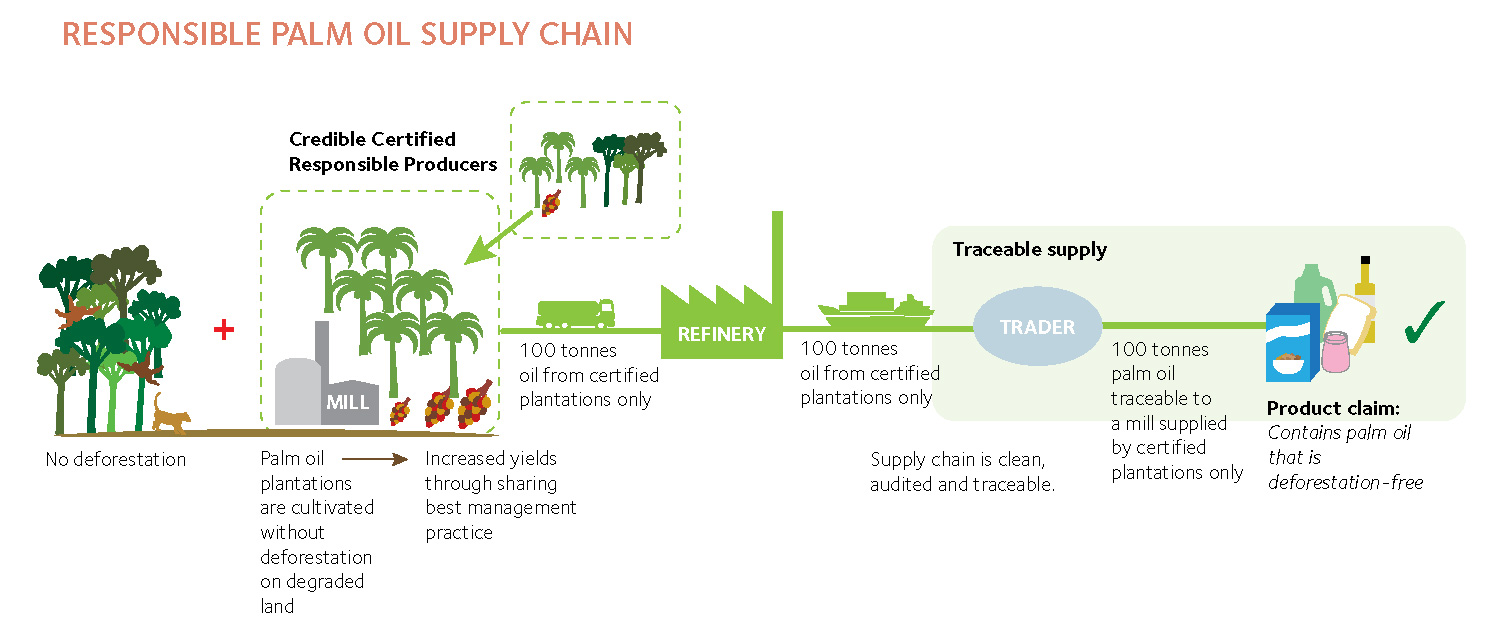
Greenpeace's idealized vision for sustainable palm oil production
Greenpeace says the RSPO should also move toward stronger standards, including banning conversion of peatlands and deforestation. The group calls on the RSPO to close some of the loopholes that allow companies to produce and trade un-certified palm oil while still operating under the banner of RSPO membership.

Greenpeace's report comes at a challenging time for the palm oil industry, relative to recent boom. Slowing demand for palm oil has severely cut profit margins in the sector this year. Meanwhile planned expansion in tropical Africa, mainland Asia, and Latin America could usher in an era of oversupply in the near-term, further undercutting prices.

It's unclear what impact these trends would have on demand for certified palm oil. Past gluts have led producers to walk away from marginal plantations and abandon plans for new development, potentially reducing pressure on forest lands. Whether this will increase interest in producing and sourcing premium RSPO-certified palm oil remains to be seen.

Nonetheless, in the short- to medium-term, palm oil production will likely continue to be a lucrative option relative to other forms of agriculture in the tropics, putting it in direct competition with forest preservation.


Source: http://news.mongabay.com/2013/0903-rspo-vs-greenpeace-palm-oil-deforestation.html

Indonesian Updates: Indonesia finally establishes REDD+ agency to tackle deforestation (7 Sep 2013)

Indonesia finally establishes REDD+ agency to tackle deforestation

September 07, 2013


Indonesia has finally established an agency to implement the country's Reducing Emissions from Deforestation and Degradation (REDD+) program.

The REDD+ agency, established by a decree from President Susilo Bambang Yudhoyono on Friday, is a ministry-level body that will coordinate a national REDD+ strategy between various ministries that influence and control land use policy across the sprawling archipelago. The agency will also oversee monitoring, reporting, and verifying emissions reductions as required under a billion dollar agreement signed with Norwayin 2010. Norway is compensating Indonesia on a performance-basis for reducing greenhouse gas emissions from deforestation.

The pact with Norway stipulated the creation of the agency, but the process has lagged behind schedule due to disagreements between various bureaucracies. Nonetheless, REDD+ has been slowly moving forward in pilot provinces, including Central Kalimantan in Indonesian Borneo. The first REDD+ project —Rimba Raya— was approved in May.

Indonesia is also in the third year ofa moratorium on granting new logging and plantation concessionsin some 14 million hectares of previously unprotected rainforests and peatlands. The moratorium was also part of the Norway deal.

REDD+ has been strongly supported by President Yudhoyono under his plan to reduce emissions 26 percent relative a projected 2020 baseline. That target could rise to 41 percent with international aid. Indonesian is one of a handful of large developing countries that has set such goals.

More than 80 percent of Indonesia's greenhouse gas emissions result from land use, mostly peatlands degradation and rainforest destruction. Therefore curtailing logging and conversion of natural forests for plantations have emerged as top priorities for the country. More than half of forest loss in Indonesia is attributed to timber, pulp and paper, and palm oil production.

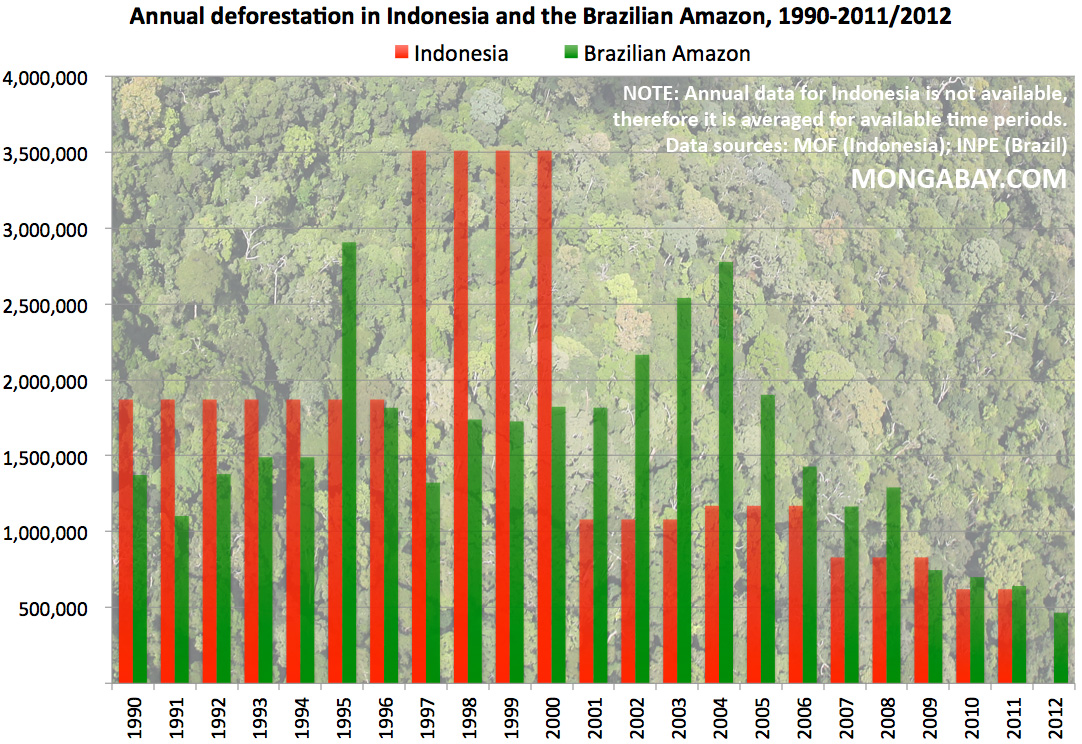
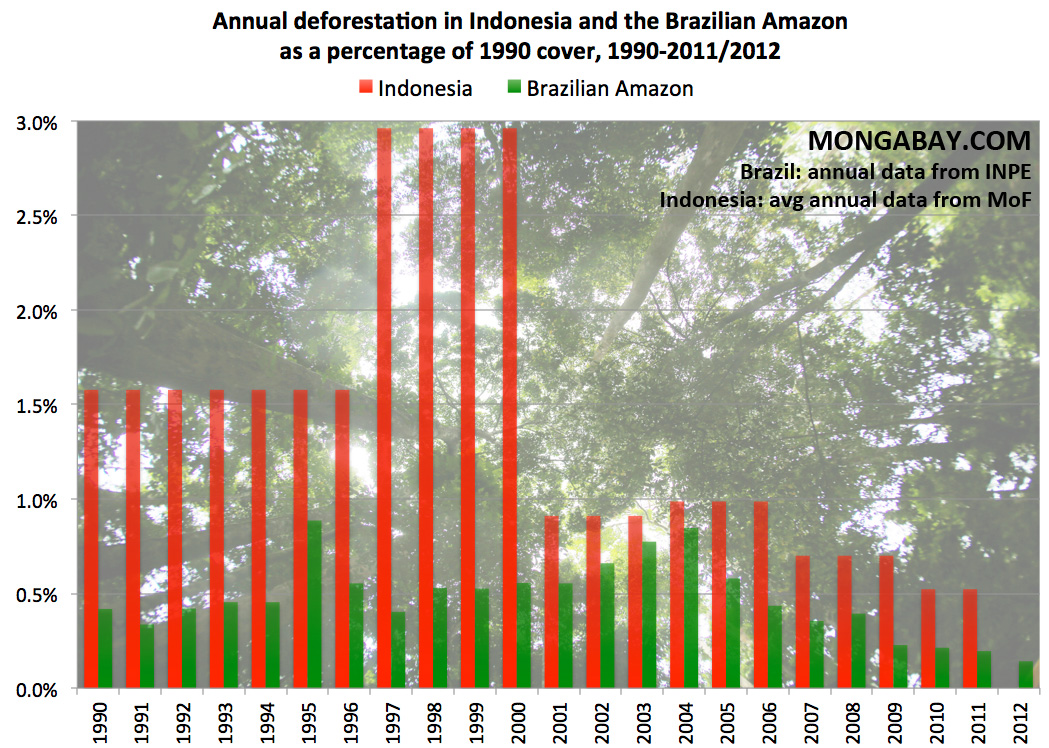
Chart: deforestation in the Brazilian Amazon and Indonesia, 1990-2011
Chart: deforestation in the Brazilian Amazon and Indonesia, 1990-2011Chart comparing annual deforestation between Brazil and Indonesia, 1990-2011
Chart comparing annual deforestation between Brazil and Indonesia, 1990-2011Indonesia has one of the highest deforestation rates in the world. Click images to enlarge.

The Indonesian government is expected to announce the REDD+ agency's head in coming weeks, according to Mongabay-Indonesia. The REDD+ Task Force, which the REDD+ agency replaces, was run by Kuntoro Mangkusubroto, a close advisor to the president.

The REDD+ agency will have 60 staff based in Jakarta.

Source: http://news.mongabay.com/2013/0907-indonesia-redd-agency.html

Sunday, September 1, 2013

Events: APEC Climate Symposium 2013 organized by APEC Climate Center in Jakarta, Indonesia from 11-13 Nov 2013

APCC
APEC Climate Symposium 2013

The APEC Climate Symposium (APCS) is an annual event, held since 2005, that brings together around 100 scientists, representatives of National Hydrological and Meteorological Services, academics, policy-makers and students from around the world to discuss emerging issues in climate prediction and its applications. This year’s APEC Climate Symposium will be held in Jakarta, Indonesia from November 11 -– 13. The theme of the 2013 symposium is “Regional Cooperation on Drought Prediction Science to Support Disaster Preparedness and Management”.

This international symposium will explore the importance of advance climate information for supporting drought preparedness and disaster management. This event will be the first of its kind to specifically examine drought in the Asia-Pacific region. Over three days, the event will examine topics such as the latest innovative techniques in drought and seasonal climate prediction, the development of Early Warning Systems (EWS), drought response and risk management planning, regional cooperation on drought response, and information transfer and communication networks. The event will bring scientists and researchers together with representatives from government agencies, NGOs, and the private sector in order to foster a collaborative dialogue on drought prediction and management.

More information may be found in the First Announcement.

First Announcement download 

Thursday, July 18, 2013

Publications: WorldFish Provides Economic Analysis of Adaptation in South-East Asia by WorldFish (18 Jul 2013)

WorldFish Provides Economic Analysis of Adaptation in South-East Asia


WorldFishJuly 2013: WorldFish has released a publication that documents the cross-country economic impacts of three climate hazards, namely typhoons, coastal erosion and saltwater intrusion, as well as the costs of adaptation options and autonomous household responses in three Asian countries.

The report, titled 'Economic Analysis of Climate Change Adaptation Strategies in Selected Coastal Areas in Indonesia, Philippines and Vietnam,' uses a range of qualitative and quantitative methods to document the confluence of risks affecting households. The study finds ecosystem-based approaches for reducing vulnerability to be more effective than hard infrastructure investments. It also stresses that planned adaptation efforts and external assistance reduce the amount of autonomous adaptation undertaken by private actors.

WorldFish is a member of the Consultative Group on International Agricultural Research (CGIAR). [Publication: Economic Analysis of Climate Change Adaptation Strategies in Selected Coastal Areas in Indonesia, Philippines and Vietnam]


For more information: 
http://climate-l.iisd.org/news/worldfish-provides-economic-analysis-of-adaptation-in-south-east-asia/209184/

Indonesian Updates: Billions lost to corruption in Indonesia’s forest sector, says report by Diana Parker, Mongabay-Indonesia correspondent (17 Jul 2013)

Billions lost to corruption in Indonesia’s forest sector, says report

Diana Parker, Mongabay-Indonesia correspondent

July 17, 2013


Corruption and mismanagement in Indonesia’s forest sector have cost the government billions of dollars in losses in recent years, including over $7 billion in losses from 2007-2011, Human Rights Watch said in a report released yesterday. The report also blasted the country’s “green growth” strategy, saying that despite recent reforms, Indonesia’s forestry policies as they are implemented today continue to allow widespread forest clearing and threaten the rights and livelihoods of forest-dependent communities.

“The Indonesian government has been selling the expansion of its forestry sector as an example of sustainable ‘green growth’ and an antidote to climate change and poverty, but the evidence suggests otherwise,” Joe Saunders, deputy program director at Human Rights Watch, said in a release to the media.

“Funds that could be used to improve public welfare are being siphoned off to enrich a handful of people or needlessly lost through mismanagement. And the regional smog crisis suggests the environment and rural livelihoods are the victims, not the beneficiaries, of the government’s forest policies.”

Mismanagement in Indonesia’s forestry sector has serious consequences for human rights and the environment, noted Human Rights Watch in the 61-page report, “The Dark Side of Green Growth: Human Rights Impacts of Weak Governance in Indonesia’s Forestry Sector.” Indonesia is one of the world’s top carbon emitters, largely due to the clearing of forests for agriculture, and increased pressure on land for the expansion of oil palm and pulp plantations has caused violent conflicts to erupt between companies and local communities who believe they have not been adequately compensated for their land.


New oil palm plantation established on peatland outside Palangkaraya, Central Kalimantan.


Loss of livelihood and agrarian conflicts

The report documents three of high-profile conflicts in Lampung province on the island of Sumatra in 2010 and 2011 in which a number of local residents and security personnel were killed. And with thousands of agrarian conflicts reported each year – the president received reports of 8,495 conflicts in 2012 alone – these cases are just the tip of the iceberg, the international rights watchdog said.

According to the report, companies are often not held accountable for failing to honor compensation agreements with communities. At the same time, residents can be harshly punished, often by police and military personnel who have been paid by the company, for reclaiming disputed land or “poaching” palm fruits or timber from land they feel they have not been properly paid for.

The Indonesian government has contributed to escalating conflicts, Human Rights Watch said, by failing to hold companies accountable for violating compensation agreements and by failing to comply with its own regulations for issuing concessions on land claimed by communities.

Under Indonesia’s current forest management system, the government often grants concessions for logging or plantation development without first guaranteeing buy in from local communities. This opens the door for land grabs, and the report documents cases in which local communities felt they did not receive proper compensated for land they lost. The report indicates that Indonesia’s forest communities, among the country’s poorest groups, have been the most harmed under this system.

“This has been an ongoing problem, but it does appear that things are getting worse because of the increasing pressure to convert land for pulp and oil palm concessions,” Arvind Ganesan, business and human rights director for Human Rights Watch, told Mongabay-Indonesia in an email. “This demand comes [from] the government’s own ‘green growth’ targets, as well as global demand for paper and biofuel.”

“[Plantation] concessions represent a more serious impact on forest-related livelihoods than the logging concessions that were prominent during the 1970s-1990s plywood and veneer boom, as the land is permanently converted to other uses,” Ganesan added.


Peat forest in Borneo


Loss of state revenue

From 2007 to 2011, illegal logging and forest sector mismanagement led to $7 billion in losses to the Indonesian government, the report, an update to the 2009 Human Rights Watch report, “Wild Money,” found. Those funds, the rights group said, could have been spent to provide important services so some of Indonesia’s poorest and most vulnerable communities.

Losses have also been increasing in recent years, despite attempts to reform the sector, with 2011 losses totaling over $2 billion, or more than the country’s entire health budget for that year.

Many people in rural areas in Indonesia still lack access to doctors and adequate health care. The report contends that by allowing large-scale losses of revenue from corruption in the forestry sector, the government is missing an opportunity to provide critical services to those communities and is instead allowing funds to be diverted into the pockets of a few wealthy individuals.


Illegal logging in Borneo


Inadequate reforms?

The report points to three key reforms that have recently come into force – a system to certify timber legality, a moratorium on plantation expansion in forests and peatlands, and Indonesia’s new freedom of information law. “Each are important steps to address the problem,” Ganesan told Mongabay-Indonesia. “But they do not go far enough and what they do cover hasn’t been effectively implemented.”

The timber legality certification system, or SVLK, was put in place in part as a response to requirements in the United States and the European Union that prohibit importing of illegally obtained timber. The system tracks the chain of custody of Indonesian timber, auditing companies to ensure that timber is acquired in accordance with Indonesian law. However, the report explained, these audits do not look into whether timber was harvested on land claimed by communities, whether local communities were consulted or gave their free, prior and informed consent, or whether communities were compensated by companies for their lost access to forests.

In its report, Human Rights Watch called Indonesian President Susilo Bambang Yudhoyono’s decision in May to renew a two-year moratorium on the issuing of new concessions in primary forests and peatlands a “bold, positive step.” However, the group also pointed out a number of serious loopholes. The moratorium is only for new licenses, so concessions issued before the policy was put in place in 2011 are exempt. As a presidential decree, there are also no legal sanctions for violating the policy. And the moratorium is temporary, meant to allow time to reform the country’s forestry sector. In the report, Human Rights Watch calls on the Indonesian government to define what specific reforms must take place before the moratorium can be lifted.


PSDH = Timber Royalty Fee, DR = Reforestation Fee. Data source: Indonesian Pulp and Paper Association. Annual reports from International Tropical Timber Organization, and Indonesian Ministry of Forestry. Courtesy of HRW.


Indonesia’s Freedom of Information Law, which entered into force in 2010, is another positive step toward forest-sector reform that Human Rights Watch acknowledged in its report, although the group contends that its implementation still falls short.

“The Freedom of Information Act is still not fully implemented and often sporadically enforced, even when the courts order disclosure of information,” Ganesan told Mongabay-Indonesia. He further explained that the lack of available forestry information “cripples oversight of the sector and provides avenues for corruption.”

The report also addressed Indonesia’s recent Constitutional Court ruling, which said the government’s practice of granting concessions on customary land was unconstitutional. This ruling could offer some hope for forest communities, Human Rights Watch said. However, the report also warned that the mapping and registration of customary lands necessary to implement this ruling was a “minefield of opportunities for continued corruption and disenfranchisement that could lead to increased conflicts.”


Illegal sawmill in Borneo


‘Not inherently bad’

While the report challenges Indonesia’s “green growth” objectives – claiming that growth in the forest sector as it is occurring today is causing deforestation and carries severe human rights consequences – the group also stressed that better management in the sector could lead to more sustainable and rights-respecting growth.

“Oil palm and pulp plantations are not inherently bad for the environment and human rights, it is the way that these sectors have been implemented,” Ganesan told Mongabay-Indonesia. The lagging progress on forest-sector reforms, he explained, has not kept pace with the increasing pressure to expand concessions due to global demand for these products and the government’s own growth plans. “[The problem] is more about developing oil palm and pulp in an unsustainable manner and without due regard for human rights.”

The solution? For plantation expansion, Ganesan said, concessions should be established on degraded lands, rather than logging natural forests, which is happening under the current system. To avoid conflicts with communities, obtaining free, prior and informed consent is key, and plantation operators should have agreements with communities so that concessions are managed in ways that benefit local residents and give residents access to credible grievance mechanisms.

Source: http://news.mongabay.com/2013/0717-hrw-dark-side-of-green-growth.html

Saturday, July 6, 2013

Indonesian Updates: Illegal palm oil from an Indonesian national park used by Asian Agri, Wilmar, WWF report says By Diana Parker, Mongabay-Indonesia correspondent (5 Jul 2013)

Illegal palm oil from an Indonesian national park used by Asian Agri, Wilmar, WWF report says

By Diana Parker, Mongabay-Indonesia correspondent
July 05, 2013


Illegal palm oil expansion inside Indonesia’s Tesso Nilo National Park is threatening protected forests and the reputation of two companies who claim to be sources of sustainably-produced palm oil, says a new WWF-Indonesia report.

In its June 26 report, “Palming Off a National Park,” WWF-Indonesia found that over 52,000 hectares of natural forests in the area have already been illegally converted into palm oil plantations. And fruits from the illegal plantations have made their way into the supply chains of at least two global companies – Asian Agri and Wilmar.

WWF-Indonesia urged all parties to take immediate action to stop the encroachment, including through implementation of what it called a “win-win solution” – a voluntary relocation program for smallholders already operating illegally inside the park, which was recently proposed by the local government of Pelalawan district and the Ministry of Forestry.

The report documented encroachment inside the Tesso Nilo forest complex, a 167,618-hectare area in Indonesia’s Riau province that includes the national park and two logging concessions – areas zoned for timber exploitation but not for plantation development. Up until 2012, over 52,000 hectares of natural forest in the Tesso Nilo forest complex had already been illegally converted to palm oil plantations, the report found, including over 15,000 ha inside the national park itself.


Tesso Nilo protected area in Sumatra. Map courtesy of Google Earth.


By examining the chain-of-custody of the illegally-produced palm oil fruits – tracking fresh fruit bunches (FFBs) through the supply chain from the smallholder farmers to the processors – WWF found that Asian Agri and Wilmar, both members of the Roundtable on Sustainable Palm Oil (RSPO), had allowed fruits from illegal plantations inside the national park to enter their supply chain. Both companies have since responded to the situation and said they are no longer purchasing fruits from suppliers inside the national park.

“WWF welcomes immediate responses taken by Asian Agri and Wilmar in the area. As dutiful members of RSPO they are obliged to make improvements to tackle this problem,” said Irwan Gunawan, deputy director for WWF-Indonesia’s market transformation initiative.

However, Irwan added, this is not an isolated problem. By looking at just 10 of the 50 mills surrounding the Tesso Nilo forest complex, WWF was able to find evidence that two global companies were using illegally-grown FFBs, indicating that palm oil exported from Indonesia to the global market has likely been contaminated with fruits grown illegally and linked to tropical forest destruction. WWF called on companies to develop more transparent supply chains, track fruits from smallholder plantations to their mills and conduct internal verification to ensure that they are not using fruits from illegal palm oil plantations.

“This problem is not restricted to these companies or the Tesso Nilo area alone,” Irwan said. “Responsible palm oil companies should implement such procedures throughout their whole operations.”


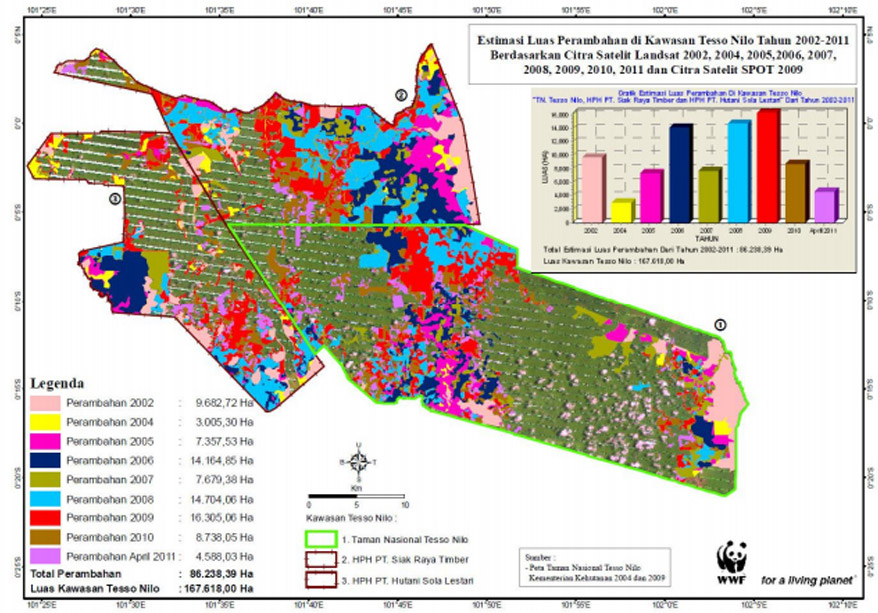
Tesso Nilo forest complex encroachment in Sumatra. Map courtesy of WWF. Click to enlarge.


WWF also encouraged the Indonesian government to immediately take steps to end encroachment in Tesso Nilo. In February 2013, after WWF shared a draft of the report with Indonesia’s Ministry of Forestry, the ministry announced that it would provide financial support to tackle the encroachment problem, including to help voluntarily relocate encroachers to land outside the Tesso Nilo forest complex. The local government of Pelalawan district has also made similar commitments, pledging funds to relocate people residing inside the national park. And while most encroachers in Tesso Nilo are migrants from other provinces, for those smallholders with “adat” or customary rights to the land inside the forest complex, WWF said it will work with these communities to ensure existing plantations are managed sustainably and will advocate for their legal land rights.

Source: http://news.mongabay.com/2013/0705-tesso-nilo-palm-encroachment.html

Sunday, June 30, 2013

Publications: Using Data Tools to Optimize Indonesia’s Land Resources: An Overview of Natural Capital Assessment by CPI (27 Jun 2013)


Using Data Tools to Optimize Indonesia’s Land Resources: An Overview of Natural Capital Assessment

Using Data Tools to Optimize Indonesia’s Land Resources: An Overview of Natural Capital AssessmentJune 27, 2013
Land and land resources play a fundamental role delivering the economic growth targets of many emerging economies and have close links to issues such as job creation, poverty alleviation, food security, and climate change. Although land is a valuable asset that produces social, environmental, and economic benefits, economic benefits are the most readily recognized; social and environmental impacts are often unpriced and undervalued.
As demands on Indonesia’s land resources continue to increase in the coming years, improved capacity to value the benefits associated with land (called natural capital assessment) and to integrate this information into land allocation decisions could support efforts to achieve both development and environmental goals.
This brief distills the elements of natural capital assessment process, highlights a few cases of existing, related experience and tools from around the world; and situates the discussion in the context of Indonesia’s development goals and pressures.

For more information: 
http://climatepolicyinitiative.org/publication/using-data-tools-to-optimize-indonesias-land-resources-an-overview-of-natural-capital-assessment/

Publications: Addressing the encroachment problem in Tesso Nilo National Park by WWF on 26 Jun 2013

Addressing the encroachment problem in Tesso Nilo National Park

The expansion of palm oil plantations into Tesso Nilo National Park needs to be stopped immediately to improve the credibility of Indonesia’s palm oil industry.

Jakarta – Illegal encroachment by palm oil producers poses an immediate threat to Tesso Nilo National Park, according to “Palming Off a National Park” a new report launched by  WWF Indonesia today.  However, the situation could be mitigated through  a win-win solution proposed by the Minister of Forestry and Regent of Pelalawan, Sumatra, which offers  the farmers a voluntary relocation with nearby land provided by the government.
According to the report, up until 2012 over 52,000 hectares of natural forest in Tesso Nilo Forest Complex (made up of a national park and two neighboring logging concessions) has already been converted to palm oil plantations, with over 15,000 ha of the converted area located inside the national park. WWF urges all parties to work on constructive solutions in order to immediately stop further encroachment and help smallholders already illegally in the area to voluntarily relocate. Local government—especially the agency regulating plantation development—is expected to be more active in managing the allocation of palm oil plantation permits. WWF Indonesia is ready to cooperate with all relevant stakeholders—particularly with the indigenous communities of Tesso Nilo—by mapping the location of plantations and assisting plantation management to implement sustainable practices.
The WWF report also shows that up to the end of the first quarter of 2012, two global companies, Asian Agri and Wilmar were not adequately filtered their Fresh Fruit Bunch (FFB) supplies, with some of the fruits sourced from plantations located inside Tesso Nilo National park. As members of the Round Table on Sustainable Palm Oil (RSPO) — under obligation to implement responsible management practices —both companies have since responded to the situation and ceased sourcing from suppliers located inside the park.
Irwan Gunawan, Deputy Director of WWF-Indonesia’s Market Transformation Initiative recognizes efforts made by the companies. “WWF welcomes immediate responses taken by Asian Agri and Wilmar in the area. As dutiful members of RSPO they are obliged to make improvements to tackle this problem.” WWF calls for both companies to develop and implement a robust and transparent chain of custody, tracking the FFB from smallholder plantations to their mills, as well as conducting internal verification to identify and stop any endorsement for illegal palm oil plantations.  
“This problem is not restricted to these companies or the Tesso Nilo area alone.  Responsible palm oil companies should implement such procedures throughout their whole operations.”
“Buyers of palm oil products should be rewarding the industry that ensures they source palm oil legally and from non-HCV (High Conservation Value) areas,” said Nazir Foead, WWF-Indonesia Conservation Director. “It is very crucial for Indonesia, as the largest palm oil exporting country in the world, to cultivate credible systems for sustainable palm oil production.” 
“WWF encourages the local authorities and the park management to verify land ownerships in order to  immediately develop viable solutions such as the relocation mechanism proposed by the government.”


For more info, please kindly contact:
Irwan Gunawan, Deputy Director Market Transformation Initiative, WWF-Indonesia
Email: igunawan@wwf.or.id, Mobile: +62 812 8748 535

Annisa Ruzuar, Communication Coordinator Market Transformation Initiative, WWF- Indonesia
Email: asruzuar@wwf.or.id, Mobile: +62 813 2004 4343

Desmarita Murni, Head of Communication and Campaign, WWF-Indonesia
Email: dmurni@wwf.or.id, Mobile: +62 811 793 458


Notes for Editors:
  • The investigation report titled ”Palming off Tesso Nilo National Park”, can be accessed throughhttp://awsassets.panda.org/downloads/wwf_indonesia__25jun13__palming_off_a_national_park_final__2_.pd
  • Tesso Nilo forest complex comprises of Tesso Nilo National Park, PT Hutani Sola Lestari and PT Siak Timber Raya logging concessions.
  • Analysis from Landsat Satellite Images 2002 – on April 2011 shows an increase in encroachment areas inside the 167,618 hectare Tesso Nilo forest complex each year with peaks in 2006 with newly recorded encroachment area of 14,165 hectares, in 2008 with 14,704 ha, and the highest in 2009 with 16,305 ha. The worst encroached area in the Tesso Nilo forest complex is PT Siak Raya Timber logging concession with 84% of the concession area or 32,310 ha encroached, followed by Tesso Nilo National Park, reaching 43% or 35,416 ha. Encroachment in PT Hutani Sola Lestari logging concession reached 40% or 18,497 ha. 
  • Oil palm plantations inside the Tesso Nilo forest complex are controlled and managed by individual owners or groups. The identification showed that 524 individuals dominate 72% (26,298 ha) of the total plantation areas (36,353 ha). Average plantation size per individual was 50 hectares, far above the typical size for a smallholder, suggesting availability of significant capital. The WWF investigation also identified 17 encroacher groups to have oil palm plantations in the Tesso Nilo forest complex. 


For more information: