Wednesday, July 25, 2012

Chinese Updates: Govt 'Set' to Resume Nuclear Projects


Govt 'Set' to Resume Nuclear Projects
2012-07-20


China is ready to resume nuclear power project approval, suspended last year in the wake of the Fukushima nuclear disaster in Japan, according to the former head of the National Energy Administration.

Speaking exclusively to China Daily, Zhang Guobao said the government may now "consider starting construction of four new projects that had been approved" prior to a suspension of activities after the crisis in Japan in March 2011.

The four nuclear plants, with seven reactors in total, were due to start construction in Fuqing, Fujian province, Tianwan, Zhejiang province, Yangjiang, Guangdong province and Shidaowan, Shandong province.

The projects are planned by the country's three nuclear power developers — China National Nuclear Corp, China Guangdong Nuclear Power Corp and China Huaneng Group.

Although not yet "officially announced", Zhang also revealed that the State Council gave approval in principle to a nuclear safety plan in June, for a five-year period ending in 2015 and long-term targets for 2020.

In the aftermath of Fukushima, the global nuclear power sector has been seen by energy analysts as being plagued by uncertainty.

European countries abandoned or postponed plans for nuclear expansion, but many emerging economies, including China, said they remained committed to nuclear power and that they planned to continue leading nuclear power development.

The Chinese government has made strenuous efforts to check and enhance nuclear safety across the country since the disaster, added Zhang.

It ordered a nine-month inspection at 41 reactors in operation or under construction, and at three reactors where construction was due to start, before the disaster struck.

The safety inspection report concluded that the quality of China's nuclear industry, including reactor design, manufacturing, construction and operations, was generally "under control", and that the country's nuclear safety standards meet International Atomic Energy Agency requirements.

However, the report also noted that some atomic plants didn't meet the latest requirements to safeguard again flood control and that some had "weak" capabilities in evaluating and dealing with tsunami-related problems.

A few civil experimental reactors and fuel-cycle facilities also fell short of new earthquake standards but corrective measure have been taken.

The agency also embarked on a research and development plan for nuclear safety technology, aiming to increase the safety level of its mainstream technology, or the advanced second-generation reactors.

And the agency established a separate division to manage nuclear power, showing the importance the government attaches to future nuclear development.

Zhang added that Chinese energy companies are now making contributions to international energy development too, by sharing the country's nuclear technology expertise to a number of countries.

CNNC, the country's largest nuclear power developer, signed an agreement with Argentina's National Atomic Energy Commission in June for nuclear program cooperation based on its latest advanced 1,000-megawatt pressurized water nuclear power reactor technology.

That demonstration project is scheduled to begin at the end of 2013.

For more info: http://english.mep.gov.cn/News_service/media_news/201207/t20120720_233739.htm

S. Korean Updates: Mutual agreements with the U.S. and Canada on Eco label


Agreements for mutual cooperation on Eco label with the U.S. (Green Seal) and Canada (EcoLogo) are concluded.

Korea Environmental Industry & Technology Institute (KEITI) of the Ministry of Environment announced on the 16th the conclusion of agreement which mutually recognizes Eco label, assigned to environmentally friendly products, Green Seal of the U.S. and EcoLogo of Canada.

Mutual Recognition Agreement (MRA) is to accept the reliability of eco labeling program of each country and to act as a proxy in acquiring the eco label of other countries for the citizens of each country who apply for the accreditation.


The conclusion of the agreement opened the road for domestic companies to acquire eco labels of the U.S. and Canada via KEITI. Acquisition process does not require the companies to obtain certification from North America examinant and test institutes, thus save large amount of time and cost for eco label accreditation.

In particular, it is expected that the agreement will provide opportunities for environmentally friendly products to enter into North America market and the U.S. public sector market.
Green Seal mark is essential for the U.S. public sector market as Green Seal Inc. is running cooperative programs with state governments, schools and public facilities of LA and Chicago.
In addition, EcoLogo products of Canada are highly recognized across North America market, also widely distributed in the U.S.


KEITI is planning to expand the exchange and cooperation through various programs and activities.

Tuesday, July 24, 2012

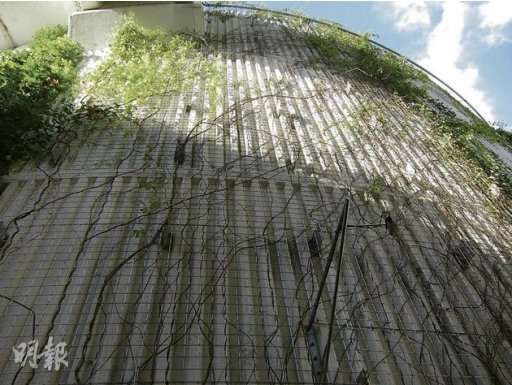
HK Updates: 渠署研究:綠化牆助降溫7℃


渠務署發現攀緣植物可降低室內溫度,但要小心挑選,如圖中的炮仗花,雖可為建築物降溫7℃,但愈向上生長,接近地面的枝葉愈稀疏。(馬耀森攝)
【明報專訊】渠務署完成垂直綠化研究,發現攀緣植物最高可為建築物降溫7℃。由於每種攀緣植物的生長速度、適應環境能力、降溫效果不同,該署認為挑選合適品種才可發揮最大效果。據了解,發展局計劃制訂垂直綠化植物清單,工務工程可因應攀緣植物特性而決定選種。
渠務署與港大合作,2010年起研究攀緣植物對外牆降溫功效,於沙田污水處理廠沿4個13米高的圓形污泥缸邊緣,種植20種攀緣植物,當中10種設鋼架讓植物附生;另外10種毋須鋼架,植物會自行沿牆壁向上生長。
擬訂清單 讓工務工程選用
結果顯示依靠鋼架生長的植物中,以首冠藤和炮仗花表現較佳,後者更可令牆壁降溫7℃。另港大改良泥土成分,發現攀緣植物生長高度較使用原有土壤高出34%。渠務署副署長徐偉解釋,攀緣植物生長愈密,降溫能力愈高,但要視乎植物是否適合在本港生長。
20種攀緣植物中,只有2、3種如黃金葛及常春藤,因不適應環境枯萎,其餘均可在1.5年內攀爬至13米高的缸頂。但各品種的生長速度參差,例如紫藤和使君子表現最佳,5個月便攀爬到缸頂,另有7個品種生長緩慢。研究發現,部分生長較快的植物如紫藤,因冬天落葉,效果大打折扣,但到夏天會迅速生長,爬滿綠化的牆壁;生長速度較慢的勒杜鵑、葡萄及金銀花,不但四季常綠,由地下至缸頂的葉片密度相若,不會出現較低位置疏落的情况。
徐偉表示,現時政府工務工程沒有參考攀緣植物,業界多使用爬山虎,較為單調,該署會公開測試結果,讓部門因應情况挑選不同的攀緣植物。
不少商場及屋苑採用預製組件,以高密度纖維棉代替泥土,逐件安裝在牆上,雖較靈活,但成本高。不過渠務署發現,大部分攀緣植物,只須沿牆壁邊緣的地下種植,或加設鋼架,便可自行沿牆向上攀爬逾10米。徐偉指研究至今兩年,僅安裝了自動灑水裝置及每年施肥兩次,保養成本有限,大部分植物均可持續生長。
明報記者 馬耀森

Indian Updates: India joins hands with S Asian neighbours to protect wildlife


India joins hands with S Asian neighbours to protect wildlife


India joins hands with S Asian neighbours to protect wildlifeNew Delhi: Recognising the danger posed to wildlife from illegal trade, India and its South Asian neighbours have agreed to develop institutional mechanisms to promote harmonised and collaborative approaches to common threats, a government document said.

However, the modalities of this agreement and the ensuing legal structures evolved at the First Meeting on Illegal Wildlife Trade in South Asia held in Kathmandu two years ago are still under discussion.

India is a lucrative market in the USD 20 billion global illegal wildlife trade.

At a time when poaching and illegal trade of wildlife articles have assumed alarming proportions, the Environment Ministry document has conceded that the South Asian nations were "not resourced adequately" to deal with the problem.

A number of regional initiatives have emerged, including SACEP (South Asia Cooperative Environment Programme), SAWTI (South Asia Wildlife Trade Initiative) and SAARC Convention on Cooperation on Environment to check the illegal trade of wildlife articles.

"...But (these agencies) have not been resourced adequately to implement activities," concedes the document --Environmental and Social Framework Document for "Strengthening Regional Cooperation in Wildlife Protection in Asia"-- prepared for financial assistance from the World Bank under regional IDA (International Development Association) window.

When contacted, officials in the Wildlife Crime Control Bureau (WCCB) refused to share more details.

Wild animals are killed for the flourishing illegal international trade of their skins, bones, flesh, fur, used for decoration, clothing, medicine and unconventional exotic food.

Victims of the trade include the iconic tiger and elephant, the snow leopard, the common leopard, the one-horn rhino, pangolin, brown bear, several species of deer and reptiles, seahorses, star tortoises, butterflies, peacocks, hornbills, parrots, parakeets and birds of prey and corals.

Yearly trade of wildlife articles probably ranks third after narcotics and the illegal weapons trade, says the document quoting INTERPOL.

The nations across the world are also signatories to CITES (the Convention on International Trade in Endangered Species of Wild Fauna and Flora), which was set up to ensure that international trade in specimens of wild animals and plants does not threaten their survival.

The report says that poaching techniques are "extremely gruesome".

"The more egregious methods include skinning or dehorning live animals and transportation of live creatures in inhuman conditions," it says.

Poaching has become so intense that tigers have disappeared from many parks throughout Asia.

"Nowhere has the impact been greater than in India and Nepal which remain the bastions of tiger conservation," says the document.

India has a Memorandum of Understanding with Nepal on controlling trans-boundary illegal trade in wildlife and conservation, apart from a protocol on tiger conservation with China.

A Global Tiger Forum of Tiger Range Countries has been created for addressing international issues related to tiger conservation.

India has appealed to China to phase out tiger farming, and eliminate stockpiles of Asian big cats body parts and derivatives. The importance of continuing the ban on trade of body parts of tigers was emphasised.

The economic value of the illegal wildlife trade is determined primarily by cross-border factors. Wildlife are poached in one country, stockpiled in another, and then traded beyond the South Asia region.

Source: http://zeenews.india.com/news/eco-news/india-joins-hands-with-s-asian-neighbours-to-protect-wildlife_784798.html

Monday, July 23, 2012

IFMA's Industrial Spotlight, 10 Aug 2012, Hong Kong


IFMA's Industrial Spotlight (10 Aug 2012)
Topic:
Organic Waste Management
Time:
Friday, 10 August 2012, 18:45 - 20:00
Venue:UR1, SCOPE Admiralty Learning Centre, 8/F United Centre, Admiralty, Hong Kong
Contact:
Tel: (852) 2512 0111 or Email: hk-ifma.administrator@ifma.org.hk


Programme Highlights:
(1)   What is and what isn’t composting.
(2)   Why on-site composting is a good solution for organic waste treatment in Hong Kong.
(3)   What is required for having a successful composting operation.
(4)   Application of organic waste management and successful cases sharing.

Speaker
Mr. Abdon Beitia, KCS Engineering

Mr. Beitia has had firsthabd experience in waste sorting and composting from a very young age. Already in 1982, when composting was unheard of in Spain ar almost anywhere in Europe, KOLLVIK Recycling, s.l. started developing on-site composters, and the family’s home became a sort of test field for waste sorting and different solutions.

With the introduction in the 1990’s of new European Directives on waste handling calling for the closure of landfills, local governments became more aware that proper waste handling and recycling plans are essentials to comply with new legislation and protect the environment. This pushed Kollvik Recycling, S.L. to include in its scope consulting activities related to waste management in small communities, towns and companies.

As a result Mr. Beitia participated in both surveying, planning, drafting and implementing waste handling plans for small size cities (20.000 pop.) in Spain, mainly in the Basque Country, as well as in France (Pyrenees Atlantiques) and for companies like Carrefour, Auchan, IKEA, Acuidoro etc.

For 2003 onwards Mr. Baitia moved to China to pursue his own interests and business, however in 2011, when the market became more receptive to new waste handling methods he moved to Hong King and set up KCS Engineering to promote the family’s products and services in Asia. In all Mr. Beitia has over 20 years professional experience in composting operations and waste related consulting.

CPD
1 hour

Registration Fee-    IFMA HK Members/ Corporate Sponsors/ CityU SCOPE Students/ HKCT Students/ HKU SPACE Students/ PolyU Students: FREE Admission
-    Supporting Organizations: HK$50
-    Non-members: HK$100

Venue Sponsor
UR1, SCOPE Admiralty Learning Centre, 8/F United Centre, Admiralty, Hong Kong (download the map)


Event FlyerClick HERE to download.

New Book: The Economics of Ecosystems and Biodiversity in Local and Regional Policy and Management by Heidi Wittmer, Haripriya Gundimeda


The Economics of Ecosystems and Biodiversity in Local and Regional Policy and Management
Edited by Heidi Wittmer, Haripriya Gundimeda

Published 17th April 2012 by Routledge – 384 pages


Description
Large Image
In this volume of the TEEB (The Economics of Ecosystems and Biodiversity) publication series, the key concepts of the project are applied to local and regional policy and public management. The aim is to show that by taking nature's benefits into account, decision makers can promote local development to ensure human well-being and economic growth and stability, while maintaining environmental sustainability.

The book explores the potential for local development provided by an approach based on nature. It offers examples of successful implementation of this approach from across the world, highlighting the importance of local decision making in management and planning. It provides tools and practical guidance for reform, and throughout the volume the economic benefits of environmental consideration at a local level are expounded.

This book is intended to offer inspiration and practical suggestions for the improvement and sustainable management of the environment and human well-being. The local aspect of this book complements the focus of the previous three volumes, completing the set to provide a comprehensive approach to simultaneously improving and maintaining economic and environmental stability, as well as human well-being.

For more details: http://www.routledge.com/books/details/9781849712521/