Showing posts with label energy. Show all posts

Wednesday, April 16, 2014

World News: IPCC report: world must urgently switch to clean sources of energy UN panel's third report explains how global dependence on fossil fuels must end in order to avoid catastrophic climate change (12 APril 2014)

 IPCC report: world must urgently switch to clean sources of energy UN panel's third report explains how global dependence on fossil fuels must end in order to avoid catastrophic climate change
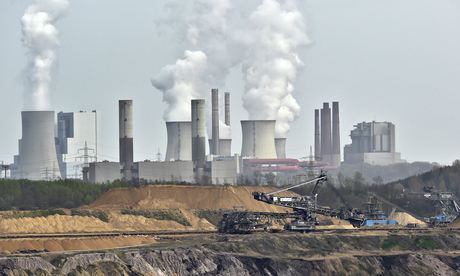
Coal mine and power station in Germany
An open-cast coal mine and power station near Grevenbroich, Germany. After concluding that global warming is almost certainly man-made and poses a grave threat to humanity, the UN-sponsored expert panel on climate change is moving on to the next phase: what to do about it. Photograph: Martin Meissner/AP
Clean energy will have to at least treble in output and dominate world energy supplies by 2050 in order to avoid catastrophic climate change, a UN report is set to conclude on Sunday.
The report produced by hundreds of experts and backed by almost 200 world governments, will detail the dramatic transformation required of the entire globe's power system, including ending centuries of coal, oil and gas supremacy.
Currently fossil fuels provide more than 80% of all energy but the urgent need to cut planet-warming carbon emissions means this must fall to as little as a third of present levels in coming decades, according to a leaked draft of the Intergovernmental Panel on Climate Change (IPCC) report seen by the Guardian.
There is heavy emphasis on renewable energy, such as wind and solar power, and cutting energy waste, which together need hundreds of billions of dollars of investment a year.
But despite the scale of the challenge, the draft report is upbeat: "Since [2007], many renewable energy technologies have substantially advanced in terms of performance and cost and a growing number have achieved technical and economic maturity, making renewable energy a fast growing category in energy supply," the report says.
It also highlights that the benefits of clean energy, particularly in reducing deadly air pollution and providing secure energy supplies, "outweigh the adverse side effects". The IPCC report is the last part of a trilogy compiled by thousands of the world's most eminent scientists which gives the most definitive account of climate change to date.
The first report, released in September, showed climate change was "unequivocally" caused by human activity and prompted Ban Ki-moon, the UN secretary general, to say: "The heat is on. Now we must act."
The second, published in March, warned that the impact of global warming, from extreme weather to reduced food production, posed a grave threat to humanity and could lead to wars and mass migration. TheInternational Energy Agency said the IPCC's work showed "the urgent need of enabling a global transition to clean energy systems".
The report will address how to avert the worst dangers by cutting carbon emissions, which have been rising despite the global recession of 2007-08.
Nuclear power is cited among the low-carbon energy sources needed, but the draft report warns it "has been declining since 1993" and faces concerns about "safety, nuclear weapon proliferation risks, waste management security as well as financial and regulatory risks".
Another way to produce low-carbon energy is to burn fossil fuels but capture and bury the carbon emissions.
The IPCC experts note that, unlike renewable energy, this technology "has not yet been applied at a large, commercial scale".
The draft report concludes that increasing carbon emissions are due to rising coal use, along with increasing demand for energy from the world's growing population. But it notes that policies implemented to cut carbon emissions will also cut the value of fossil fuel reserves, particularly for coal. It also says increased use of gas could cut emissions in the "short term", if it replaces coal.
China's vast coal burning represents a huge challenge but a new analysis from Greenpeace, published on Friday, suggests it may have reached a turning point. "The range of coal caps and anti-smog measures put in place by the Chinese authorities could see the country cut its carbon emissions by more than twice the UK's annual footprint by 2020, making it possible for global carbon levels to peak before climate change spirals out of control," said Li Shuo, Greenpeace East Asia's climate and energy campaigner.
On Thursday, Nobel peace prize winner Archbishop Desmond Tutucalled in the Guardian for an anti-apartheid-style campaign against fossil fuel companies. "It is clear that [the companies] are not simply going to give up; they stand to make too much money," he wrote.
Over half a trillion dollars a year are spent subsidising fossil fuels – six times more than spent supporting renewable energy – and US president Barack Obama and other leaders have pledged to phase these out. The draft IPCC report states this could be done without harming the poor: "Many countries have reformed their tax and budget systems to reduce fuel subsidies, that actually accrue to the relatively wealthy, and used other mechanisms that are more targeted to the poor."
The draft report runs counter to some of the UK's key energy policies. It states that decarbonising electricity is key to cost-effective cuts in emissions, but the coalition government voted down a plan to do this by 2030. The report also warns that building high-carbon energy infrastructure developments will lock societies into high emissions and may be "difficult or very costly to change", but UK ministers are strongly pushing shale gas exploration. The UK's carbon plan includes significant burning of biofuels and biomass (usually wood), which is supposed to be carbon neutral. But the IPCC report says scientific debate about whether biofuels cut emissions "remains unresolved" and that without policy safeguards "large scale bioenergy deployment could increase emissions".
Friends of the Earth's executive director, Andy Atkins, said: "We can only avoid catastrophic climate change if we reduce our dependency on fossil fuels – we're already on track for four degrees warming, which will be impossible for human society to adapt to. We have the technology to prevent dangerous climate change. What we lack is the political will of our leaders to strongly champion renewable power and energy efficiency."
Li said: "We stand at a fork in road. One way leads to more dependence on dwindling fossil fuels that are wrecking our climate and damaging our health; the other to a world powered by a booming clean energy sector that is already driving growth and creating jobs. The sooner we act, the cheaper it will be."
source from: http://www.theguardian.com/environment/2014/apr/12/ipcc-report-world-must-switch-clean-sources-energy

Thursday, March 27, 2014

Publication: India Energy Subsidy Review Issue 1 Volume 1 (24 March 2014)

India Energy Subsidy Review Issue 1 Volume 1

» Kieran Clarke, Shruti Sharma, Damon Vis-Dunbar, IISD, 2014.Paper, copyright: IISD
This is the first edition of the India Energy Subsidy Review, a biannual publication of the IISD’s Global Subsidies Initiative. Part One outlines economic and policy developments affecting India’s subsidized key fuel markets (diesel, liquefied petroleum gas, kerosene and natural gas), and analyses the dynamics of each market. Part Two features analysis by guest authors on issues related to energy pricing policy. In this edition, two articles examine the impact of energy subsidy reforms on India’s transport and agriculture sectors respectively. This edition of the review concludes with a commentary by Kirit Parikh and Jyoti Parikh, distinguished practitioners in the field.


PDF
source from: http://www.iisd.org/publications/pub.aspx?pno=2896

Thursday, February 13, 2014

World News: Think Differently for Asia's Water, Food, and Energy Security - ADB President (6 Feb 2014)

Think Differently for Asia's Water, Food, and Energy Security - ADB President

NEW DELHI, INDIA – It is critical that Asia’s precious but increasingly scarce water resources are managed in a coordinated way to ensure the region has not only sufficient water but also enough food and energy to meet its needs, Asian Development Bank (ADB) President Takehiko Nakao said today.
“We need to think differently about water and its uses for food and energy production—and take action,” Mr. Nakao told delegates in a keynote speech at the 14th Delhi Sustainable Development Summit in New Delhi.
Asian Water Development Outlook 2013 notes that 36 of ADB’s 48 Asian member countries, including the People’s Republic of China and India, have poor water security, with some nations facing imminent water crises that threaten their food and energy security. ADB’s Food Security in Asia and the Pacific publication calls for a new approach in addressing malnutrition while theEnergy Outlook for Asia and the Pacific looks at the policy, social, infrastructure, and technology issues affecting energy demand.
Mr. Nakao said it is critical to look at the links - or nexus - between water, food, and energy.
Excessive groundwater has been extracted in some places because subsidized energy allows for unrestricted use of electric power pumps. This in turn threatens water shortages for farmers and a lower power supply to other users. Such distorted pricing must disappear.
Meanwhile, rising energy use will squeeze already scarce water resources since large quantities of water are needed for extracting energy and refining fuels.  As 80% of water use is for agriculture, water shortages lead to food shortages. The region must change its mindset to understand that “food wasted is water and energy wasted,” Mr.  Nakao said.
He said river basin organizations that gather users, utilities, and government representatives are key to resolving competition between different uses for water. ADB is working with such organizations to encourage collaborative water management, set up new institutions with better data and information, and encourage innovative technologies. These activities are helping improve water security for more than 400 million people in around 30 rivers basins in the region.
The annual Delhi Sustainable Development Summit gathers policymakers, experts, and leaders from business, academia, and civil society to discuss sustainable development. The event is organized by The Energy and Resources Institute, based in New Delhi.
source from: http://www.adb.org/news/think-differently-asias-water-food-and-energy-security-adb-president

Monday, January 27, 2014

Publication: Shining a Light on Fossil Fuel Subsidies at the WTO: How NGOs can contribute to WTO notification and surveillance (Jan 2014)

IISD Publications Centre

Shining a Light on Fossil Fuel Subsidies at the WTO: How NGOs can contribute to WTO notification and surveillance

» Liesbeth Casier, Robin Fraser, Mark Halle, Robert Wolfe, IISD, 2014.Paper, 29 pages, copyright: IISD
Fossil fuel subsidies undermine efforts to mitigate climate change and damage the trading system. However, multilateral discussion is hampered by inconsistent definitions and incomplete data. Members do not notify such subsidies as much as they should under the Agreement on Subsidies and Countervailing measures (ASCM), which limits the usefulness of the SCM Committee. The reports of the Trade Policy review mechanism on individual countries and on the trading system draw on a wider range of sources, creating an opportunity for non-governmental organizations (NGOs) to provide the missing data from publicly available sources. We suggest a new template that could be used for such third-party notifications. The objective is to shine a light on all fossil fuel subsidies that cause market distortions, especially trade distortions. The result should be better, more comparable data for the Secretariat, governments, and researchers, providing the basis for better-informed discussion of the incidence of fossil fuel subsidies and rationale for their use.

PDF
  • Hard copy not available.

Thursday, January 23, 2014

World News: China’s shale revolution: will it take off? (19 Jan 2014)

China’s shale revolution: will it take off?

Western energy companies are flocking to China to help unlock its shale reserves
article image
The prospect of exploiting shale gas and oil reserves has sparked interest around the world (Image by JustinWoolford) 
 
Last month, Weir Group held its first ever Christmas party for contacts in the Chinese oil and gas industry. It was not a particularly large or lavish event: 75 of Weir’s customers and suppliers gathered to celebrate the festive season in the usual British style at the Park Tavern pub in Shanghai. But the guests were part of a potentially momentous phenomenon: the birth of China’s shale gas industry.

Weir, which is based in Scotland but runs its oil and gas business from the heartland of the shale boom in Texas, is one of the world’s leading manufacturers of the pumps used for hydraulic fracturing or “fracking” – injecting water, sand and chemicals into wells at high pressure to open up shales and other rocks that do not give up their resources easily.

As China seeks to unlock its shale oil and gas, it offers the potential to eventually become a huge market for western companies such as Weir. “It’s going to be a long time before China reaches the US level,” says Keith Cochrane, Weir’s chief. “But there’s no question they are serious.”

China's production and demand forecast
Chinese planners have watched with envy as the US shale revolution has cut American energy costs and imports. For its part, the US views China’s effort to generate its own shale boom as a golden opportunity for American business. If China can spark its own shale revolution, energy costs for its manufacturers would fall and its oil and gas industry could emerge as a powerful force in world markets. But the Obama administration believes the potential benefits greatly outweigh any potential damage to US business.

ExxonMobil, Chevron and ConocoPhillips of the US, and Royal Dutch Shell, Total and Eni from Europe, are among the international oil companies that have signed deals to explore shale resources in China.

For companies providing services for oil and gas production, from drilling to fracking to water management, the prizes could be even greater.

Schlumberger
, Halliburton, Baker Hughes and Weatherford, the world’s largest private-sector oil services companies, are boosting their presence in China.

Yet for all the excitement, the future of China’s shale remains cloudy. Progress so far has been disappointing, and shale production in China faces many challenges. Ultimately, its development will be a test not only of the country’s geology and the ingenuity of its engineers, but of its entire economic model.

China’s potential is certainly vast. By some estimates it has the world’s largest shale gas resources, with about 68 per cent more technically recoverable gas than the US, according to the US Energy Information Administration. Yet progress has been slow. The Chinese government is still sticking to its official production target of 6.5bn cubic metres of gas from shale by 2015 and 60bn-100bn cubic metres by 2020, but at current rates of production that is unlikely to happen.


China has the largest recoverable shale gas reserves in the world

Shell bet big on China’s potential, earmarking $1bn and developing the country’s best performing well to date. But it now says significant shale developments outside the US could take decades.

Recent successes achieved by Sinopec, the second-largest state-controlled Chinese oil group, in the Sichuan basin have revived hopes that shale production can be made to work in China. Yet shale still seems unlikely to meet the country’s growing demand for gas. In addition to prioritising domestic production, China is diversifying international supply, including coming closer to signing a gas supply deal with Russia.

Differences between US and China
China’s shale reserves are often more challenging than those in the US. Chinese geologists are envious of the Bakken oil shale in North Dakota, or the Marcellus gas shale of Pennsylvania, where reserves can be just a mile below the surface. In the steep hills of Sichuan, they are three miles down in structures warped by active faultlines.

China also lacks the pipelines that criss-cross North America. Beijing has had to offer incentives to build gas liquefaction or compression plants near shale gas zones, allowing gas to be trucked out of valleys with no accessible infrastructure. And in most of China’s promising areas for shale gas, such as the Tarim Basin in the northwest, there are limited supplies of water needed for fracking.

See also: the untold story of the US shale gas revolution

Yet more than any of these physical differences, it may be the “soft” factors, including the lack of an open and competitive business environment, a mature legal structure and private land ownership, that are holding back China’s shale revolution.

“There’s so much money to be made in shale in China but it is developing very slowly so there must be a problem,” says Lin Boqiang, director of the China Center for Energy Economics Research at Xiamen University.

In the view of many executives and analysts, the crucial difference between the US and China is in the structure of the industry. As Chen Liming, president of BP China, put it at a recent discussion in Beijing: “I think America has succeeded because of its open market. Without competitiveness they wouldn’t succeed. So there is constant improvement. Through competition, you can greatly increase efficiency and costs will fall.”

The US shale revolution was led by the country’s small and medium-sized companies, which tried many different approaches to “crack the code” and unlock oil and gas. The US also has a rich ecosystem of oil services companies – as many as 10,000 by some counts. In China, by contrast, shale developments are dominated by two state-controlled groups: Sinopec and CNPC, parent of PetroChina. All the shale exploration deals with large western companies have been signed by one of those two, but the Chinese companies still harbour doubts about shale’s potential.

Because production from individual shale wells declines quickly, companies have to drill more and more wells just to keep total output up, requiring heavy capital spending, and the Chinese oil majors are leery of the commitments that involves.

Trevor Houser, a consultant with the Rhodium Group, says: “If the big US oil groups, ExxonMobil and Chevron, had held 90 per cent of US shale acreage, the pace of development would not have been nearly so fast.

Kick-starting China’s industry
Impatient with the slow pace of the Chinese oil giants, central ministries threw the nation’s second round of shale tenders open to other players. But industry insiders say these newcomers, which include power companies, coal miners and a steel mill, are not meeting minimal spending commitments, in part because they underestimated the barriers posed by the state giants’ dominance.

Having won land tenders, the newcomers find it hard to hire oil services companies, most of which are affiliated to state organisations. They also struggle to ship into higher-priced urban markets, since the state-owned majors control the pipelines too.

Representatives of the state-owned oil giants and the state planning agencies emphasise the need for Chinese solutions to China’s unique geology. For instance, drillers tend to encounter more mud in Chinese shale wells, which can choke off the flow of gas and cause water to pool up, ultimately destroying the well’s productivity.

Looking at the US shale revolution, the decisive factors are clear: a competitive industry, responsive capital markets, scope for local initiative and innovation, and strong property rights, including intellectual property.

All of those conditions are more or less absent in China. If the country is to make its industry a success, it will need to bring a different kind of shale revolution to its institutional landscape.

For China, developing shale reserves offers a triple benefit. Increased gas production could replace coal for power generation, reducing the smog that blights many Chinese cities, as well as lowering energy costs and curbing dependence on foreign energy – an increasingly pressing issue since the nation last year claimed the crown as the world’s largest oil importer.
Its ambition is supported by the US, which has held an annual oil and gas forum with China for more than a decade to bring together businesses and officials working in the industry. President Barack Obama also launched a series of energy co-operation initiatives in 2009, including a shale gas programme that organises workshops and study tours.

David Sandalow of Columbia University’s Center on Global Energy Policy, who until last year was assistant secretary with responsibility for international affairs at the US energy department, says helping China develop its shale gas reserves meets several American policy objectives.

“Chinese shale development could help reduce pressures on global oil and gas markets,” Mr Sandalow says. “It could provide significant commercial opportunities to US companies. It could dramatically reduce the air pollution that afflicts Chinese cities and help fight global warming.”

However, US support for China’s shale industry could one day rebound. Chinese oil services companies working on shale projects are trying to learn skills that could allow them to compete for business in the much more actively developed North American shale fields, some of which already have Chinese investment. In the future, it may be Chinese companies who see American shale as the business opportunity they cannot afford to miss.

Tuesday, January 21, 2014

Publication: Energy and Security: Strategies for a World in Transition (Jan 2014)

Energy and Security: Strategies for a World in Transition

Revised and updated second edition
Energy and Security: Strategies for a World in Transition, edited by Jan H. Kalicki and David L. Goldwyn
Jan Kalicki, David L. Goldwyn
The second, completely updated edition of this widely read and respected guide is the most authoritative survey available on the perennial question of energy security. Energy and Security: Strategies for a World in Transition gathers today's topmost foreign policy and energy experts and leaders to assess how the United States can integrate its energy and national security interests. 
“Required reading for those seeking to understand the strategic-level importance of energy interests and economics in the area of foreign policy. It will have a valued place on my desk.”—Maria van der Hoeven, Executive Director, International Energy Agency
“The illustrious array of international energy experts...provides a thorough, insightful, and compelling analysis of the new challenges and opportunities facing the world energy community today.”—Abdalla Salem El Badri, Secretary General, OPEC
“Path-breaking...a roadmap for energy empowerment in the 21st century. The analysis is based on solid research, and the recommendations are well written, well organized, and cogently argued.”—Strobe Talbott, President, The Brookings Institution and former US Deputy Secretary of State

Monday, January 13, 2014

Vietnam News: Waste to energy - outlook for energy and environment sectors (10 Jan 2014)

Waste to energy - outlook for energy and environment sectors


Perspective of waste-to-energy project

Currently in Vietnam, it is difficult to develop large-scale hydropower, however, small-scale hydropower occupy land, forests and cause lots of impact on the environment. While Biomass, solar and wind energy are still underdeveloped, waste-to-energy becoming potential source for a system of national power.

Waste - abundant source for energy

According to statistics, the total amount of municipal solid waste in Vietnam approximately 12.8 million tons per year. It is forecasted that by 2015 this figure will be about 13.5 million tons per year, and 2020 it will be 22 million tons per year. Hanoi alone produces 7,000-8,000 tons per day in the period 2015-2020, Ho Chi Minh City (10.000-12.000 tons/day), Hai Phong and Dong Nai (5,000-6,000 tons /day). This will be stable sources for power plant with capacity of 300 tons/day, equivalent to nearly 350mW output power.

However, at this time, Vietnam has an industrial waste treatment system project with capacity of 75 tons/day in the Nam Son waste treatment complex in Hanoi which is funded by the Japan's New Energy and Industrial Technology Development Organization (NEDO). The system can generate electricity with a capacity of 1,930kW, scheduled for completion in late 2014. Earlier, in 2006, Ho Chi Minh City brought the Go Cat waste treatment plant with a capacity of 2.4 MW into operation, however, the amount of electricity produced is very small.

Mr. Le Anh Tung, Chairman of Vietnam Ecotech Company said that in Vietnam municipal solid waste did not sort from the source, organic substance is up to more than 60%. Water content in waste ranges from 50 to 55%. Therefore, the heating value of solid waste is very low, only from 1200 to 1500 kcal / kg. This is one of the biggest problems for the development of waste-to-energy plant in Vietnam. Clearly, the current solid waste management system is unsatisfactory and needs to be addressed in a dire way. In particular, to make the waste classification, it is necessary to reduce moisture in the waste and select the type of high calorific value waste.

In addition, Mr. Nguyen Duc Cuong, director of the Center for Renewable Energy under the Energy Institute (Ministry of Industry and Trade) said that the biomass electricity prices remain low, so that ​​the call for investment in renewable energy projects is very difficult. In addition, investors are also worried about the licensing procedure, because 2 years are so long to prepare procedures for the renewable energy project. In addition, enterprises are facing difficulties in land lease policy.

Prospects for development and cooperation

Vietnam government has realized the effect of waste in energy production and environmental protection. Vietnam has been trying to build and develop waste-to-energy in the near future. Accordingly, in 2014, the Prime Minister will issue a decision on the "mechanism to support the development of waste-to-energy projects in Vietnam". In particular, the expected electricity price at the point of delivery for the direct burning of solid waste projects is 2,160 VND/kWh (equivalent to 10.05 USD/kWh). This price will help investors have more profits. Therefore, it is the first step to encourage the development of this type of power in Vietnam.

At the seminar “Waste-to-energy technology: co-operative opportunities and prospects” which was held in Hanoi recently, Malaysia’s Malakoff cooperation and Germany’s Oschatz, Eurec, CPP co-operation expressed their desire to invest and develop waste-to-energy projects in Vietnam.

Mr. Le Anh Tung, Chairman of Ecotech company said that his company and other businesses were willing to share their experience in this field. To approach waste-to-energy technology, Ecotech company proposed to build three projects in Hanoi, Dong Nai and Ba Ria - Vung Tau. According to him, Vietnam should choose appropriate technology in order to satisfy economic efficiency and protect environment as well.
 
source from:

Wednesday, November 13, 2013

World's News: Fukushima offshore wind farm powering grid (12 Nov 2013)

Fukushima offshore wind farm powering grid

A wind farm floating 20 km off the coast of Japan's Fukushima Prefecture, home to the crippled Daiichi nuclear power plant, has successfully started powering turbines to feed energy to the grid, a spokesman for the project's government-led consortium confirmed Tuesday.
The government-funded project, led by Marubeni Corporation, is Japan's first step towards realizing a new, clean energy hub in the Fukushima area, which is still grappling with the devastating effects of a colossal earthquake triggering a massive tsunami that caused a triple meltdown at the stricken Daiichi facility.
The consortium said that the revolutionary wind farm which was brought online Monday will eventually have the capacity to generate 1 gigawatt of electricity from 143 turbines. Currently the project is powering a 2-megawatt turbine designed by Hitachi Ltd. and known locally as "Fukushima Mirai."
The project's substation is also floating offshore and represents one of the first of its kind and is called "Fukushima Kizuna."
The word "kizuna" became a national designation in the weeks and months following the earthquake and tsunami battering Japan's eastern seaboard on March 11, 2011, and roughly translates to " bonds between people."
Along with Marubeni Corp., Japan's Ministry of Economy, Trade and Industry will now oversee the installation of two more turbines to augment the generating capacity of the floating wind farm, trade ministry officials said.
The trade ministry has earmarked 22 billion yen (around 222 million U.S. dollars) for the project's expansion over the next five years and will look to pump an additional 31 billion yen ( about 312.48 million dollar) into the project from next April, the officials said.
Fukushima's governor Yuhei Sato praised the efforts of the consortium, stating that the project represented a new lease of life for the prefecture and that the floating wind farm stood as a symbol of Fukushima's future.
With all of Japan's 50 nuclear power stations currently offline for safety inspections, the government has been looking at tapping into renewable sources of energy, such as solar, hydro and wind power as a weakening yen has seen import costs for fossil fuels sky rocket for resource-poor Japan who is looking to reduce its carbon emissions along with domestic policy and international protocols.
However, such forms of renewable energy are unlikely to make up for the shortfall of power as rectors here remain offline and the infrastructure, safety evaluations, noise and maintenance issues of offshore wind farms, for example, as well as the unpredictability of the generation capacity has had some of Japan' s ruling Liberal Democratic Party (LDP), business lobbies and experts arguing that the ultimate solution to Japan's energy crisis might not be so simple.
Experts highlight that all energy sources have their pros and cons and that wind power, despite being one of the cleanest forms of new power, lacks the generating capacity of other forms of energy.
Wind power's average generating capacity is 2 watts per square meter compared to 20 watts per square meter for solar power and 1, 000 watts per square meter for nuclear power, an expert from Japan 's energy industry pointed out.
However, a spokesperson for the trade ministry said that the new wind farm off Fukushima marked the beginning of a push towards combining renewable power with conventional sources and that the project could be economically beneficial to the region and Japan at large as the new technology could be exported overseas.
"Thousands of people were injured or otherwise affected by the terrible accident at the Fukushima Daiichi nuclear power plant," said Kazuyoshi Akaba, a vice minister at the trade ministry.
"To have a new source of clean energy based here is not just meaningful for those affected, but also the industry and the government will strive to ensure the project is a success," he said.
Japan has more than 10 other wind farm projects currently underway and at various stages of completion, with experts stating that offshore wind power could generate as much as 1,600 gigawatts of power to supply the nation's grids.

Tuesday, November 12, 2013

China News: Wind turbine generator installed in Inner Mongolia (12 Nov 2013)

Wind turbine generator installed in Inner Mongolia


The first China-made wind turbine generator has been installed in a wind farm in Inner Mongolia Autonomous Region to capture high altitude wind energy, company officials said Tuesday.
The producer, Shanxi-based Taiyuan Heavy Machinery Group Co., Ltd., said that the 5,000-kilowatt wind turbine was installed and put into use last week at a wind farm located more than 2,100 meters above sea level.
Cao Keshun, spokesman for the company, said that the generator, which weighs 805 tonnes, can be used both on land and sea for wind power generation. Its annual output is enough to supply electricity for 10,000 households per year.
The Chinese government strongly supports development of the wind power industry. The country's wind power installed capacity is expected to top 75 million kilowatts with electricity output reaching 140 billion kilowatt-hours by the end of 2013, said Wang Jun, head of the New Energy Bureau of the National Energy Administration, last month.
Cao said that the company has decided to tap further into wind power equipment production, and recently built a plant in Ulan Qab City in Inner Mongolia, which was designed with an annual production capacity of 500 wind power generators.
Established in 1950, Taiyuan Heavy Machinery Group Co., Ltd. was the first heavy machinery manufacturer designed and built by the People's Republic of China. In August, it produced the world's largest and strongest crane.

Wednesday, October 30, 2013

Publication: Green Revenues for Green Energy: Environmental fiscal reform for renewable energy technology deployment in China ( Oct 2013)

IISD Publications Centre

Green Revenues for Green Energy: Environmental fiscal reform for renewable energy technology deployment in China

» Jacqueline Cottrell, Richard Bridle, Zhao Yongqiang, Shi Jingli, Xie Xuxuan, Christopher Beaton,Aaron Leopold, Eike Meyer, Shruti Sharma, Han Cheng, 2013.Paper
China’s economy continues to grow rapidly with corresponding increases in both energy consumption and environmental pollution. Renewable energy is a key part of China’s response to this challenge. The current costs of measures to facilitate the large-scale deployment of renewable energy are primarily met through an electricity surcharge—effectively a tax on electricity consumption. However, concerns have been raised that continuing to rely on the surcharge alone places a disproportionate burden on electricity consumers. In response, the need for further debate on how best to fund renewable energy and reduce environmental pollution was identified by the IISD and the CNREC, leading to the establishment of a research project to examine the international experience of similar schemes and their relevance to China. This report presents a summary for policy-makers of the findings of that research.

Tuesday, October 22, 2013

Publication: Biofuels - At What Cost? A review of costs and benefits of U.K. biofuel policies (13 Oct 2013)

Biofuels - At What Cost? A review of costs and benefits of U.K. biofuel policies

» Christopher Charles, Richard Bridle, Tom Moerenhout, IISD, 2013.Paper, 51 pages, copyright: IISD
This report evaluates some of the principal issues associated with the U.K.'s biofuel industry, including support policies, employment creation, emissions abatement, and the role of biofuels and other renewable technologies in meeting EU renewable energy targets. It assesses the costs and benefits of the U.K.’s policies in meeting the objectives that EU member states have set out to achieve, including increased energy security, improvements in environmental performance and the generation of additional economic value. The report finds:

Monday, October 21, 2013

Publication: Biofuels At What Cost? A review of costs and benefits of Spain's biofuel policies (13 Oct 2013)

IISD Publications Centre

Biofuels At What Cost? A review of costs and benefits of Spain's biofuel policies

» Christopher Charles, Alicia Natalia Zamudio Trigo, Tom Moerenhout, 2013.Paper, 60 pages
This report evaluates some of the principal issues associated with Spain’s biofuels industry, support policies, employment creation, emission abatement and the role of biofuels and other renewable transport technologies in meeting EU renewable energy targets. The report assesses the costs and benefits of Spain’s policies in meeting the objectives that EU member states have set out to achieve—increased energy security, improvements in environmental performance and the generation of additional economic value. The report finds:
  1. Support to Spain’s biofuel industry in 2011 was estimated at between €213 million and €237 million for ethanol and from €955 million to €1,002 million for biodiesel.
  2. 2011 carbon abatement costs for ethanol were €488 per tonne CO2 avoided and €194 per tonne for non-land based biodiesel. Conventional biodiesel was responsible for net emissions increases and no abatement cost can be calculated.
  3. There is a wide range for the number of direct and indirect jobs created by the Spanish biofuels sector estimated at between 3,797 and 12,055 in 2011. Job estimates are based on a variety of job-counting approaches used in measuring biofuel and renewable energy jobs reflecting the challenges in assessing the numbers and quality of sectorial jobs.
  4. More than 75 per cent of biodiesel consumed in Spain was imported in 2011. Around 95 per cent of biodiesel feedstock was imported with 90 per cent coming from Argentinian soy and Indonesian palm oil. Spain also imported 73 per cent of the feedstock used in ethanol production eroding energy security benefits due to a high reliance on foreign imports.
A number of policy recommendations are provided to promote the sustainability and effectiveness of Spain’s biofuel policies.

Sunday, September 29, 2013

Publications: Energizing Hong Kong: A Comprehensive Study of Hong Kong People’s Attitudes Towards Power Sources and Climate Change by Michael E. Degolyer (24 Sep 2013)

Energizing Hong Kong: A Comprehensive Study of Hong Kong People’s Attitudes Towards Power Sources and Climate Change
DATE: 24 Sept 2013


This survey report captures how Hong Kong people view issues related to energy and climate change, as well as their environmental behaviours and knowledge.The survey is in hope of informing us on how best to approach energy policy deliberation in Hong Kong. Where appropriate, comparisons were made between the current survey’s findings and previous environmental surveys in order to give additional information on how perceptions and behaviours have changed over time. Download full report


For more information: 
http://www.civic-exchange.org/wp/201309energysurvey_en-2/

Friday, September 27, 2013

Publications: Nuclear Energy: Institutional Arrangement and Public Engagement in France by Jacques Foos & Ludivine Gilli (14 Sep 2013)

Nuclear Energy: Institutional Arrangement and Public Engagement in France
By Jacques Foos & Ludivine Gilli

This report mainly focuses on the public engagement process France has gone through while discussing their energy policy, in particular nuclear energy. It sheds light on various important components of the process, for example, availability of independent information, formation of independent agencies and their roles, involvement of independent experts, as well as general public education. Download full report


For more information: http://www.civic-exchange.org/wp/130914frenergypaper_en/

Publications: New report outlines China's energy development "The China International Energy Cooperation Report 2012/2013" (27 Sep 2013)

New report outlines China's energy development
By Gong Yingchun
China.org.cn, September 27, 2013

A new report, released in Beijing on Tuesday, has outlined China's energy development, current problems and future international cooperation.
The China International Energy Cooperation Report 2012/2013 was unveiled at an event jointly hosted by Renmin University of China, the Center for International Energy and Environment Strategy Studies of Renmin University (CIEESS), Energy Outlook Magazine and the China Council for the Promotion of International Trade (CCPIT).
The China International Energy Cooperation Report 2012/2013 was unveiled in Beijing on Tuesday. [Photo/China.org.cn]
Wu Zongxin, a professor at Tsinghua University, said in his keynote speech that China has to seek out an effective solution to deal with its increasing energy demands. According to data released by the National Bureau of Statistics, China consumed about 3.6 billion tons of standard coal equivalent (TCE) in 2012, and accounted for one fifth of the global energy consumption. "China's energy consumption, if it increases by 200 million every year, will probably rise to eight or nine billion TCE in the future," he said.
With energy demands increasing every year, China has become the largest energy consumer in the world. The growing concern from the international community for global climate change has placed carbon tax and carbon trading on the agenda. Therefore, there is mounting pressure on China, where coal consumption still amounts to approximately 70 percent of the total energy consumption.
Despite China's large energy reserves, energy resources per capita are much lower than the average world level due to the large population. The high energy demand has encouraged China to seek cooperation with foreign countries. "China's dependency of foreign oil has exceeded 55 percent," Wu said.
Moreover, China is facing difficulties in climate change. It has overtaken the United States as the world's top annual emitter of carbon dioxide. China is focusing on boosting energy restructuring, and developing clean energy in a bid to reduce carbon emissions.
"Natural gas currently only accounts for about five percent of China's primary energy consumption, while the global average is almost 24 percent. Nuclear power currently accounts for only two percent of China's electricity output, but the average world level is 16 percent," Wu said.
International energy cooperation is therefore crucial for China to meet its energy demand and its responsibility for cutting carbon emissions.
The China International Energy Cooperation Report 2012/2013 was unveiled in Beijing on Tuesday. [Photo/China.org.cn]

The China International Energy Cooperation Report 2012/2013, released in Beijing on Tuesday, has outlined China's energy development, current problems and future international cooperation. [Photo/China.org.cn]

Wednesday, September 25, 2013

Chinese Updates: Windows and doors behind China's wasted energy (25 Sep 2013)

Windows and doors behind China's wasted energy
Xinhua, September 25, 2013

Want to lead a green life? Start by replacing poorly fitting windows in your apartment.
Energy wasted from leakage around windows and doors makes up 20 percent of total home energy consumption in China, according to Ni Shouqiang, deputy director of the China Construction Structure Association.
Windows and doors are major weak spots in the thermal envelope of buildings, failing to reduce heat loss in the winter and heat gain in the summer, said Ni at the China International Festival of Windows and Doors held from Saturday to Monday in the city of Gaobeidian, in north China's Hebei Province.
The inefficiency increases the burden on the public heating system in the winter and means more use of air conditioners in the summer, Ni said at the event dedicated to energy-saving, high-tech windows and doors.
Winter heating in northern China consumes a huge amount of coal and warm air escapes easily through gaps around windows and doors, he said.
In Hebei, each resident needs an average of two tons of coal each winter, which is a major contributor to haze and air pollution.
If the efficiency of windows and doors, totalling 11 billion square meters in China, reached the level required in Europe, it would save 430 million tons of coal equivalent every year.
"It will reduce both energy use and pollution," Ni said.
China builds 2.5 billion square meters of new structures each year, more than the total for all developed countries combined. Energy-efficient windows and doors only account for 0.4 percent of those being used, which means energy consumption caused by leakage and drafts in China is two to three times more than in developed countries.
China has standards of energy efficiency for windows and doors, but they are poorly implemented, said Wei Hedong, chief engineer of Hebei Orient Sunda, a Sino-German venture that manufactures efficient windows and doors.
An abundance of substandard products has exacerbated the problem.
"Some developers just care about price, not quality. They cheat home buyers with false certificates of quality," said a window producer in Hebei who declined to be named.
Statistics from the Ministry of Housing and Urban-Rural Development show China has more than 30,000 manufactures of windows and doors, the vast majority of which are small enterprises with outdated machines and techniques.
In order to seal off the energy waste, experts say the government should update current standards and encourage citizens to make improvements.
"We lag far behind in terms of new standards. Some of the standards we follow today were decided on twenty years ago," said Yao Bing, deputy director of China Energy Conservation Association.
Ni Shouqiang wants subsidies and low-interest loans to help home owners replace or upgrade their windows and doors, an approach that was successful in developed countries. He also wants to see universities and other institutions researching efficiency.
Driven by increasingly tough environmental legislation, European companies have been working on the problem for sixty years, said Bao Youge, general manager of Rehau Polymers (Suzhou) Co., Ltd, a Chinese subsidiary of the Germany polymer processor Rehau.
The Ministry of Housing and Urban-Rural Development is expected to unveil revised standards for green buildings this year, a significant move to cutting energy consumption in buildings use 40 percent of total social energy.
"Energy-efficient windows and doors are fundamental to achieving our goal," said Lin Haiyan, deputy dean of China Academy of Building Research.